Did you know that 75% of homeowners struggle with limited space for their entertainment setups? Whether it’s a bulky receiver or a growing collection of devices, finding a way to keep everything organized can be a challenge. That’s where smart design comes in.
This guide will show you how to create a custom storage solution that maximizes your room’s potential. From planning to mounting, you’ll learn how to build a piece that’s both functional and stylish. Precision is key—every inch matters when it comes to fitting components securely.
By the end, you’ll have a system that not only clears clutter but also enhances the look of your space. Let’s get started on transforming your entertainment area into a clean, efficient center for your gear.
Key Takeaways
- Learn how to maximize limited space with smart design.
- Understand the importance of precise measurements for a secure fit.
- Discover how to create a storage solution that’s both practical and visually appealing.
- Get step-by-step guidance on planning, building, and mounting your project.
- Ensure proper ventilation and accessibility for your electronics.
Planning Your DIY Wooden Shelves Project
Before diving into the build, it’s essential to evaluate your room’s layout. Proper planning ensures your storage solution fits seamlessly into your space. Start by assessing the available area and identifying the best spot for your project.
Assessing Your Available Space and Requirements
Begin by measuring the wall where you plan to install your storage. Look for stud locations to ensure a secure fit. Leave enough space on each side for ventilation and accessibility.
Consider the size of your electronics and other items. This will help you determine the ideal dimensions for your project. A well-planned layout ensures everything has its place.
Selecting Materials and Tools
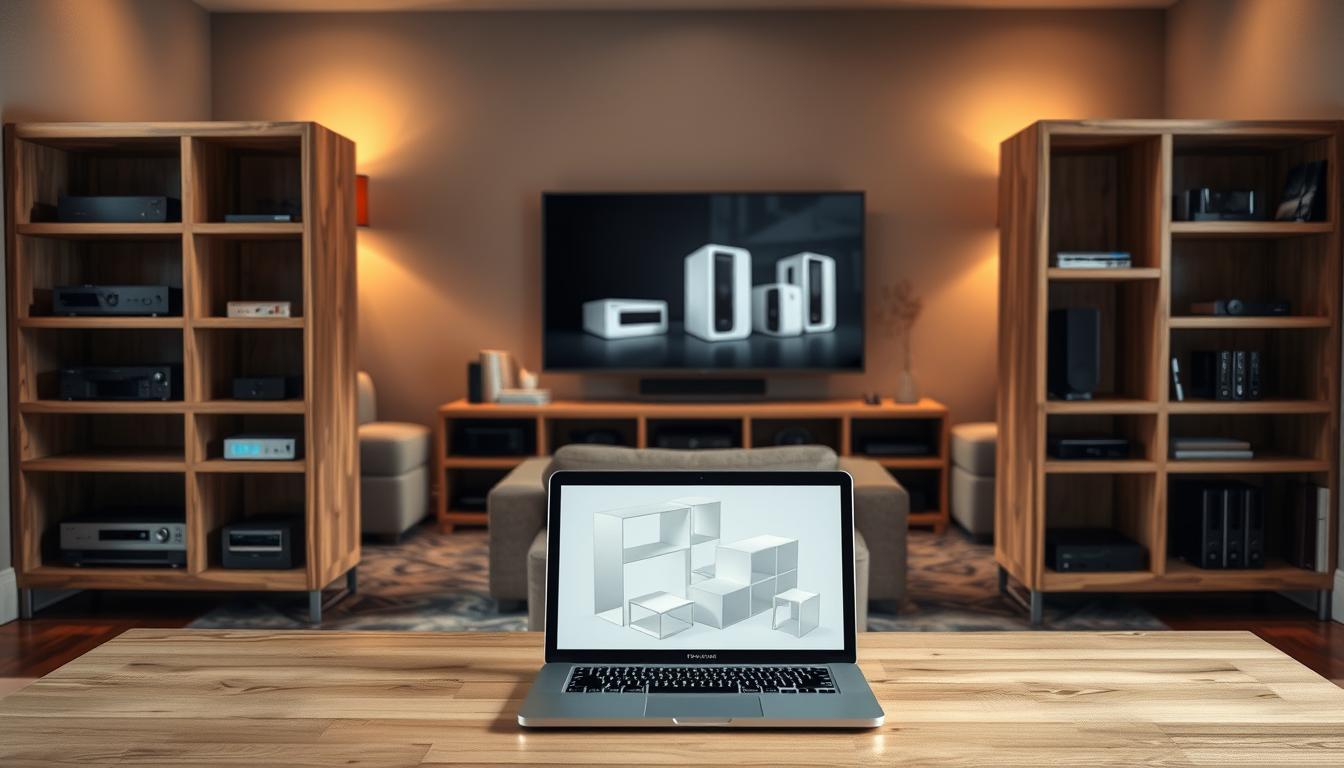
Choosing the right materials is crucial for durability and aesthetics. Southern yellow pine is a popular choice for its strength and versatility. Oak dowels and wood screws provide additional support.
Here’s a list of essential materials and tools:
| Material/Tool | Quantity | Purpose |
|---|---|---|
| Southern yellow pine | 8 x 1.5 x 96 inches | Main structure |
| Oak dowels | 36 inches | Reinforcement |
| Wood screws | 6 (3-inch), 3 (3/4- to 1-inch) | Secure assembly |
| Drill | 1 | Create pilot holes |
Ensure you have all the necessary tools before starting. This includes a drill, measuring tape, and a level. Proper preparation saves time and ensures a smooth build process.
Understanding Your Home Theater Organization Needs
Effective organization starts with understanding your specific needs. Whether you’re storing a TV, receiver, or gaming console, each piece of equipment requires careful consideration. A well-designed shelf system ensures everything has its room while maintaining a clean and functional layout.
Evaluating Electronic Components and Gear
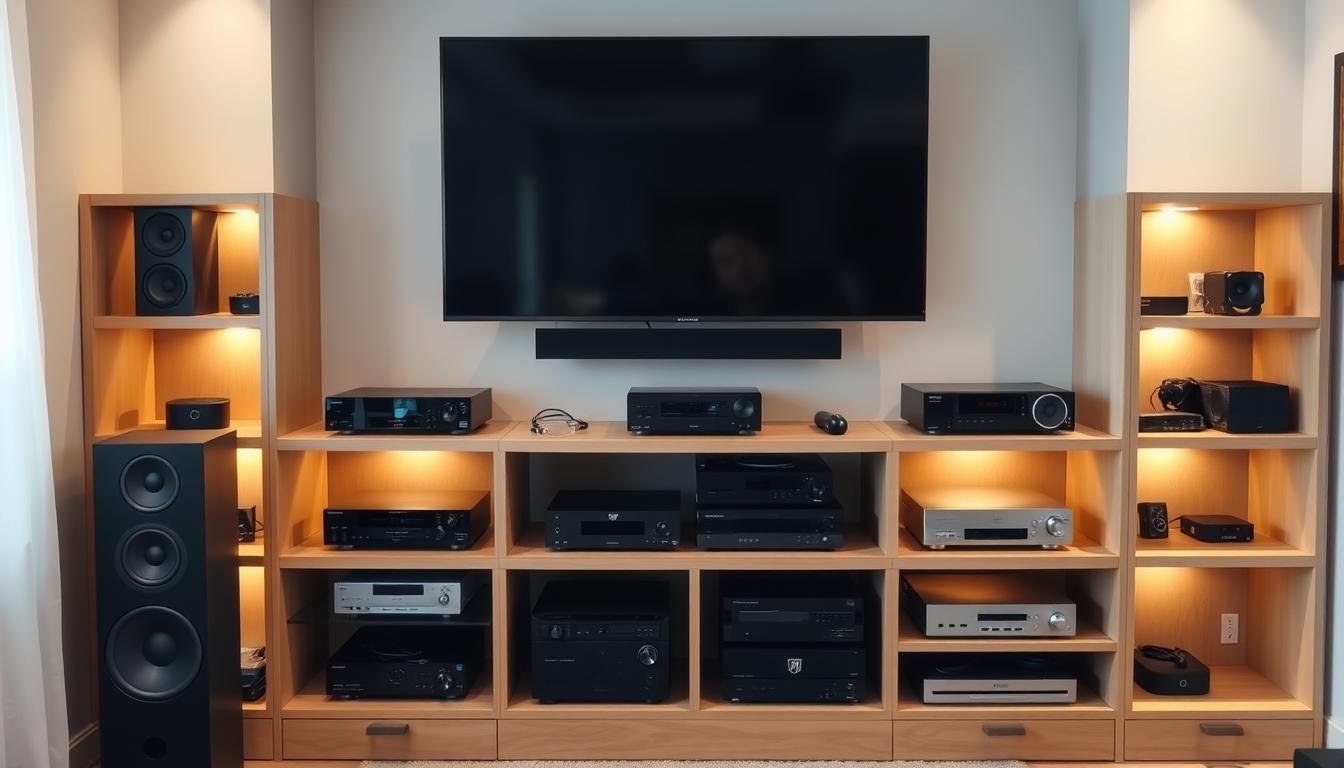
Begin by listing all the components you need to store. Consider the length and size of each item, as well as their placement. For example, heavier devices like amplifiers should be placed at the bottom for stability. This lowers the center of gravity and reduces the risk of tipping.
Ventilation is another critical factor. Open designs or ventilated shelves help prevent overheating. Ensure there’s enough space around each device for proper airflow. This not only extends the life of your electronics but also enhances performance.
Incorporating Aesthetic and Functional Design
Balancing functionality with aesthetics is key. Choose materials that complement your room’s décor while providing durability. For example, solid wood or steel offers both strength and a polished look. Open shelves are great for easy access, while closed cabinets can hide cables and smaller items.
Think about how you’ll store accessories like remotes and cables. Built-in drawers or small compartments can keep these items organized. A well-planned design not only looks good but also makes your setup more efficient.
Finally, ensure your layout allows for frequent access. Leave a foot of clearance around the wall for easy movement. This ensures you can reach your gear without hassle, making your home theater experience more enjoyable.
Measuring and Marking Your Wall for Installation
Accurate measurements are the foundation of a secure and functional installation. Before you begin, gather your tools and ensure your workspace is ready. Precision at this stage will save time and prevent errors later.
Identifying Stud Locations and Determining Shelf Length
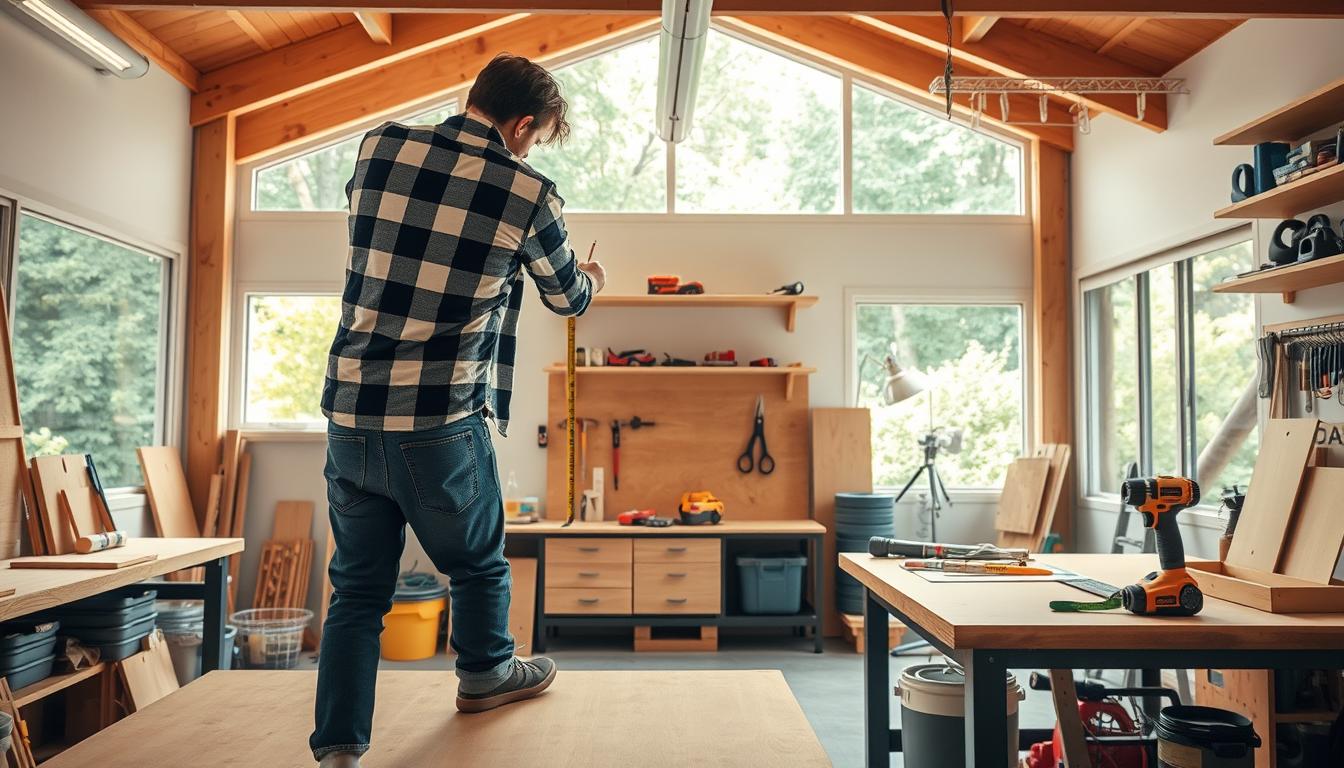
Start by locating the studs in your wall. Use a stud finder to ensure you mark the exact positions. This step is crucial for stability, as studs provide the primary support for your project.
Next, measure the required length of your shelf. Consider the space needed for your electronics and accessories. Leave a ½-inch gap on each side for ventilation and ease of installation.
Setting Up Precise Drill Points and Overhangs
Once the studs are marked, determine the placement of your drill points. Measure carefully to ensure the shelf aligns perfectly with the studs. This guarantees a secure fit and prevents wobbling.
For a clean look, plan for a slight overhang. An 18-inch cut-out is ideal for most setups. Mark the wall clearly to avoid mistakes during drilling.
| Tool | Purpose |
|---|---|
| Stud Finder | Locate wall studs |
| Measuring Tape | Determine shelf length |
| Pencil | Mark drill points |
| Level | Ensure straight alignment |
Double-check all measurements before proceeding. A well-marked wall ensures a smooth installation process and a professional finish.
Framing and Structural Considerations
Proper framing is the backbone of any durable storage solution. Without a solid foundation, even the best design can fail. This step ensures your project remains stable and functional for years to come.
Installing Support Studs and Reinforcements
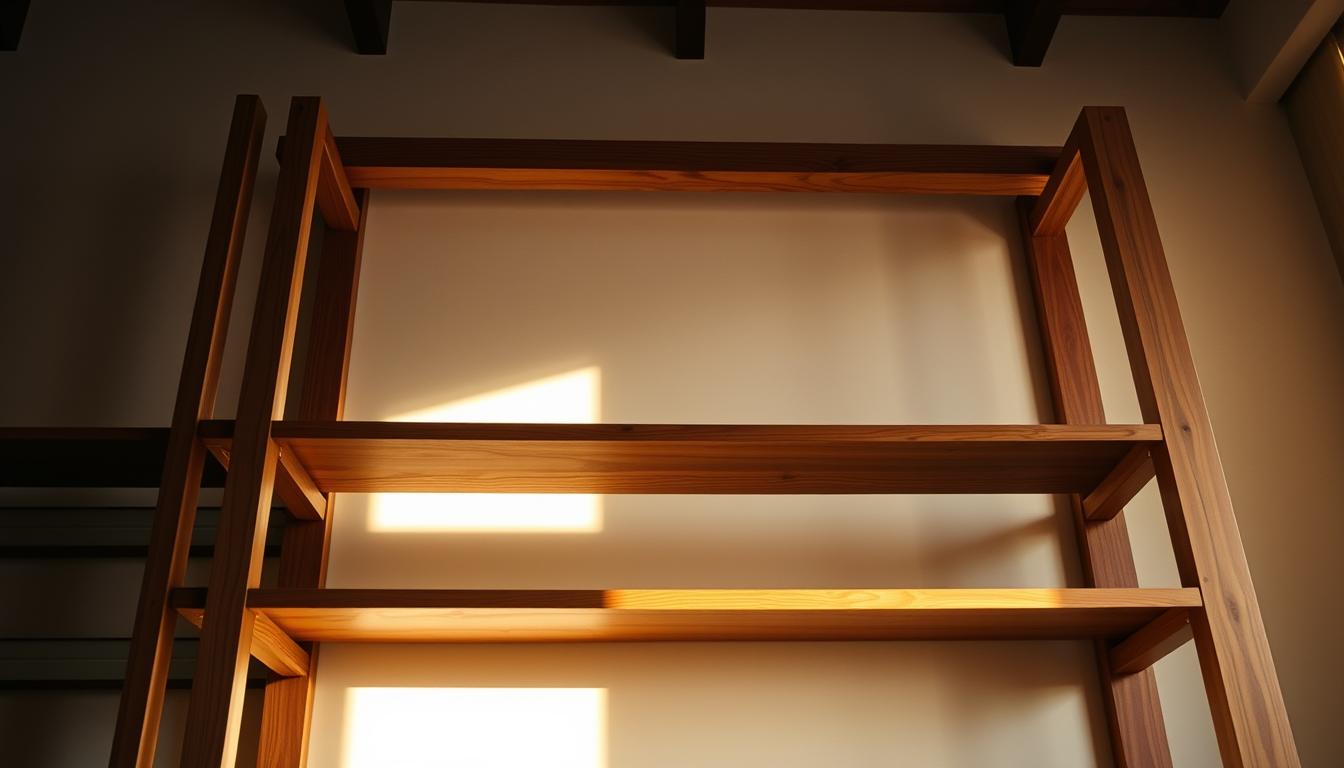
Start by identifying the existing studs in your wall. These provide the primary support for your project. If needed, add extra studs to strengthen the frame. This is especially important for heavier components.
Measure the length of each reinforcement piece carefully. Ensure it fits snugly between the studs. Secure each piece in place using wood screws for maximum stability.
Ensuring Stability Around the Cut-out
Framing the cut-out area is critical for long-term stability. Reinforce the sides with additional studs to prevent sagging. This step also helps distribute weight evenly across the frame.
Use a level to ensure everything is aligned correctly. A well-constructed frame guarantees your shelf will hold heavy components reliably. Take your time to execute each step in the proper way.
| Material/Tool | Purpose |
|---|---|
| Extra Studs | Strengthen the frame |
| Wood Screws | Secure reinforcements |
| Level | Ensure straight alignment |
| Measuring Tape | Determine reinforcement length |
By focusing on proper framing and reinforcement, you’ll create a storage solution that’s both sturdy and reliable. This attention to detail ensures your project stands the test of time.
DIY Wooden Shelves for Organizing Your Home Theater Gear
Building a sturdy framework is the first step to ensuring your storage solution lasts. Proper construction and reinforcement are essential for both functionality and aesthetics. This section will guide you through creating secure supports and integrating polished aluminum face plates for a professional finish.
Constructing and Securing Shelf Supports
Start by aligning your supports with the center of the wall. This ensures even weight distribution and stability. Measure the length of each support carefully, leaving enough space for ventilation and accessibility.
Secure the supports using wood screws for maximum durability. Drill pilot holes to prevent splitting the wood. Double-check the alignment with a level to ensure everything is straight and balanced.

Integrating Aluminum Face Plates and Custom Notches
Cut aluminum face plates to 1/16″ thickness with a ½-inch overhang. This extends beyond the hole for added strength. Position the plates carefully, ensuring they align with the supports and provide a clean, polished look.
Create custom notches to allow the face plates to elegantly support each component. This step ensures a seamless fit and enhances the overall design. Secure the plates with screws, ensuring every end is reinforced for stability.
Finally, check the balance of the entire assembly. A well-balanced installation ensures the shelf occupies the proper room on your wall without tipping or sagging. This attention to detail guarantees a professional and durable result.
Finishing Touches and Customizations
The final touches of your project can transform it from functional to extraordinary. These steps ensure your creation not only looks professional but also reflects your personal style. Let’s dive into the details of staining, painting, and adding custom features.
Applying Gel Stain, Polyurethane, and Textured Paint
Start by preparing the surface with a pre-stain conditioner. This ensures an even application of the gel stain. Gel stains are ideal for woods like pine, as they minimize blotching and provide a rich, consistent color.
Once the stain dries, apply a coat of spray-on polyurethane. This protects the wood and enhances its natural beauty. For a textured finish, use matte paint. It adds depth and character to the piece, making it stand out.
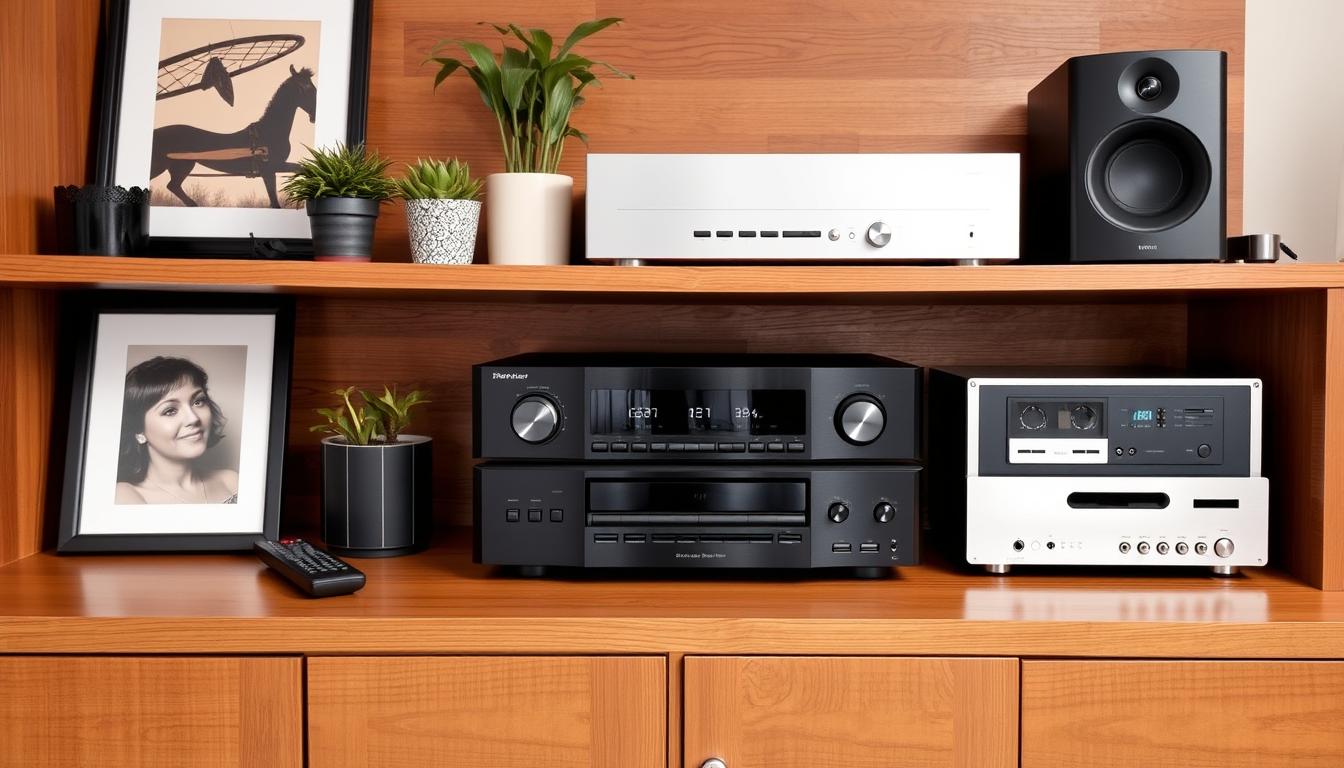
Adding Custom Features and Accessories
Custom features elevate the design and functionality of your project. Consider adding decorative notches along the side for a seamless transition. These small details make a big difference in the overall look.
Use a drill to attach accessories like hooks or small compartments. These additions help store items like remotes or cables, keeping everything organized. Ensure each piece aligns perfectly for a cohesive finish.
“The right finishing touches can turn a simple project into a work of art. Take your time to ensure every detail is perfect.”
Here’s a table of tools and materials you’ll need for the finishing process:
| Material/Tool | Purpose |
|---|---|
| Gel Stain | Enhance wood color |
| Polyurethane | Protect and seal wood |
| Textured Paint | Add matte finish |
| Drill | Attach accessories |
By focusing on these finishing touches, you’ll create a project that’s both beautiful and functional. Every step ensures your work stands out and serves its purpose perfectly.
Mounting and Securing Your Shelves to the Wall
Mounting your storage solution correctly ensures both safety and functionality. Proper alignment and secure fixation are essential to support heavy components and maintain stability over time. Follow these steps to achieve a professional and durable installation.
Aligning Brackets with Studs for Maximum Support
Start by locating the studs in your wall using a stud finder. Studs are typically spaced 16 inches apart, providing the primary support for your project. Mark the stud locations clearly to ensure your brackets align perfectly.
Position the mounting brackets at the center of the studs for even weight distribution. This step is crucial for stability, especially when storing heavy electronics. Double-check the alignment with a level to ensure everything is straight.
Using Screws and Angle Brackets for a Secure Fit
Secure the brackets to the studs using 1⅝-inch screws. This length ensures a strong grip on the stud, preventing the shelf from loosening over time. Drill pilot holes to avoid splitting the wood and ensure a smooth installation.
Attach angle brackets to the end of the shelf for additional support. These brackets reinforce the structure, preventing sagging or tipping. Use a drill to secure each bracket firmly in place.
“Proper mounting is the key to a long-lasting and safe storage solution. Take your time to ensure every step is executed correctly.”
Here’s a table of tools and materials you’ll need for the mounting process:
| Tool/Material | Purpose |
|---|---|
| Stud Finder | Locate wall studs |
| 1⅝-inch Screws | Secure brackets |
| Angle Brackets | Reinforce shelf ends |
| Drill | Install screws and brackets |
For additional tips on optimizing your setup, check out how bookshelf speakers can enhance your home theater experience. By following these steps, you’ll create a secure and functional storage solution that stands the test of time.
Conclusion
Creating a custom storage solution can transform your space into a well-organized and efficient area. From planning to finishing touches, each step ensures your project meets your specific needs. Careful measurements, high-quality materials, and precise installation are key to achieving a professional result.
This project is designed to help you maximize your available place while maintaining a clean and functional layout. By following the steps outlined, you can build a shelf that not only looks great but also supports your equipment securely.
Take the time to apply these techniques and enjoy the benefits of a personalized design. Share your finished project and revisit this guide for future customizations. With the right approach, you can create a storage solution that enhances your space and meets your needs perfectly.
FAQ
How do I determine the right length for my shelves?
Measure the available wall space and consider the items you plan to store. Ensure the length accommodates your gear while leaving enough room for easy access.
What tools are essential for building wooden shelves?
You’ll need a drill, screws, a level, a stud finder, and a saw. These tools help ensure precise measurements and secure installation.
How do I locate studs in my wall?
Use a stud finder to detect the vertical supports behind the wall. Mark their positions to ensure your shelves are securely anchored.
What materials work best for sturdy shelves?
Solid wood or plywood are excellent choices. They provide durability and can support the weight of your home theater equipment.
How can I ensure my shelves are level?
Use a level during installation to check alignment. Adjust the brackets or supports as needed to achieve a balanced look.
Can I customize the finish of my shelves?
Yes, you can apply gel stain, polyurethane, or textured paint to match your room’s aesthetic. Custom finishes add a personal touch.
How do I secure shelves to the wall for maximum stability?
Align brackets with studs and use screws or angle brackets. This ensures the shelves are firmly attached and can handle heavy items.
What’s the best way to organize gear on the shelves?
Group similar items together and leave space for cables and accessories. This keeps your setup neat and functional.
Can I add custom features to my shelves?
Absolutely. Consider adding notches for cables, aluminum face plates, or additional supports to enhance functionality and style.