Did you know that over 70% of Americans prefer handmade items for their homes? Crafting your own serving tray not only adds a personal touch but also ensures it fits your unique style. This guide will walk you through creating a functional and elegant tray perfect for entertaining.
Using materials like walnut and maple, you can build a tray that’s both durable and stylish. The right finish, such as Osmo Top Oil, enhances the wood’s natural beauty while protecting it. Whether you’re a seasoned woodworker or a beginner, this project is designed to be customizable and straightforward.
From selecting the right wood to applying the final touches, this article covers every step. You’ll learn how to assemble the tray, add beveled edges, and choose finishes that match your home decor. Get ready to create a piece that’s as practical as it is beautiful.
Key Takeaways
- Handmade serving trays add a personal touch to your home.
- Walnut and maple are excellent materials for durability and style.
- Customize the size and design to suit your needs.
- Use finishes like Osmo Top Oil for protection and aesthetics.
- This project is beginner-friendly and highly rewarding.
Introduction and Project Overview
Creating a serving tray tailored to your needs can transform your home entertainment experience. Whether you’re hosting a movie night or enjoying a quiet evening, a well-designed tray keeps everything organized and within reach.
Understanding the Purpose of Your Tray
The primary role of a serving tray is to make transporting snacks and drinks effortless. During gatherings, it ensures your food and beverages stay secure and accessible. This project combines functionality with style, making it a perfect addition to your home.
Customizing the size and design allows you to match your decor. For example, a tray measuring 18” long and 12” wide fits most spaces comfortably. The thickness of the base, typically 1”, ensures sturdiness while maintaining a sleek look.

Benefits for Home Theater Use
Using a tray in your home theater setup offers several advantages. It keeps your space tidy, preventing spills and clutter. Additionally, it adds a touch of elegance to your entertainment area.
This project blends woodworking techniques with creative design. You’ll learn how to assemble the tray, add beveled edges, and choose finishes that enhance its appearance. The process is beginner-friendly, making it accessible to all skill levels.
To guide you, we’ve included video tutorials and step-by-step instructions. These resources ensure you complete the project the right way, achieving professional results.
| Feature | Benefit |
|---|---|
| Customizable Size | Fits your space perfectly |
| Durable Materials | Ensures long-lasting use |
| Stylish Design | Enhances home decor |
Essential Materials and Tools for Your DIY Project
Building a functional and stylish serving tray starts with the right materials and tools. Choosing high-quality supplies ensures your project is both durable and visually appealing. From wood species to finishing products, every detail matters.

Wood Species and Finishing Supplies
Selecting the right wood is crucial for your tray. Walnut and maple are excellent choices due to their durability and natural beauty. These hardwoods provide a sturdy base while adding a touch of elegance to your design.
For finishing, sandpapers with grits of 120 and 180 are ideal for smoothing the surface. A natural finish like Osmo Top Oil enhances the wood’s color while offering protection. This combination ensures your tray looks professional and lasts for years.
Hardware and Safety Equipment
Hardware such as brackets, dowels, and wood glue is essential for assembly. These components ensure your tray remains sturdy and secure. Using the right hardware guarantees a polished final product.
Safety is equally important in woodworking. Always wear protective gear like goggles and gloves. Proper handling of tools like table saws and miter saws prevents accidents and ensures precision.
- Materials: Walnut, maple, wood glue, sandpapers, Osmo Top Oil.
- Tools: Table saw, miter saw, planer, safety gear.
- Tips: Choose durable wood, sand thoroughly, prioritize safety.
By gathering the right materials and tools, you set the foundation for a successful project. This approach ensures your tray is both functional and visually stunning.
Designing the Tray Base and Selecting Wood
The foundation of any great tray lies in its wood choice and layout. Selecting the right material ensures both durability and aesthetic appeal. High-quality species like walnut and maple are ideal for creating a sturdy and stylish base.
Choosing Between Walnut, Maple, and Other Options
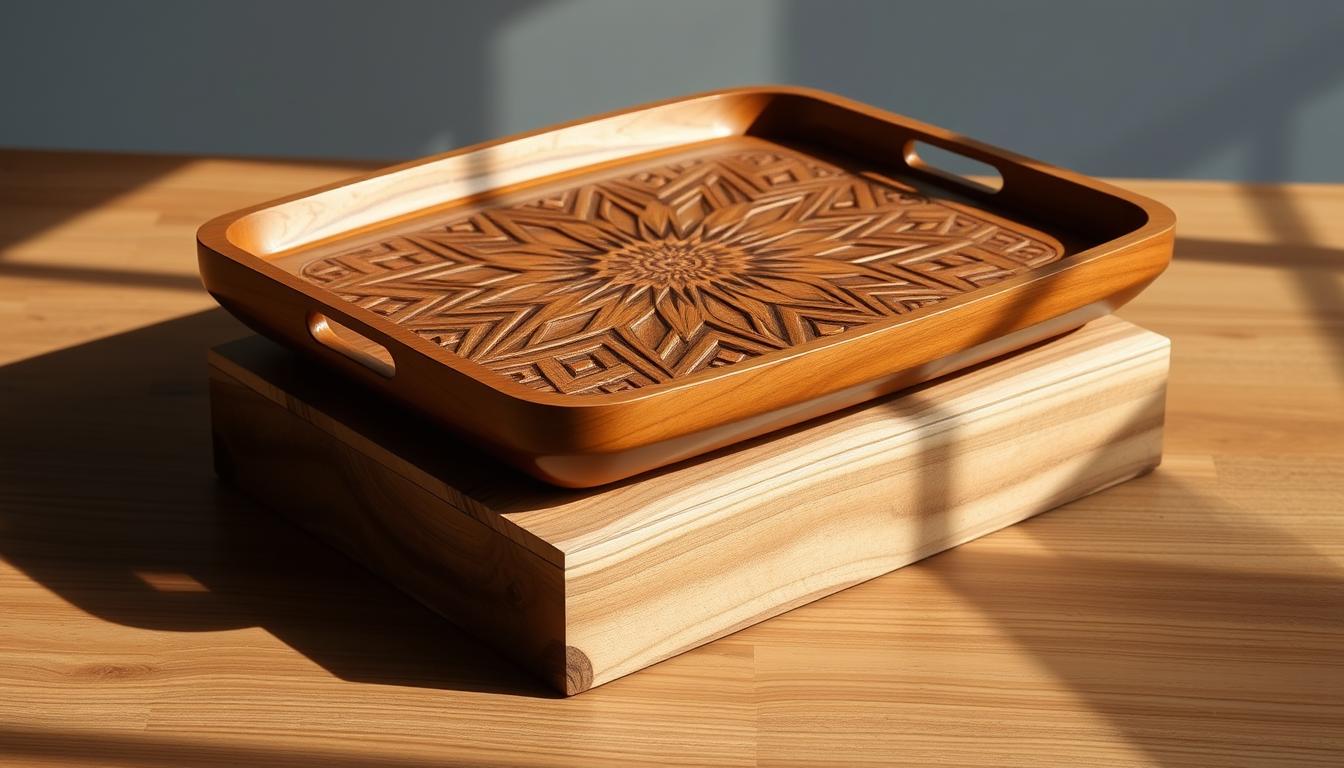
Walnut is a popular choice for its rich color and strength. Pairing it with a maple stripe adds a modern contrast, enhancing the tray’s visual appeal. The difference in grain and tone between these woods creates a striking design.
When selecting your material, consider durability and final look. Hardwoods like walnut ensure the tray can withstand daily use. Maple, with its lighter hue, complements darker woods beautifully.
Deciding on Tray Dimensions and Layout
The size of your tray depends on its intended use. A base measuring 18” long and 12” wide is versatile for most needs. The thickness of the board, typically 1”, provides stability while maintaining a sleek profile.
When gluing and joining boards, focus on the bottom panel’s strength. A well-constructed base ensures the tray remains stable and functional. Careful planning of dimensions and layout guarantees a polished final product.
“The right wood choice and dimensions are key to a tray that’s both beautiful and practical.”
By prioritizing material quality and thoughtful design, you create a tray that’s as functional as it is elegant. This approach ensures your project is a success from start to finish.
Creating a Stable Tray Base: Cutting and Assembly Techniques
The stability of your tray starts with accurate cutting and assembly. A well-constructed base ensures your project is both functional and durable. Follow these steps to achieve a polished result.
Step-by-Step Cutting Instructions
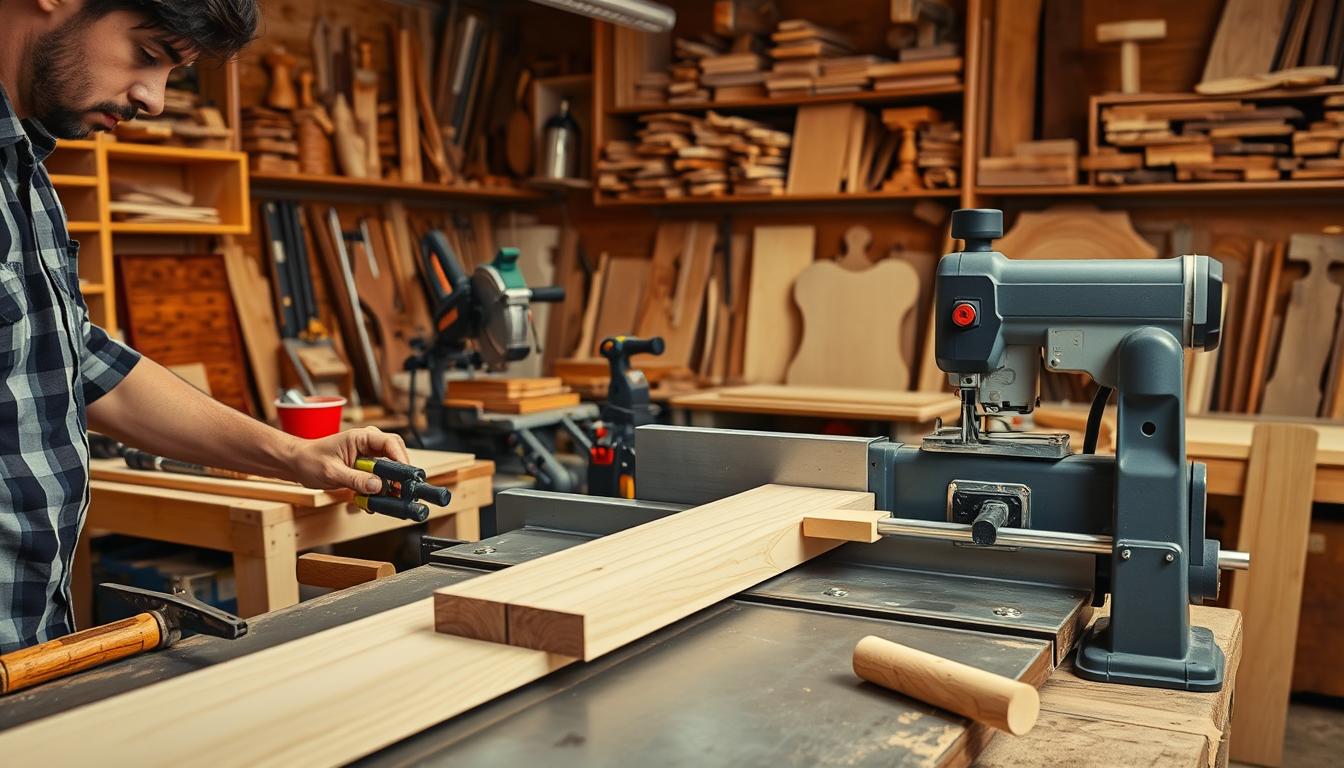
Begin by milling the walnut board into the desired dimensions. Use a table saw to cut the board into precise pieces. For a modern touch, offset the maple stripe during the cutting process.
Set the table saw blade to a 45-degree angle for beveling the edges. This technique ensures clean aesthetics and a professional finish. Double-check measurements before making any cuts to avoid errors.
Joining Pieces and Achieving Clean Edges
Apply wood glue evenly to the edges of the pieces. Clamp them together firmly to ensure a secure bond. Allow sufficient drying time for the glue to set completely.
Use a table saw to refine the edges further. Beveling at the correct angle enhances the tray’s appearance and functionality. Sand the edges lightly to remove any roughness.
Proper clamping and drying are crucial for a stable base. Ensure the bottom panel is securely joined to maintain the tray’s strength. This step-by-step approach guarantees a flawless final product.
| Step | Key Detail |
|---|---|
| Cutting | Use a table saw for precise cuts |
| Beveling | Set blade to 45 degrees for clean edges |
| Joining | Apply glue evenly and clamp securely |
By following these techniques, you’ll create a tray base that’s both sturdy and visually appealing. Refer to the video for additional tips on achieving professional results.
Designing and Crafting Custom Handles
Handles are more than functional—they’re a design statement. The right handle can transform your tray into a stylish and practical piece. By focusing on material, size, and aesthetics, you can create handles that enhance both usability and visual appeal.
Handle Material Selection and Sizing
Start by choosing materials that complement your tray base. Combining walnut with maple creates a striking contrast while maintaining durability. Test different dimensions by holding the handle to ensure it feels natural in your hand. A comfortable grip is essential for daily use.
Adjust the thickness and width for optimal ergonomics. Trimming the edges ensures a smooth finish, while the right size guarantees ease of handling. Use tools like a table saw to shape the handles precisely.

Integrating Handle Design with Tray Aesthetics
The design of your handles should align with the overall look of the tray. Consider the grain and color of the wood to create a cohesive appearance. A well-integrated handle enhances the tray’s elegance and functionality.
Secure the handles using brackets or dowels for added stability. This step ensures they remain firmly attached while maintaining a polished look. Custom handles not only improve usability but also add a personal touch to your project.
| Feature | Benefit |
|---|---|
| Material Contrast | Enhances visual appeal |
| Ergonomic Sizing | Ensures comfort and ease of use |
| Secure Attachment | Provides durability and stability |
For more tips on enhancing your home theater setup, explore our detailed guide. Custom handles are a small yet impactful way to elevate your tray’s design and functionality.
Secure Attachment Methods for Handles
Ensuring your tray handles are securely attached is crucial for both functionality and durability. A well-attached handle not only enhances usability but also adds to the overall aesthetic of your project. This section will guide you through the techniques to achieve a professional-grade attachment.
Using Brackets and Dowels for Reinforcement
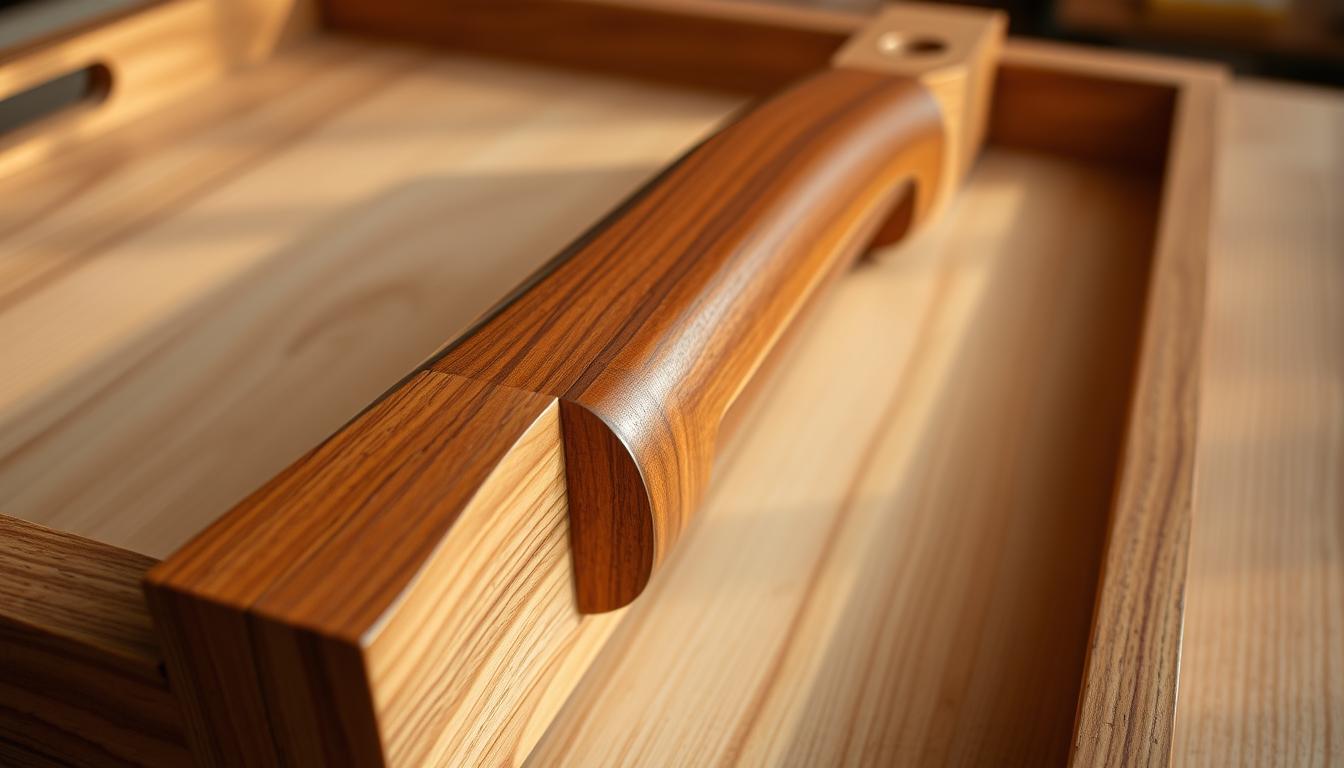
Start by crafting custom walnut brackets for your handle. Use a ripping blade to create precise notches in the bracket until the handle fits snugly. This ensures a seamless integration between the handle and the tray.
For added stability, reinforce the attachment with dowels. Use a plywood template to drill holes for the dowels, ensuring perfect alignment. This method guarantees that the handles remain securely in place, even with regular use.
- Custom Brackets: Crafted from walnut for durability and style.
- Precision Notches: Created with a ripping blade for a snug fit.
- Dowel Reinforcement: Ensures long-lasting stability.
Safety is paramount during this process. Always wear protective gear and double-check measurements before drilling. Accuracy in woodworking not only improves the final product’s durability but also ensures a polished look.
“Secure hardware integration is the key to a professional-grade tray.”
By following these steps, you’ll create handles that are both functional and visually appealing. This attention to detail ensures your tray is ready for everyday use while maintaining its elegance.
Finishing Touches: Sanding, Beveling, and Applying a Protective Finish
Achieving a flawless finish on your project requires attention to detail. The final steps of sanding, beveling, and applying a protective coating ensure your tray is both durable and visually stunning. These techniques enhance the wood’s natural beauty while preparing it for everyday use.
Sanding Techniques for a Smooth Surface
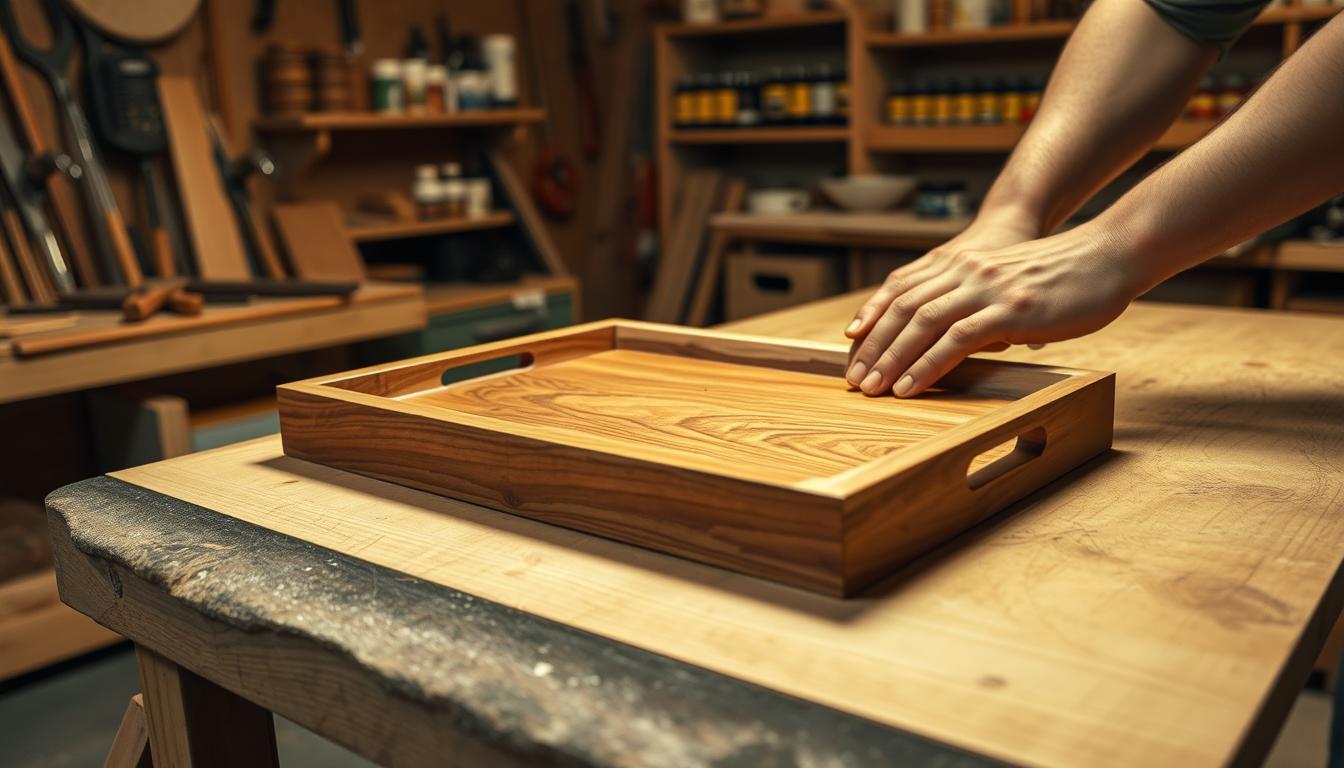
Start by sanding the surface with 120-grit sandpaper to remove any rough spots. Progress to 180-grit for a smoother finish. This step ensures the wood is ready for the final coating. Pay extra attention to the edges to prevent splinters.
Beveling the edges adds a professional touch. Use a table saw set to a 45-degree angle for clean, rounded edges. This technique not only improves the tray’s appearance but also makes it safer to handle.
Choosing and Applying the Right Wood Finish
Selecting the right finish is crucial for both protection and aesthetics. Options like Osmo Top Oil or Mahoney’s Walnut Oil enhance the wood’s natural color while providing a food-safe surface. Apply the finish evenly using a white cleaning pad for optimal absorption.
Buff the surface after application to achieve a smooth, polished look. Allow sufficient drying time between coats for the best results. This step ensures the finish is durable and long-lasting.
“A consistent finish not only protects the wood but also highlights its unique grain and texture.”
For a detailed guide, refer to the video tutorial included in this project. It demonstrates proper finishing techniques for a professional-grade result. By following these steps, you’ll create a tray that’s as functional as it is beautiful.
DIY Wooden Trays for Theater Snacks and Drinks: Customization and Design Ideas
Personalizing your serving tray allows you to match it perfectly to your home decor. By altering wood species, adjusting dimensions, or adding unique design elements, you can create a piece that’s both functional and visually appealing. This section explores creative ways to customize your project to suit your style.
Modifying Wood Species and Dimensions to Suit Your Style
Start by experimenting with different wood species. Walnut and maple are excellent choices for their durability and contrasting colors. Combining these materials creates a striking look while ensuring your tray is sturdy enough for daily use.
Adjusting the dimensions is another way to tailor your project. A base measuring 18” long and 12” wide fits most spaces comfortably. You can also modify the thickness of the bottom panel to match your needs. This flexibility ensures your tray is both practical and stylish.
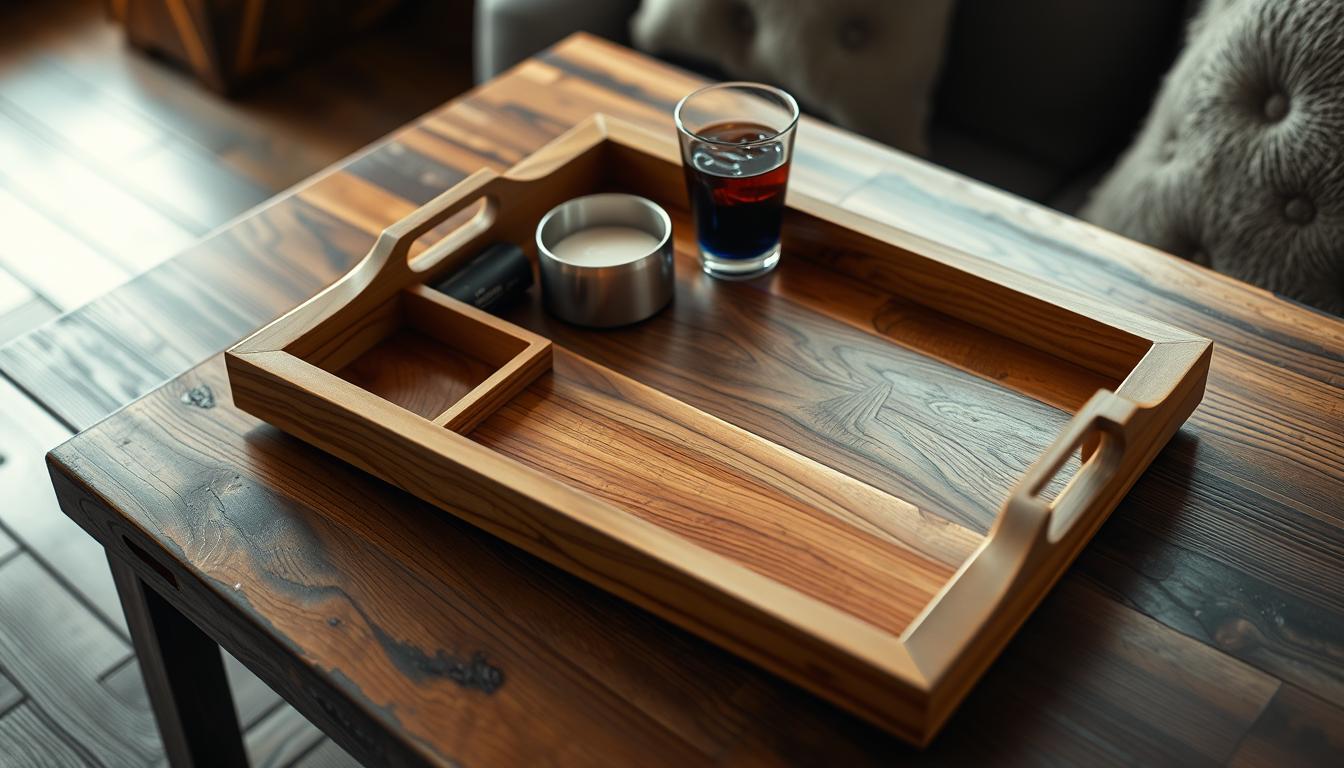
Refining the overall design is key to making your wooden tray unique. Consider adding chamfers or round overs to the edges for a polished finish. These small details elevate the tray’s appearance while improving its functionality.
Practical adjustments can also enhance usability. For example, wider handles provide a more comfortable grip. You can also experiment with finishes like Osmo Top Oil to protect the wood and enhance its natural beauty.
“Customization transforms your tray into a one-of-a-kind piece that reflects your personal style.”
By exploring these ideas, you’ll create a serving tray that’s as unique as your home. Whether you’re hosting a movie night or enjoying a quiet evening, a customized tray adds both elegance and practicality to your space.
Incorporating Style and Functionality in Your Home Theater Setup
Your home theater setup can be elevated with a stylish and functional serving tray. Beyond its practical use, the tray can enhance the overall decor of your space. By coordinating its look and exploring creative uses, you can make it a versatile addition to your entertainment area.
Coordinating Tray Look with Decor
Matching your tray to your home theater’s decor ensures visual harmony. Choose materials and finishes that complement your seating and lighting. For example, a walnut tray with a natural finish pairs well with leather furniture and warm tones.
Consider the size and design of the tray to fit your space. A sleek, modern tray works well in contemporary setups, while a rustic design suits traditional themes. The right choice enhances both functionality and aesthetics.
Creative Uses Beyond Serving Snacks and Drinks
Your tray can serve multiple purposes in your home theater. Use it as a decorative centerpiece to display candles or plants. It can also act as an organizer for remotes, magazines, or gaming accessories.
For a unique touch, repurpose the tray as a workstation accessory. It’s perfect for holding laptops or notebooks during movie nights. These creative uses maximize its value while keeping your space tidy.
| Use | Benefit |
|---|---|
| Decorative Centerpiece | Adds elegance to your space |
| Organizer | Keeps essentials within reach |
| Workstation Accessory | Enhances functionality |
Emphasize the edges and finishes of your tray for added sophistication. Beveled edges and a polished look create a refined appearance. These details make the tray a standout piece in your home theater.
“A thoughtfully designed tray can elevate both the practical serving of food and the overall ambiance of your space.”
For more inspiration, explore video tutorials on integrating functionality with aesthetics. A well-designed tray not only enhances your home theater but also reflects your personal style.
Conclusion
Crafting a custom serving tray is a rewarding journey that combines creativity and practicality. From selecting the right materials to applying the final finish, each step ensures your tray is both functional and stylish. The process highlights the importance of careful planning and precision, resulting in a piece that’s uniquely yours.
This project isn’t just about serving food—it’s about enhancing your home’s decor. A well-designed tray can elevate your living space, whether it’s used in your home theater or as a decorative centerpiece. The versatility of a handcrafted tray makes it a valuable addition to any room.
Embrace this project as a creative outlet. Experiment with different finishes, handle designs, and dimensions to match your personal style. The step-by-step guide ensures you achieve professional results, even as a beginner. Your finished tray will be a statement piece, blending practicality with elegance.
Take pride in your creation. A custom tray not only serves a purpose but also reflects your craftsmanship and attention to detail. Start your project today and enjoy the satisfaction of building something truly unique.
FAQ
What types of wood are best for making a serving tray?
Walnut, maple, and oak are excellent choices due to their durability and aesthetic appeal. Each wood species offers unique grain patterns and colors to match your decor.
How do I determine the right size for my tray?
Consider the items you plan to carry. A standard size is around 12×18 inches, but you can adjust dimensions based on your needs and the space where it will be used.
What tools are essential for this project?
You’ll need a saw, drill, sandpaper, clamps, and a measuring tape. Safety equipment like gloves and goggles is also recommended for protection.
How can I ensure the tray edges are smooth and safe?
Use a router or sandpaper to bevel the edges. This not only enhances the look but also prevents splinters and sharp corners.
What’s the best way to attach handles securely?
Brackets and dowels provide strong reinforcement. Pre-drill holes to avoid splitting the wood and ensure the handles are firmly attached.
How do I choose the right finish for my tray?
Food-safe oils like mineral oil or walnut oil are ideal. They protect the wood while maintaining its natural look and are safe for serving food.
Can I customize the tray to match my home decor?
Absolutely. Experiment with wood species, finishes, and handle designs to create a piece that complements your style and color scheme.
What if I want to use the tray for purposes other than serving?
These trays are versatile. Use them as decorative pieces, organizers, or even as part of your table setting for a cohesive look.
How do I maintain the tray’s appearance over time?
Regularly clean it with a damp cloth and reapply oil as needed. Avoid soaking the wood to prevent warping or damage.