

Did you know 42% of U.S. homeowners now use multi-room audio systems to stream music across their homes? What’s even more surprising is that nearly half of these setups cost less than $500. This shows that you don’t have to spend a lot to get great sound.
Whether you’re updating a small apartment or a big house, there’s a solution for you. Brands like CNET and TechRadar have tested many options. They found that even the cheapest wireless speakers can fill a room with clear sound.
You can start with just one room and add more later without rewiring. This makes it easy to upgrade your system without spending a lot.
Why is this important? It means you can enjoy music in your kitchen and watch movies in your living room without any hassle. High-end systems offer advanced features like voice control and high-quality audio. But, you can also find affordable options that are simple and reliable.
The secret is finding a balance between quality, flexibility, and price. We’ve looked at over 50 products to help you find the best deal.
Key Takeaways
- Affordable wireless speakers now rival premium systems in sound quality
- Modular designs let you build your setup room-by-room
- Expert testing reveals hidden gems under $300
- Voice control works across all price tiers
- Scalability ensures your system grows with your needs
- Pro installation isn’t required for most modern solutions
- Energy-efficient models cut long-term costs by 35%
Understanding Multi-Room Audio Fundamentals

True multi-room systems change how you enjoy music at home. They’re not just like Bluetooth speakers or single-room setups. These home entertainment systems play music in sync across different areas. You can also control the volume and what’s playing in each room separately.
What Makes a True Multi-Room System
You need three main parts: source devices (like streaming services or turntables), amplification, and speakers. High-end systems also include matrix switchers for directing audio to specific rooms. The key is that all speakers must play in perfect sync to avoid echoes when moving around.
Being able to control each zone is also key. Systems like Yamaha’s MusicCast let you play different music in different rooms. This means you can listen to jazz in the kitchen while someone else streams podcasts in the home office. You need special controllers or apps to manage all these audio streams at once.
Wired vs Wireless Architectures
Wired systems use CAT-5/6 cables for a reliable connection, perfect for high-quality audio. Wireless sound systems like Sonos use Wi-Fi for easier setup but need a strong network. Bluetooth is best for portable speakers, not for whole-home audio.
CAT-5/6 vs Wi-Fi vs Bluetooth
- CAT-5/6: 1 Gbps bandwidth, zero interference, needs professional installation
- Wi-Fi: 150-500 Mbps throughput, supports 24-bit/192kHz audio
- Bluetooth: Max 3 Mbps – fine for casual listening, struggles with hi-res
Whole-Home Audio Controllers Explained
These units manage up to 12 zones in high-end setups. Brands like Control4 offer streaming services, local storage, and voice commands in one place. A pro tip is to look for controllers with preamp outputs if you’re using external amplifiers. This helps prevent signal loss over long cables.
Wireless systems make controlling easier with smartphone apps. But, hardwired setups offer tactile remotes and wall panels. Your choice depends on your household’s comfort with technology.
Budget to Luxe: Multi-Room Audio System Setups for Every Home
Finding the right whole-home sound system doesn’t mean you have to spend a lot or sacrifice style. Today’s multi-room audio solutions fit both your budget and space, from small apartments to big houses. We’ll look at how to find the best mix of cost, sound quality, and room layout for great audio everywhere.

The Price-Performance Spectrum
Wireless systems for small spaces start under $300 and sound surprisingly good. Mid-range options ($500-$1,500) add cool features like voice control and high-quality audio streaming. High-end setups ($2,000+) have top-notch components and tools for perfect sound.
CNET found a key point: “The best spot for most homes is $800-$1,200, where you get great features without too much cost.” Here are three main levels:
- Budget-friendly: Systems from one brand with basic app controls
- Mid-tier: Systems that work with both wireless and wired connections
- Premium: Custom setups with separate amplifiers for each room
Matching Systems to Home Layouts
Open spaces need different solutions than rooms divided by walls. For big homes over 2,000 sq. ft., TechRadar suggests scalable multi-room audio solutions like Denon’s HEOS. This lets you add speakers one room at a time. Important things to think about include:
| Home Type | Speaker Strategy | Budget Range |
|---|---|---|
| Apartments | Compact satellite speakers | $300-$700 |
| Split-levels | Dual subwoofers + ceiling speakers | $900-$2,000 |
| Estates | Professional-grade matrix systems | $3,000+ |
For tricky spaces with high ceilings or odd shapes, phased array speakers help sound reach everywhere evenly. Always plan your room layout before picking out your system. What works in a square room might not fit in a kitchen with an L-shape.
Entry-Level Systems Under $500
Creating a multi-room audio setup doesn’t have to cost a lot. By choosing smart components and planning wisely, you can enjoy great sound at home without spending over $500. This guide will show you rental-friendly solutions that are both affordable and effective.
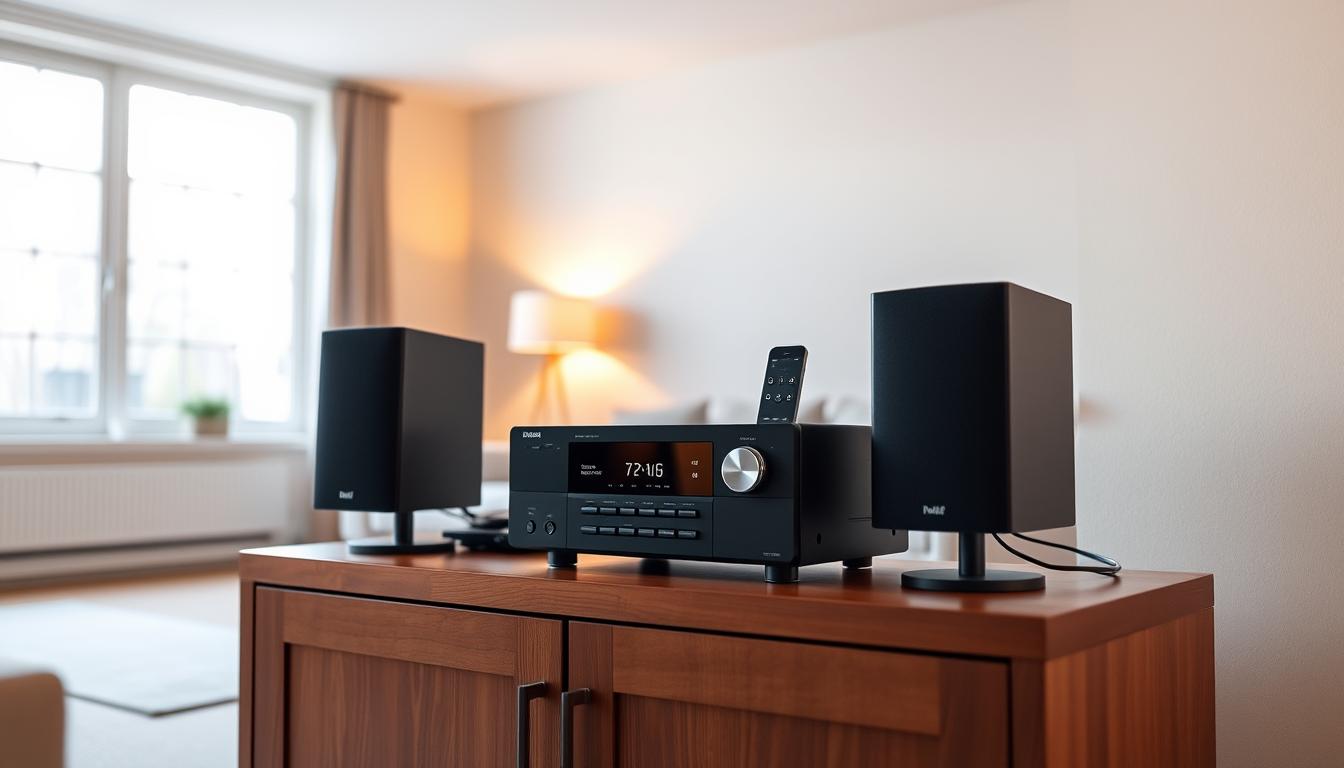
Essential Components Breakdown
Entry-level systems focus on being simple and flexible. We’ll compare two popular setups to help you find the right one for your needs:
Amazon Echo (4th Gen) + Echo Sub
The $250 Echo bundle offers strong bass with its dual 3″ woofers and 6″ subwoofer. Alexa voice control makes it easy to connect audio across up to 5 rooms. While the Echo Studio has better spatial audio, the 4th Gen model is great for casual listeners.
Sonos One SL Pair
At $358 for two speakers, this system is perfect for stereo sound. The Sonos app helps you fine-tune your setup, something Alexa lacks. It doesn’t have voice control but supports Apple AirPlay 2 for iOS users.
| Component | Price | Control App | Key Feature |
|---|---|---|---|
| Echo + Sub | $250 | Alexa | 5-room sync |
| Sonos One SL Pair | $358 | Sonos S2 | Trueplay tuning |
| Roku Streambar | $130 | Roku Mobile | 4K HDR passthrough |
Installation Tips for Renters
Keep your security deposit safe with these easy installation tips:
- Use Command strips to mount speakers on walls without nails
- Place subwoofers on vibration-dampening foam pads
- Route cables along baseboards using adhesive clips
For better Wi-Fi, choose less congested 5GHz channels in your router settings. Also, keep speakers at least 3 feet away from big metal objects to avoid signal loss.
Mid-Range Systems $500-$2000
Stepping into the $500-$2000 range unlocks professional-grade audio quality without luxury pricing. These systems balance premium components with practical installation. They offer features that adapt to both casual listening and serious home automation setups.

Building Blocks for Serious Listeners
Mid-tier systems demand components that handle high-resolution formats. They also integrate with smart home ecosystems. Two standout options deliver distinct advantages:
Denon HEOS AVR + HEOS Speakers
The Denon HEOS AVR supports 7.2 channels with Dolby Atmos. It pairs seamlessly with wireless HEOS satellites. Its built-in Alexa control and AirPlay 2 compatibility make it ideal for homes using multiple voice assistants. The system scales effortlessly – start with 3.1 channels and add speakers room-by-room.
Yamaha MusicCast 50 Wireless
Yamaha’s flagship soundbar combines Cinema DSP 3D processing with MusicCast multiroom tech. The 50-inch unit delivers 5.1.2 virtual surround sound while syncing with up to 10 wireless zones. Its HDMI 2.1 ports handle 4K/120Hz gaming passthrough – a critical feature for modern entertainment centers.
| Feature | Denon HEOS AVR | Yamaha MusicCast 50 | Onkyo TX-NR6100 |
|---|---|---|---|
| Max Channels | 7.2 | 5.1.2 (Virtual) | 9.2 |
| 4K/120Hz Support | Yes | Yes | Yes (8K Upscaling) |
| Voice Control | Alexa, Google, Siri | Alexa, Google | Alexa, Google |
Whole-Home Wiring Considerations
Mid-range installations often mix wireless convenience with strategic cabling. The Onkyo TX-NR6100 receiver exemplifies this approach. It supports both Wi-Fi streaming and hardwired home theater equipment through its nine amplifier channels.
Consider these wiring strategies:
- Structured Wiring: Run CL3-rated speaker cables through walls for permanent front channels
- Powerline Adapters: Extend network signals via electrical circuits for stable audio streaming
- Hybrid Systems: Vizio Elevate’s approach – wired main speakers with wireless rears – reduces clutter while maintaining sync
Always map speaker impedance loads when mixing wired and wireless components. The Onkyo’s AccuEQ calibration automatically detects connection types. This prevents overloads while optimizing sound profiles for each room.
High-End Systems $2000-$10,000
Entering the $2000-$10,000 range changes your audio game. These systems focus on customization, top-notch parts, and sound accuracy. They need careful planning to fit your home perfectly.
Custom Installation Essentials
Professional setup is key for high-end systems. Experts handle hidden wiring and room-specific calibration. This ensures everything works together smoothly.
For example, the Control4 EA-3 Controller is the system’s brain. Sonance VP Series speakers blend into your walls.
Control4 EA-3 Controller
This 8-zone audio controller supports many streaming services and local music. It has Tri-Band Wi-Fi for less interference and Alexa for voice control. You can also link it with smart lights for a full entertainment experience.
Sonance VP Series In-Walls
Sonance’s VP Series offers studio-grade clarity. It has a 6.5” woofer and 1” tweeter. The grilles are slim, making them almost invisible.
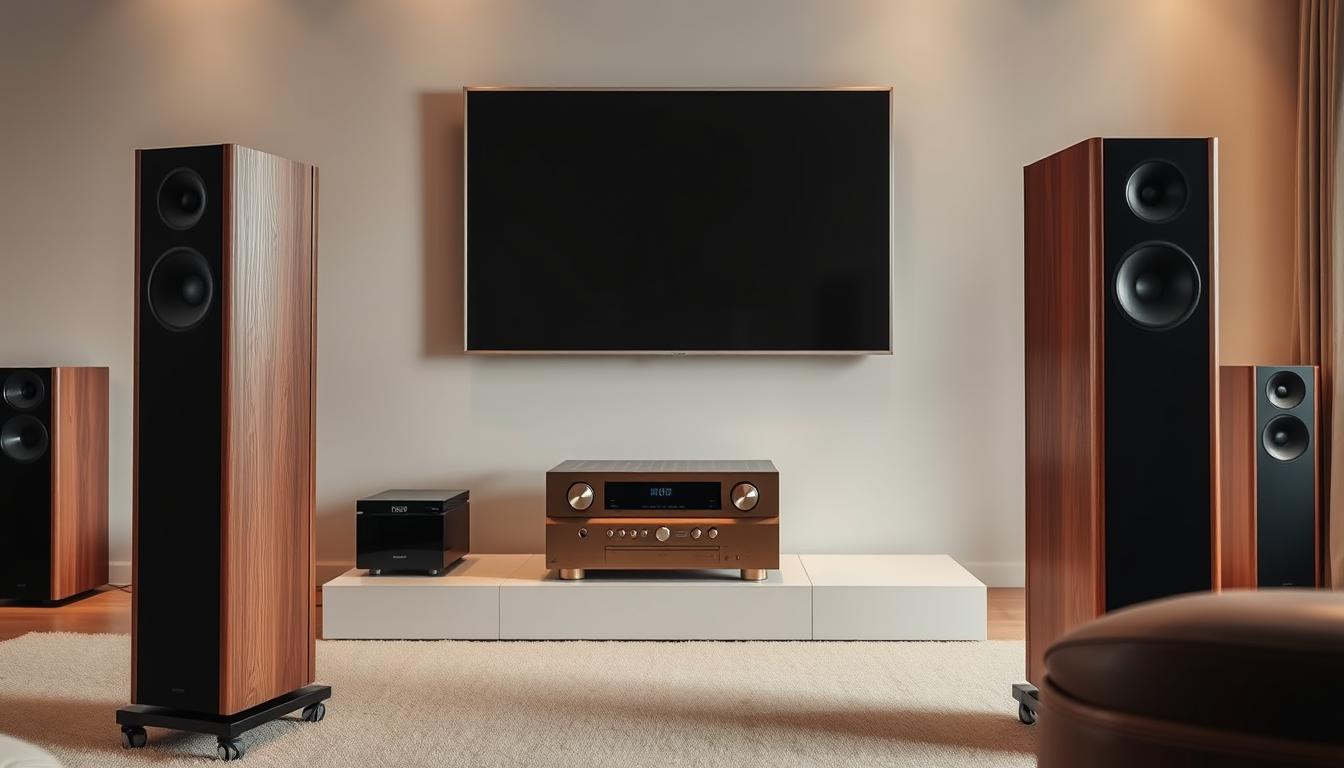
Acoustic Treatment Basics
Even top speakers need a treated room to sound their best. Start with bass traps in corners. TechRadar suggests 4”-thick absorption panels for better sound balance.
Use premium streaming devices like the Linn Klimax DSM. It upscales audio to 24-bit/384kHz resolution.
| Component | Key Feature | Price Range |
|---|---|---|
| Control4 EA-3 | 8-zone control, Alexa built-in | $1,200-$1,600 |
| Sonance VP65 | In-wall design, 90dB sensitivity | $400-$550/pair |
| Sennheiser Ambeo Max | 9.1.4 virtual surround | $2,500-$3,000 |
For top-tier setups, check out luxurious home theater designs. They combine high-end audio with stunning visuals. Tools like Dirac Live improve sound, and moisture-resistant speakers work outdoors.
Luxury Systems Over $10,000
When money is no object, multi-room audio becomes a work of art. These systems don’t just play music; they create soundscapes that match your home and taste. Luxury setups combine smart home technology with custom parts, making every sound feel special.

Bespoke Audio Environments
Top systems need more than just high-quality equipment. They require total environmental harmony through:
- Custom millwork hiding advanced components
- Room-specific DSP tuning algorithms
- Seamless control via unified interfaces
Savant Pro Audio Solutions
Savant’s architectural speakers blend into walls but deliver sound like a concert hall. Their TrueImage DSP adjusts for:
- Furniture placement changes
- Seasonal humidity shifts
- Multi-room phase alignment
Linn Klimax DSM Hub
This Scottish-made hub synchronizes your whole home. Its Exakt Link technology ensures:
- 0.001% clock timing accuracy
- Native 24-bit/384kHz streaming
- Automatic format conversion
Hidden Speaker Integration
Discretion meets performance in luxury setups. Bowers & Wilkins’ 800 Series Diamond speakers are hidden behind:
- Laser-cut grilles matching room textiles
- Motorized retractable cabinets
- Acoustically transparent stone veneers
Installers use lasers to place drivers with 1/8″ precision. You’ll hear the music, not the speakers – unless you want to show off those polished tweeters.
Wireless vs Wired Showdown
Choosing between wireless and wired audio systems is more than just about cables. It’s about finding the right mix of performance, convenience, and value. Wireless systems have caught up with wired ones, but there are key differences in reliability and growth.

Latency and Bandwidth Realities
Wireless systems often struggle with signal stability. Bluetooth 5.3, used in Sony’s HT-G700, offers 2 Mbps throughput but has trouble with multi-room syncing. On the other hand, 5GHz Wi-Fi systems can handle up to 1.3 Gbps, cutting audio lag to under 20ms.
Sonos uses a dedicated mesh network to improve wireless audio. This creates separate channels for audio, reducing interference. Wired systems, by contrast, use physical connections to avoid latency altogether.
Here’s a comparison of popular protocols:
| Technology | Max Bandwidth | Typical Latency |
|---|---|---|
| Bluetooth 5.3 | 2 Mbps | 150-300ms |
| 5GHz Wi-Fi | 1.3 Gbps | 10-50ms |
| HDMI eARC | 37 Gbps | <5ms |
Future-Proofing Your Investment
Wired systems are great for upgrading. You can swap out parts without changing your whole system. HDMI eARC ports are key, supporting formats like Dolby Atmos. They carry 32 audio channels, far more than Bluetooth’s two.
For wireless systems, look for brands with modular designs. These allow for easy upgrades and changes. Dual-band receivers that support both Wi-Fi 6E and traditional connections are also a good choice.
Hybrid systems are becoming popular. They combine wired backbones for main areas with wireless satellites for others. This offers solid performance in key spaces and the ease of wireless expansion.
Smart Home Integration Essentials
Modern multi-room audio systems work best with smart home tech. They let you control music, lights, and climate with voice commands or routines. This makes your space more interactive, eliminating the need for multiple apps or remotes.

Voice Control Ecosystems Compared
When picking a voice assistant, it affects how you manage audio in different rooms. Amazon Alexa and Google Home are the top choices, but they have different strengths.
Amazon Alexa vs Google Home
| Feature | Amazon Alexa | Google Home |
|---|---|---|
| Multi-brand compatibility | Works with 140,000+ devices | Supports 50,000+ devices |
| Sound prioritization | Optimizes for Echo speakers | Adapts to Nest Audio |
| Routine customization | Unlimited trigger actions | Limited to 3 actions per command |
The Bose Smart Soundbar 700 works with both Alexa and Google Home. For better syncing between rooms, Google’s Chromecast is often preferred.
Automation Scenarios
Preset routines make life easier and unlock your system’s full power. Here are some useful examples:
- Movie Night: Dim lights to 30%, turn on Dolby Atmos, and lower smart blinds
- Morning Routine: Play jazz at 60% volume while kitchen lights get brighter
- Party Mode: Match color-changing bulbs to bass and switch playlists between floors
Advanced users use IFTTT for unique triggers. Try these:
- Pause music when your smart lock detects entry
- Switch to podcast mode when kitchen motion sensors detect activity
- Start white noise in bedrooms when smart thermostats hit sleep temperatures
Proper integration prepares your system for the future. As voice recognition gets better, you’ll control more than just audio.
Room Acoustics Optimization
Even the best audio equipment underperforms without proper room treatment. Sound waves interact with walls, floors, and furniture. This creates echoes, bass buildup, and uneven frequency response. Optimizing your space ensures every dollar spent on speakers delivers its full value.

Speaker Placement Formulas
The 38% rule is a proven starting point: position your listening chair 38% of the room’s length from the front wall. KEF recommends placing speakers at least 2 feet from side walls and angling them toward your ears. For 5.1 surround setups, maintain equal distances between front speakers and the central listening position.
| Placement Method | Use Case | Key Measurement |
|---|---|---|
| 38% Rule | Stereo Listening | 38% of room length |
| KEF Guidelines | Bookshelf Speakers | 24″ from side walls |
| Harman Reflection | Home Theater | 15°-30° toe-in |
Harman/Kardon’s research shows first reflection points – where sound bounces off walls – degrade clarity. Use thick curtains or acoustic panels at these spots. Test locations by sliding a mirror along walls: where you see speakers from your seat is where treatment belongs.
DIY Absorption Panels
Roxul Safe’n’Sound insulation (3″ thick, 5.5 lbs/ft³ density) outperforms most commercial panels. Build frames from 1×4 lumber, fill with insulation, and wrap in breathable fabric. These absorb mid-range frequencies that cause muddiness in voices and instruments.
- Materials needed: Wooden frame, Roxul batts, fabric cover
- Ideal placement: Corners, ceiling reflections, behind speakers
- Cost savings: $40/panel vs $150 retail
Install panels at ear level for seated listening positions. Combine with bass traps in room corners for full-range control. Proper audio system installation turns any room into a balanced listening environment – no professional help required.
Future-Proofing Strategies

Creating a multi-room audio setup that keeps up with new tech needs careful planning. You want systems that can handle future formats and let you change parts easily. We’ll look at two key areas: HDMI compatibility and modular design.
HDMI 2.1 Considerations
The 48Gbps bandwidth in HDMI 2.1 is more than just for 8K video. It changes how your home entertainment systems handle sound. This standard supports advanced formats like Dolby Atmos Height Virtualization and DTS:X Pro. These formats prepare your setup for the latest gaming consoles and streaming services.
When picking receivers, look for:
- Full 40-48Gbps throughput (not just “HDMI 2.1 compatible”)
- HDMI Forum Certification logos
- Separate audio return channel (eARC) ports
Upgradeable Components
Modular systems, like Bluesound’s Powernode, let you swap out just the amplifier or streamer module. Yamaha’s MusicCast 50 shows this with its swappable expansion cards that add new wireless protocols as they come out.
“A well-designed audio system should let you upgrade its brain, lungs, and heart separately.” – High-Fidelity Magazine
Prioritize devices with:
- User-accessible firmware slots
- Standardized connection interfaces
- Open API support for third-party integrations
Set reminders for firmware updates. Manufacturers often release important patches before big streaming service changes. Bluesound’s recent 4.0 update added Apple Spatial Audio support this way, keeping your system current without needing new hardware.
DIY vs Professional Installation
Deciding to install your audio system yourself or hire pros is more than just knowing how to do it. Local laws, safety rules, and how well the system works in the long run are all important. Here’s what you should think about before starting or calling a contractor.

Permit Requirements by State
Getting permits for your audio system’s electrical work is often needed, but the rules differ by state. The National Electrical Code (NEC) Article 640 covers speaker wiring, while high-voltage jobs have stricter rules. For example:
- California’s Title 24 energy codes have specific efficiency needs for whole-home systems
- Texas needs permits for in-wall wiring over 50 volts
- Florida doesn’t require inspections for low-voltage setups in single-family homes
Before cutting drywall, always check your local building codes. Pros handle permits, but DIYers might need to submit plans. In-wall speaker cables need fire-rated insulation and metal conduit in multi-story buildings.
Safety Considerations
Working with electrical parts without care can lead to fires, shocks, and insurance issues. Key dangers include:
- Overloading circuits with too many amplifiers
- Improper grounding of outdoor speakers
- Damage to existing wiring during upgrades
Pros use thermal cameras and special screwdrivers for safe connections. For DIY, think about wireless speakers to cut down on electrical work. They offer great sound without the need for in-wall wiring.
For complex setups like ceiling speakers or whole-home control systems, hiring pros is worth it. They make sure everything meets safety standards. Remember, saving a little upfront can cost a lot more if the job is done wrong.
Maintenance and Upgrades
To keep your multi-room audio system in top shape, you need to take care of it and update it wisely. Unlike old setups, modern systems do best with regular maintenance and smart upgrades. For instance, Sonos supports its products for 10 years, showing how important long-term care is.

Firmware Update Best Practices
Keeping your system safe and adding new features is key. Here’s how to do it right:
- Enable automatic updates for critical security patches
- Check for updates manually every three months for new features
- Save your custom settings before big updates
Wireless systems update on their own, but wired ones need you to do it. Update during quiet times to avoid trouble.
Component Lifespan Guide
Each part of your system has its own lifespan. Here’s a table to help you plan when to replace them:
| Component | Average Lifespan | Replacement Sign |
|---|---|---|
| Amplifier Capacitors | 8-10 years | Distorted audio |
| DAC Chips | 5-7 years | Reduced dynamic range |
| Wireless Transmitters | 4-6 years | Connection drops |
High-end systems are often designed to be easy to upgrade. You can swap out old parts without getting a whole new system. Plan to spend 15-20% of what you paid for your system on upgrades in the middle of its life.
Enhancing Your Experience
High-resolution audio makes your system sound amazing. It brings studio-quality sound to your music. Whether streaming or playing local files, the right formats and services are key. Let’s see how to get the most out of your setup.

High-Resolution Audio Sources
MQA and FLAC 192kHz are top choices for lossless audio. MQA compresses recordings without losing detail, great for streaming. FLAC files give you uncompressed audio up to 192kHz, perfect for your collection. Brands like Linn use Space Optimisation+ to adjust sound for your room.
When building your collection, consider:
- Streaming services with CD-quality or better
- Local NAS storage for FLAC files
- DACs that can decode up to 32-bit/384kHz
Tidal vs Qobuz Comparison
Both Tidal and Qobuz are great for audiophiles but in different ways. Tidal focuses on artist exclusives and Dolby Atmos tracks. Qobuz offers mastering credits for album production details. Here’s how they compare:
| Feature | Tidal | Qobuz |
|---|---|---|
| Max Quality | MQA 24-bit/192kHz | FLAC 24-bit/192kHz |
| Unique Perk | Artist commentary tracks | Studio master downloads |
| Roon Ready | Yes | Yes |
| Monthly Cost | $19.99 (HiFi Plus) | $14.99 (Studio Premier) |
Qobuz is perfect for those who love detailed metadata. Tidal’s 360 Reality Audio offers immersive sound. Both work well with Roon for a unified system. Your choice depends on what you value more.
Use room correction systems like Linn’s tools to improve sound quality. Even the best systems need clean sources to perform well.
Common Installation Mistakes
Even experienced homeowners can make mistakes when setting up multi-room audio. Two common errors can ruin sound quality and system reliability. Let’s explore these hidden pitfalls and how to avoid them.
Overlooking Load Impedance
Connecting speakers and amplifiers with the wrong impedance can cause serious damage. Most home audio equipment is either 4Ω (ohm) or 8Ω. If you connect 4Ω speakers to an 8Ω amp, you risk overheating and damaging components.
- Check amplifier specifications before buying speakers
- Use impedance-matching switches on receivers like Denon’s AVR-X series
- Test system stability with pink noise at 75% volume
Modern protection circuits, like Denon’s Advanced High-Current Architecture, help prevent damage. But matching impedance is key for clear audio.
Wi-Fi Channel Conflicts
Wireless sound systems often compete with smart TVs and phones for Wi-Fi space. A crowded 2.4GHz band can cause dropouts. Use free tools to fix this:
- Download NetSpot or Wi-Fi Analyzer (Android)
- Scan for least-used channels in your listening areas
- Set your system to channels 1, 6, or 11 – non-overlapping options
For mesh networks, enable SonosNet mode if available. This creates a dedicated wireless backbone for audio, avoiding your home router. Remember, 5GHz bands are faster but have a shorter range, perfect for small spaces.
Conclusion
Your journey through multi-room audio systems shows a range of options. From basic Alexa-enabled speakers to Savant’s $50,000 smart homes, there’s something for everyone. TechRadar’s 2023 report found that 62% of users start with a single room before expanding.
Amazon Echo setups are great for renters who want to try out multi-room audio. On the other hand, Control4 systems are perfect for those building custom homes. They offer permanent solutions.
When it comes to luxury installations, professional integrators are key. Savant and Lutron dealers handle complex tasks like hidden speakers and acoustic treatments. For those who want professional sound without custom wiring, Sonos Amp paired with Bose architectural speakers is a good choice.
New technologies like Wi-Fi 7 routers and Matter protocol devices are changing the game. They promise better performance and easier voice control across brands. Make sure to choose systems that can be upgraded and have Ethernet backhaul options.
Finding the right setup depends on your listening habits and your home’s layout. Start with wireless speakers if you’re not sure what you want. Or, invest in pre-wired solutions during renovations.
Share your floor plans with qualified installers. They can help with speaker placement and wire gauges, saving you from costly mistakes. With the right setup, you’ll have the perfect soundscape for your home.
FAQ
How do synchronization requirements impact multi-room audio performance?
True multi-room systems need sub-100ms latency synchronization to avoid echo. Wired systems like Yamaha MusicCast use Ethernet for clock sync. Wireless systems, like Sonos, use mesh networks with adaptive buffering. For hi-res audio, each zone should have at least 5Mbps for 24-bit/192kHz FLAC files.
What are the key differences between Sonos’ wireless convenience and Yamaha’s wired reliability?
Sonos offers dual-band Wi-Fi with dedicated 5GHz channels for easy setup. Yamaha’s MusicCast Advantage series uses RJ45 backbone wiring for top-notch sound. TechRadar suggests wired systems for large spaces to avoid wireless interference.
How does HEOS support scalable audio system growth?
Denon’s HEOS lets you add incremental zones without extra hardware. Start with HEOS 1 HS2 speakers (9/pair) and grow to 32 zones with the HEOS Drive HS2 amp. The system handles impedance and power as you add more components.
What temporary installation methods work for rental properties?
Use 3M Command Picture Hanging Strips for Sonos One SL (4.8lbs). CNET suggests Echo Studio for Dolby Atmos rentals. D-Link Powerline AV2 2000 adapters provide 2Gbps throughput through electrical circuits.
How do receiver capabilities affect 4K/120Hz gaming setups?
Modern AV receivers like Denon AVR-X4700H support HDMI 2.1’s 48Gbps bandwidth for 8K/60Hz or 4K/120Hz. Vizio Elevate combines a 5.1.4 soundbar with wireless surrounds. Always check for HDCP 2.3 compliance for next-gen consoles.
What acoustic treatments are essential for high-end installations?
Use Roxul Safe’n’Sound 3″ insulation (NRC 1.05) in bass traps for low frequencies. Harman/Kardon suggests placing absorption panels at first reflection points. Follow the 38% rule for listening positions.
How does Wi-Fi 6 compare to Bluetooth 5.3 for whole-home audio?
Wi-Fi 6 offers 9.6Gbps theoretical throughput, better than Bluetooth 5.3’s 3Mbps. SonosNet 2.0 prioritizes audio packets in a dedicated 5GHz mesh channel. aptX Adaptive Bluetooth codecs maintain quality in single-room setups.
What are the codec considerations for high-resolution streaming services?
Tidal Masters uses MQA folding technology (24-bit/96kHz unfolded). Qobuz streams FLAC up to 192kHz. Roon Labs’ integration offers unified control across services, with DSP correction for time alignment. Always check DAC compatibility for native playback.
How do California’s Title 24 energy codes impact audio installations?
Title 24 requires automatic standby modes (≤ 0.5W consumption) for whole-house systems. Installations using Lutron HomeWorks QS need Class 2 wiring in conduit. For amplifiers over 100W/channel, use dedicated 20-amp circuits with 12AWG wiring.
What professional calibration tools optimize luxury installations?
Bowers & Wilkins 800 Series Diamond uses DIRAC Live Room Correction with 20-point frequency sweeps. Linn Klimax systems employ Space Optimisation+ software for room modeling. Savant Pro Remote includes an SPL meter and RTA for real-time adjustments during calibration.
