Did you know that cluttered workspaces can reduce productivity by up to 20%? A well-organized room not only boosts efficiency but also enhances the overall look of your space. This guide will help you craft a custom storage solution that combines functionality with a sleek, modern design.
You’ll learn how to assemble a sturdy frame, integrate efficient cable routing systems, and add finishing touches like LED lighting. Using tools like miter saws and drills, along with materials such as birch plywood and pine, you can create a piece that fits seamlessly into your workspace.
Whether you’re organizing wires, storing supplies, or enhancing your room’s aesthetics, this project offers a clean look and practical benefits. Follow the detailed steps to achieve a professional finish that meets your needs.
Key Takeaways
- Organize your workspace for improved productivity and aesthetics.
- Use tools like miter saws and drills for precise construction.
- Incorporate cable routing systems for a tidy setup.
- Add LED lighting for a modern, polished finish.
- Choose materials like birch plywood for durability and style.
Understanding the Project Overview
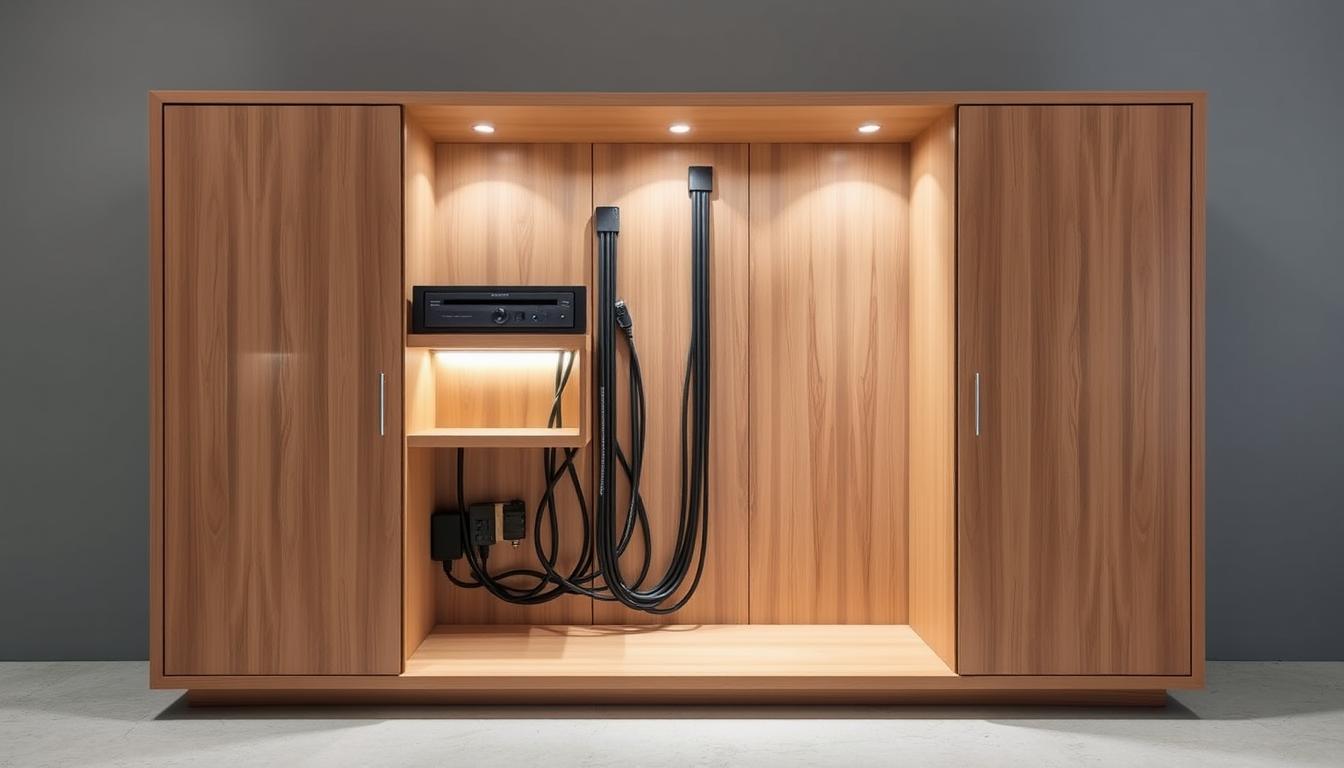
Clutter in your workspace can lead to more than just a messy desk—it can impact your safety and efficiency. This project focuses on creating a custom solution that not only organizes your wires and equipment but also enhances the overall look of your room. By addressing common issues like tripping hazards and tangled cords, you can transform your space into a safer, more productive environment.
Defining the Objectives and Benefits
The primary goal of this project is to provide a clean look while improving functionality. Effective cable management reduces clutter, prevents accidents, and extends the lifespan of your wires. A well-designed cabinet also protects your equipment from damage and keeps your workspace streamlined.
Studies show that a tidy workspace can boost productivity by up to 20%. Additionally, proper organization minimizes distractions, allowing you to focus on your tasks. With this project, you’ll achieve a balance between aesthetics and practicality.
Reviewing Design Inspirations and Workspace Needs
Design inspirations for this project range from modern furniture to innovative DIY solutions. Whether you’re working with a small desk or a larger setup, the key is to create a custom solution that fits your specific needs. Consider factors like the size of your room, the number of devices, and the types of cables you use.
For example, integrating a drawer system can help store smaller items like adapters and flash drives. Adding a frame for cable routing ensures that wires are neatly organized and easily accessible. By tailoring the design to your workspace, you’ll create a solution that’s both functional and visually appealing.
Ultimately, this project is about more than just organization—it’s about creating a space that works for you. With careful planning and thoughtful design, you can achieve a clean look that enhances both safety and productivity.
Planning Your Design and Material Selection
Effective planning is the foundation of any successful project. Before diving into the construction, take time to map out your design and gather the right materials. This ensures your cabinet is both functional and visually appealing.

Choosing the Right Wood and Supplies
Selecting the right type of wood is crucial for durability and style. Options like birch plywood, pine, and poplar are popular choices. Birch plywood offers a sleek finish, while pine is cost-effective and easy to work with.
Consider your workspace needs when choosing supplies. For example, if you’re organizing cables and equipment, opt for materials that can support the weight and provide ample storage. Matching supplies to your design goals ensures a cohesive look.
Mapping Out Tool and Material Requirements
Tools like miter saws, drills, and sanders are essential for precise assembly. A tape measure and square help map out measurements accurately. This step ensures your frame and panels fit perfectly.
Reading manufacturer instructions is vital when using hardware like pocket hole jigs and drawer slides. Proper tool selection and usage guarantee a clean, professional finish.
| Material | Best Use | Key Feature |
|---|---|---|
| Birch Plywood | Cabinet Body | Durable and Smooth Finish |
| Pine | Frame and Legs | Lightweight and Affordable |
| Poplar | Drawer Fronts | Easy to Paint or Stain |
By carefully planning your design and material selection, you’ll create a cabinet that not only organizes your space but also enhances its overall aesthetic. A well-prepared project ensures a seamless build and a polished result.
Build a wooden cabinet for cable management and equipment storage.
Efficient organization starts with the right storage solution. This project focuses on creating a custom piece that combines functionality with a sleek design. By addressing common issues like tangled wires and cluttered equipment, you can transform your workspace into a more productive environment.
This section ties together the design and material planning from earlier steps. Precision in measuring and cutting wood is crucial for a structural and neat build. A well-crafted frame ensures durability, while thoughtful design elements like cable routing paths keep wires organized and accessible.

The final outcome is a durable and aesthetically appealing solution that fits seamlessly into your room. Integrating functional elements like drawers and shelves provides ample space for equipment and supplies. This ensures a clean and organized setup that enhances both productivity and style.
As you prepare for the assembly process, remember that attention to detail is key. Properly routed cables and well-placed storage compartments create a tidy and efficient workspace. This section sets the stage for the detailed instructions that follow, ensuring your project is a success from start to finish.
Step-by-Step Assembly: From Leg to Face Frame
Starting with the legs and frame ensures stability and a professional finish. This section guides you through constructing the base and creating a flush face frame for a clean look. Precision is key, so double-check measurements before making any cuts.
Constructing the Square Leg and Stretcher Assembly
Begin by cutting the wood pieces to the required lengths. Use a miter saw for accuracy. Assemble the legs and stretchers using pocket holes and screws. This method keeps joints hidden for a sleek appearance.
Glue the end grain joints to add strength. Clamp the assembly tightly while the glue dries. This ensures a sturdy base for your project. Follow these steps for a seamless build:
- Measure and cut the wood pieces to 16.75″, 28″, and 52.5″.
- Drill pocket holes at each end of the stretchers.
- Attach the legs to the stretchers using screws.
- Apply glue to the joints and clamp them securely.
Building the Face Frame for a Clean Cabinet Look
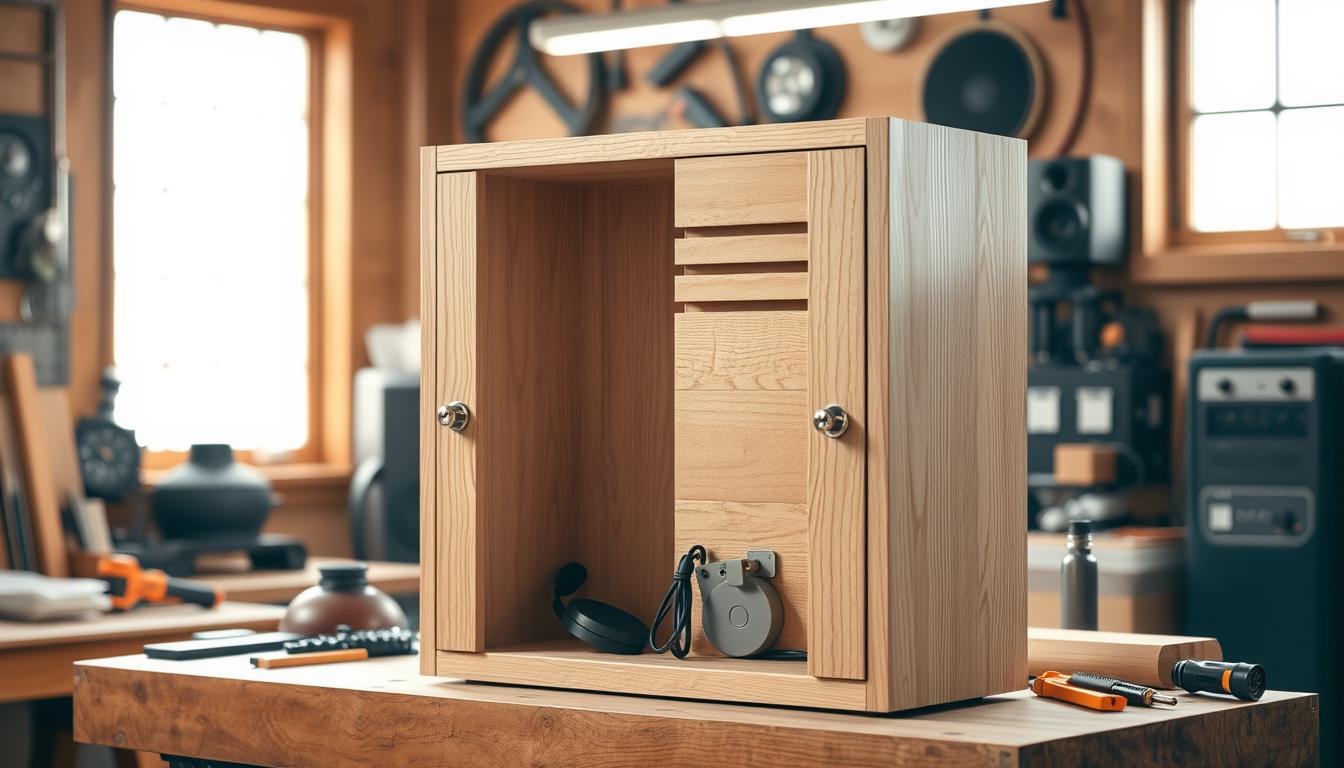
For the face frame, use 1×2 poplar boards. Cut the stiles to 28″ and the rails to 12.5″. Align the stiles and rails carefully to ensure a flush fit. Drill pocket holes at the ends of the rails for hidden joints.
Glue the joints and clamp the frame together. Allow it to dry completely before moving to the next step. Precise measurements and alignment are crucial for a professional finish.
Here’s a quick guide to building the face frame:
- Cut the stiles and rails to the specified lengths.
- Drill pocket holes in the rails for hidden joints.
- Align the stiles and rails and secure them with screws.
- Apply glue to the joints and clamp the frame tightly.
For more tips on creating sturdy frames, check out this guide on building a riser platform.
Creating the Cabinet Body and Internal Supports
Accurate measurements and precise cuts are essential for a sturdy and polished cabinet body. This step ensures your project is both functional and visually appealing. Begin by preparing the plywood panels and installing the internal supports for added strength.
Cutting and Preparing Plywood Panels
Start by measuring and marking the 3/4″ plywood for the cabinet body. Use a circular saw with a track guide for clean, straight cuts. Stack and clamp the panels together to ensure consistent height across all pieces.
Apply painter’s tape along the cut lines to minimize blowout. This technique protects the edges and maintains a smooth finish. Double-check all measurements before cutting to avoid errors.

For safety, wear protective gear and secure the plywood firmly before cutting. A well-prepared panel ensures a seamless assembly process.
Installing Floor Panels and Internal Supports
Begin by attaching the floor panels at the base of the cabinet. Use pocket holes to secure them in place. This method provides a clean look while ensuring stability.
Next, add internal supports to reinforce the structure. Align the supports carefully and attach them with screws. This step enhances the durability of your project.
When joining two plywood sides, ensure they are flush for a professional finish. Proper alignment prevents gaps and ensures a tight fit. Take your time to achieve the best results.
By following these steps, you’ll create a cabinet body that’s both sturdy and aesthetically pleasing. Attention to detail during this phase sets the foundation for a successful build.
Integrating Drawer Systems and Custom Storage Compartments
Customizing your workspace with functional storage can transform your productivity. Adding drawers and compartments ensures everything has its place, reducing clutter and improving efficiency. This section covers DIY techniques for constructing drawers and creating tailored storage solutions for your needs.
DIY Drawer Construction Techniques
Start by cutting 1/2″ birch plywood to precise measurements for the drawer boxes. Use pocket hole joinery to assemble the pieces, ensuring a sturdy and seamless build. Edge banding can be applied to the front edges for a polished finish.
For the drawer fronts, choose materials that match your design aesthetic. Attach them securely to the boxes using screws or adhesive. Proper alignment is crucial for a smooth operation and professional look.

Install ball bearing drawer slides for effortless opening and closing. Measure carefully to ensure the slides are level and aligned. This step guarantees a superior fit and enhances the functionality of your storage solution.
Customizing Cable Cubbies and Shelf Inserts
Create custom compartments to organize cables and power supplies efficiently. Measure the space available and design cubbies that fit your specific equipment. Use dividers to separate cords and prevent tangling.
For shelf inserts, consider adjustable designs to accommodate future changes. This flexibility allows you to adapt the storage layout as your needs evolve. Proper cable management can reduce tripping hazards by up to 40%, enhancing safety in your workspace.
By tailoring the layout to your requirements, you’ll achieve a clean and organized setup that boosts productivity. Whether you’re storing adapters, flash drives, or power strips, these custom solutions ensure everything is within reach.
Embedding Cable Management Systems and LED Enhancements
A well-organized workspace not only enhances productivity but also ensures safety and efficiency. This section focuses on integrating advanced cable management systems and LED lighting to create a streamlined and visually appealing environment. By following these steps, you can achieve a clutter-free setup that maximizes functionality.
Routing Cables Using Clips and Ties
Neatly routing cables is essential for maintaining a tidy workspace. Start by using adhesive-backed clips to secure wires along the cabinet edges or walls. These clips keep cables in place and prevent tangling.
For larger bundles, velcro straps or zip ties are ideal. They allow flexibility and easy adjustments when adding or removing devices. Ensure cables are labeled for quick identification, reducing downtime during maintenance.

| Tool | Best Use | Key Feature |
|---|---|---|
| Adhesive Clips | Single Cables | Easy to Install |
| Velcro Straps | Bundles | Reusable and Adjustable |
| Zip Ties | Permanent Fixes | Durable and Secure |
Proper cable routing reduces tripping hazards and extends the lifespan of your wires. Studies show that 75% of businesses report improved organization after implementing these systems.
Integrating LED Lighting and Control Solutions
Adding LED lighting enhances both the functionality and aesthetics of your workspace. Start by installing RGB LED strips along the edges of your cabinet or inside cable cubbies. These strips provide ambient lighting and can be customized to match your room’s decor.
For a professional finish, use diffusing covers to soften the light and eliminate glare. Mount control boxes and sensors in hidden compartments to maintain a clean look. Align these components carefully to optimize lighting effects.
LED enhancements not only improve visibility but also reduce energy consumption by up to 80%. They are a cost-effective solution for creating a modern and efficient workspace.
By combining cable management and LED lighting, you’ll achieve a workspace that is both functional and visually appealing. These enhancements ensure a clutter-free environment that boosts productivity and safety.
Finishing Touches: Stain, Clear Coat, and Detail Enhancements
The final step in your project is all about enhancing the visual appeal and durability of your creation. A well-applied finish not only protects the wood but also elevates the overall look of your workspace. This section guides you through staining, clear coating, and adding subtle details for a professional result.
Applying Stains and Clear Finishes
Start by preparing the wood surface. Sand it thoroughly to remove any imperfections. This ensures the stain adheres evenly. Use a dark walnut stain mixed with weathered grey for a rich, modern finish.
Apply the stain with a brush or cloth, working in the direction of the grain. Wipe off excess stain to avoid blotches. Allow it to dry completely before moving to the next step.
For added protection, apply a clear coat. Use a polyurethane finish for durability. Sand lightly between coats to remove dust nibs. This creates a smooth, professional look.
“Aesthetic enhancements like staining can increase perceived value by 30% in office environments.”
Adding Toe Kick Details and Smooth Edge Treatments
Toe kicks add both functionality and style. Use trimmed poplar pieces to create a 45° chamfer. This detail enhances the base of your project while maintaining a clean look.
Secure the toe kick with a brad nailer or clamps. Ensure it’s flush with the cabinet for a seamless finish. Smooth any rough edges with sandpaper for a polished appearance.
| Tool | Best Use | Key Feature |
|---|---|---|
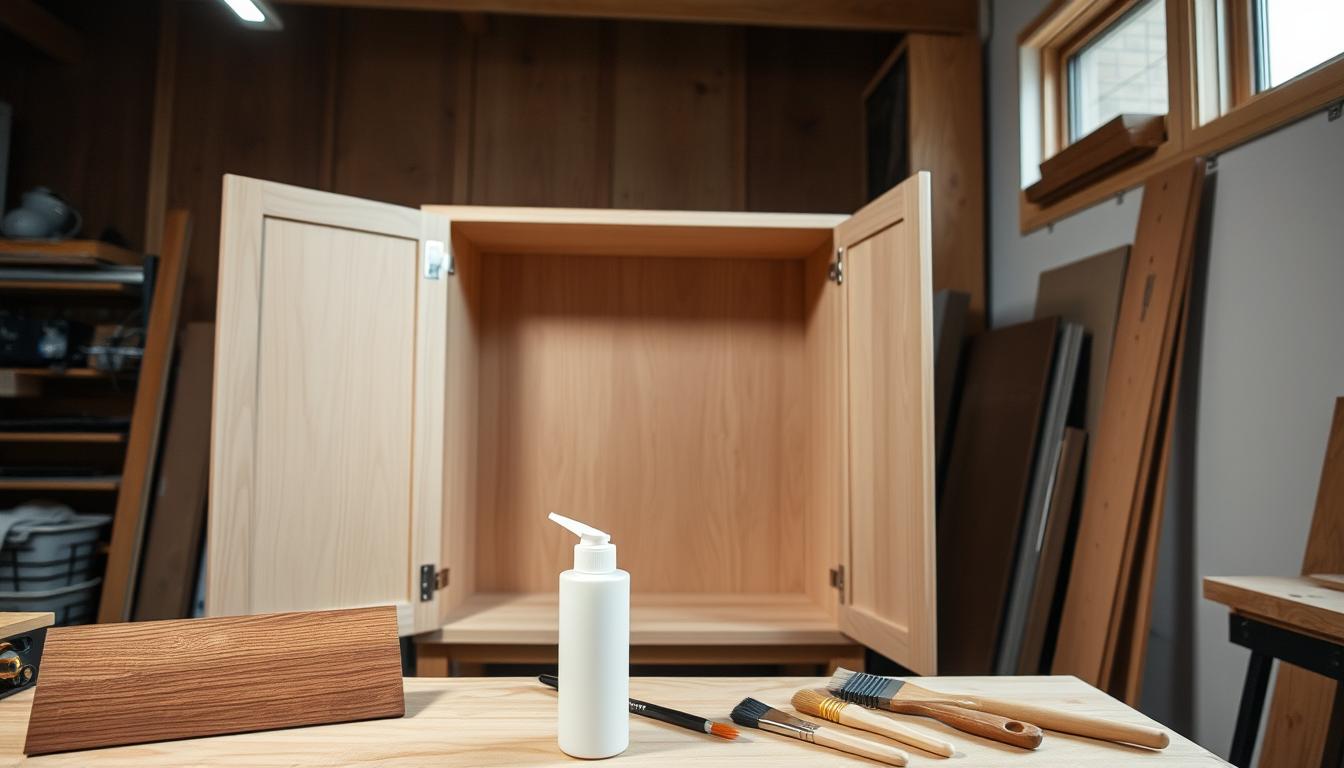
| Brush | Stain Application | Even Coverage |
| Sandpaper | Smoothing Surfaces | Removes Imperfections |
| Brad Nailer | Securing Details | Precision and Speed |
By following these steps, you’ll achieve a clean look that combines style and durability. Attention to detail during the finishing phase ensures your project stands out.
Optimizing Your Workspace with Effective Cable Organization
A clutter-free workspace is essential for maintaining focus and efficiency. Proper cable organization not only enhances productivity but also reduces safety hazards. By implementing smart techniques and using the right accessories, you can transform your space into a streamlined and functional environment.
Implementing Cable Bundling Techniques
Bundling cables is a simple yet effective way to keep them organized. Use velcro straps or zip ties to group wires together. This prevents tangling and makes it easier to identify specific cords when needed.
For a more flexible solution, consider adhesive-backed clips. These can be attached to the underside of desks or along walls, keeping cables neatly routed. Labeling each bundle with tags or colored ties further enhances efficiency.
“Proper cable bundling can reduce tripping hazards by up to 60%, ensuring a safer workspace.”
Utilizing Additional Accessories for a Clean Look
Creative accessories can elevate your cable management game. Binder clips, for example, can hold cords in place, preventing them from slipping behind furniture. Duct tape or repurposed household items like toilet paper rolls can also serve as temporary solutions.
For a more polished appearance, invest in cable sleeves or trays. These accessories not only hide wires but also protect them from wear and tear. Here’s a quick comparison of popular options:
| Accessory | Best Use | Key Feature |
|---|---|---|
| Velcro Straps | Bundling Cables | Reusable and Adjustable |
| Adhesive Clips | Routing Cables | Easy to Install |
| Cable Sleeves | Protecting Wires | Durable and Aesthetic |
By incorporating these techniques and accessories, you’ll achieve a clean look that boosts both productivity and safety. A well-organized workspace is a step toward a more efficient and enjoyable work environment.
Conclusion
Creating an organized workspace starts with thoughtful design and precise execution. This project focused on crafting a custom solution to tackle clutter and enhance productivity. From selecting materials to assembling and finishing, each step was designed to deliver a clean look and functional setup.
Proper cable management ensures safety and accessibility, while a well-designed cabinet keeps your room streamlined. By following the guide, you’ve learned to integrate drawers, shelves, and LED lighting for a polished finish. Adapting these techniques to your workspace can boost efficiency and create a professional environment.
Remember, planning is key. Measure carefully, choose durable materials, and focus on details. A tidy workspace not only improves productivity but also enhances safety and aesthetics. Share your feedback or questions as you apply these strategies to your own setup.
FAQ
What are the key benefits of building a custom cabinet for cable management?
A custom cabinet helps organize cables, reduces clutter, and provides a clean look for your workspace. It also offers tailored storage for equipment and supplies, improving efficiency.
How do I choose the right wood for my cabinet?
Select durable woods like plywood or hardwood for longevity. Consider the finish and how it complements your room’s design. Always ensure the material meets your project’s structural needs.
What tools are essential for this project?
You’ll need a saw, drill, screws, measuring tape, and sandpaper. Optional tools like a router or clamps can enhance precision and ease during assembly.
How can I ensure effective cable routing inside the cabinet?
Use cable ties, clips, and grommets to route wires neatly. Plan the layout to avoid tangling and ensure easy access to cords when needed.
Can I add LED lighting to my cabinet?
Yes, integrating LED strips enhances visibility and adds a modern touch. Use adhesive strips or clips to secure them along the edges or inside compartments.
What finishing techniques work best for a professional look?
Apply a stain or clear coat to protect the wood and enhance its appearance. Smooth edge treatments and toe kick details add a polished finish.
How do I customize storage compartments for my needs?
Measure your equipment and design cubbies or shelves accordingly. Adjustable shelves and drawer inserts offer flexibility for future changes.
What’s the best way to maintain a clean look after installation?
Regularly organize cables using ties and clips. Keep equipment stored neatly and avoid overloading shelves or drawers.