Did you know that 92% of homeowners struggle with clutter in their entertainment spaces? Creating a custom hidden storage cabinet can transform your home theater into a sleek, organized haven. This project focuses on designing a cabinet that blends seamlessly into your space while offering practical storage solutions.
Starting with detailed sketches and precise measurements, this guide ensures every inch of your wall is utilized efficiently. The cabinet is divided into multiple compartments, each designed to maximize space without compromising aesthetics. By constructing it in separate parts, you can easily transport and reassemble it on-site.
Accuracy is key, especially when working with board sizes and panel placements. This step-by-step approach ensures a professional finish, making it perfect for anyone looking to integrate custom furniture into their home. For more creative storage ideas, check out this resource.
Key Takeaways
- Custom hidden cabinets enhance both functionality and aesthetics in your home theater.
- Detailed planning and precise measurements are essential for a seamless fit.
- Constructing the cabinet in parts simplifies transportation and assembly.
- Multiple compartments maximize storage without cluttering the space.
- This guide provides a comprehensive approach for DIY enthusiasts.
Design and Planning Essentials
Planning your custom cabinet starts with a clear vision and precise measurements. This step ensures your project aligns with your room’s layout and meets your storage needs. Early sketches and accurate dimensions are the backbone of a seamless design.
Concept Sketches and Measurements
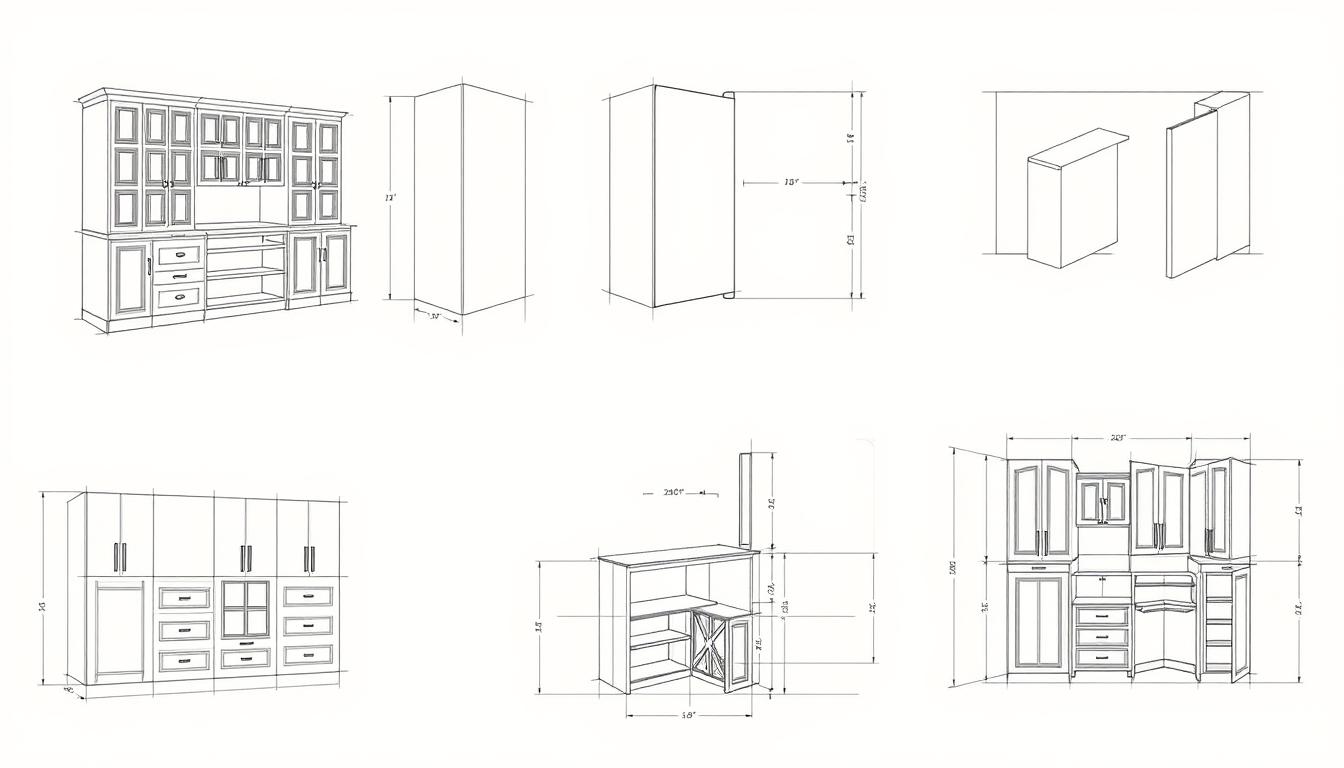
Begin with detailed sketches to visualize your cabinet. Use a pencil and paper or digital tools to outline the design. Measure your room carefully, noting the height, width, and depth of the wall. These measurements will guide the cabinet’s dimensions and ensure a perfect fit.
Consider the type of wood and panel materials you’ll use. This decision impacts both the look and durability of your cabinet. For example, hardwood is sturdy, while plywood offers a cost-effective alternative.
Dividing Wall Space and Setting Dimensions
Dividing a long wall into smaller sections simplifies the construction process. For instance, a 184-inch wall can be split into multiple compartments. This approach makes the cabinet easier to transport and assemble on-site.
Pay attention to door swing and opening limitations. Each door should function smoothly without obstructing movement. Use precise measurements in inches to avoid gaps or misalignments.
Overcoming On-Site Limitations
Real-world challenges like uneven walls or tight spaces require careful planning. Use a drill and hinge to adjust for irregularities. Building the cabinet in smaller units ensures it fits perfectly, even in tricky areas.
Here’s a quick reference table for setting dimensions:
| Component | Recommended Size |
|---|---|
| Cabinet Height | 84 inches |
| Cabinet Width | 24 inches per compartment |
| Door Swing | 90 degrees |
By addressing these details early, you’ll create a cabinet that’s both functional and visually appealing.
Materials, Tools, and Preparation
Selecting the right materials and tools is the foundation of a successful project. High-quality supplies ensure durability and a professional finish. This section guides you through choosing wood, panels, and fasteners, as well as setting up your workspace for efficiency.
Choosing the Right Wood, Panels, and Fasteners
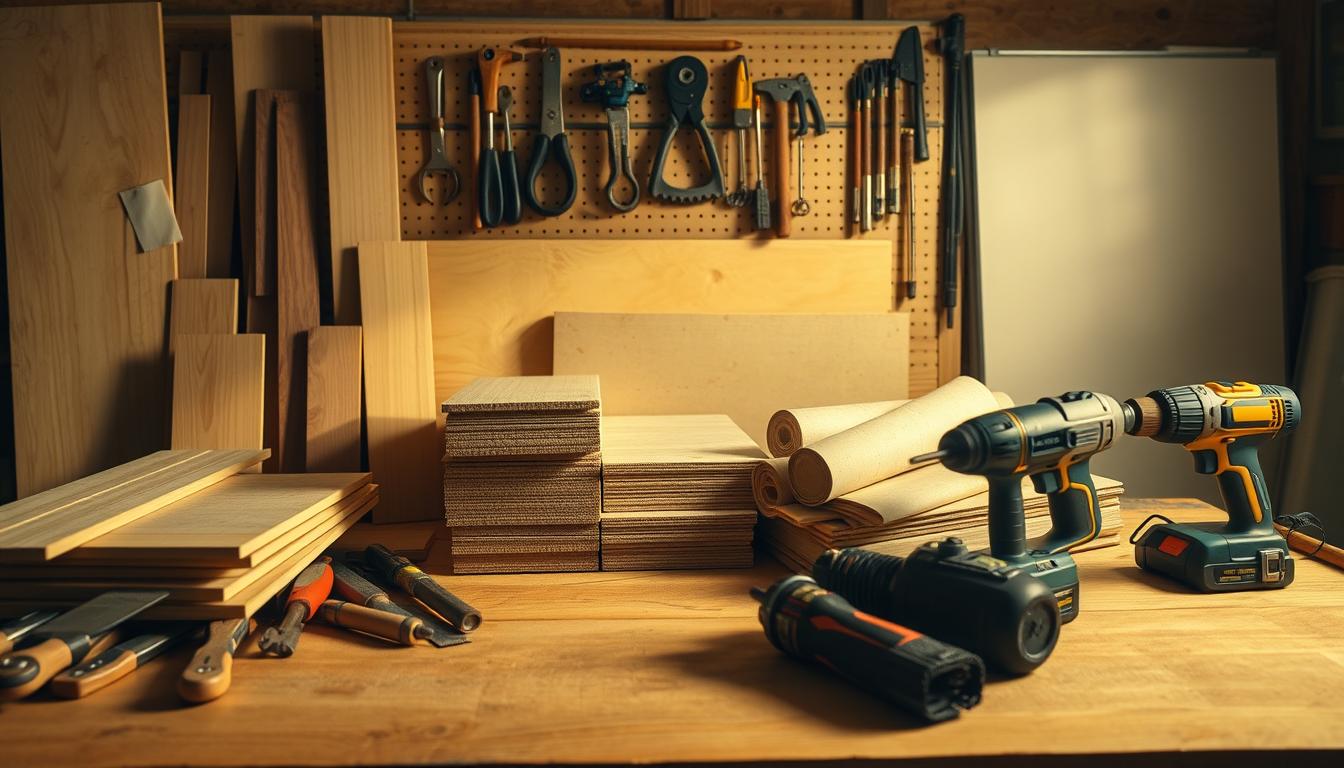
Start with quality materials like maple plywood and poplar face frames. These options balance durability and cost-effectiveness. For panels, opt for sturdy plywood that complements your room’s aesthetic.
Fasteners play a crucial role in stability. Use 1-1/4” pocket hole screws and brad nails for secure joints. For hinges, choose Euro Style concealed hinges for a sleek look. Glue adds extra strength to critical connections.
Gathering Tools and Setting Up Your Workspace
Essential tools include a circular saw, Kreg jig, and hand-held router. These ensure precise cuts and clean edges. A cutting table or jig improves accuracy and reduces errors.
Set up a dedicated workspace with ample room for large pieces. Keep tools organized and within reach. Safety is paramount, so wear protective gear and follow manufacturer instructions.
| Tool | Purpose |
|---|---|
| Circular Saw | Cutting boards and panels |
| Kreg Jig | Creating pocket holes |
| Hand-Held Router | Smoothing edges and adding details |
Preparation saves time and ensures a smooth build. Measure twice, cut once, and double-check all dimensions. With the right materials and tools, your project will be both functional and visually appealing.
Building a Hidden Storage Cabinet for Your Home Theater
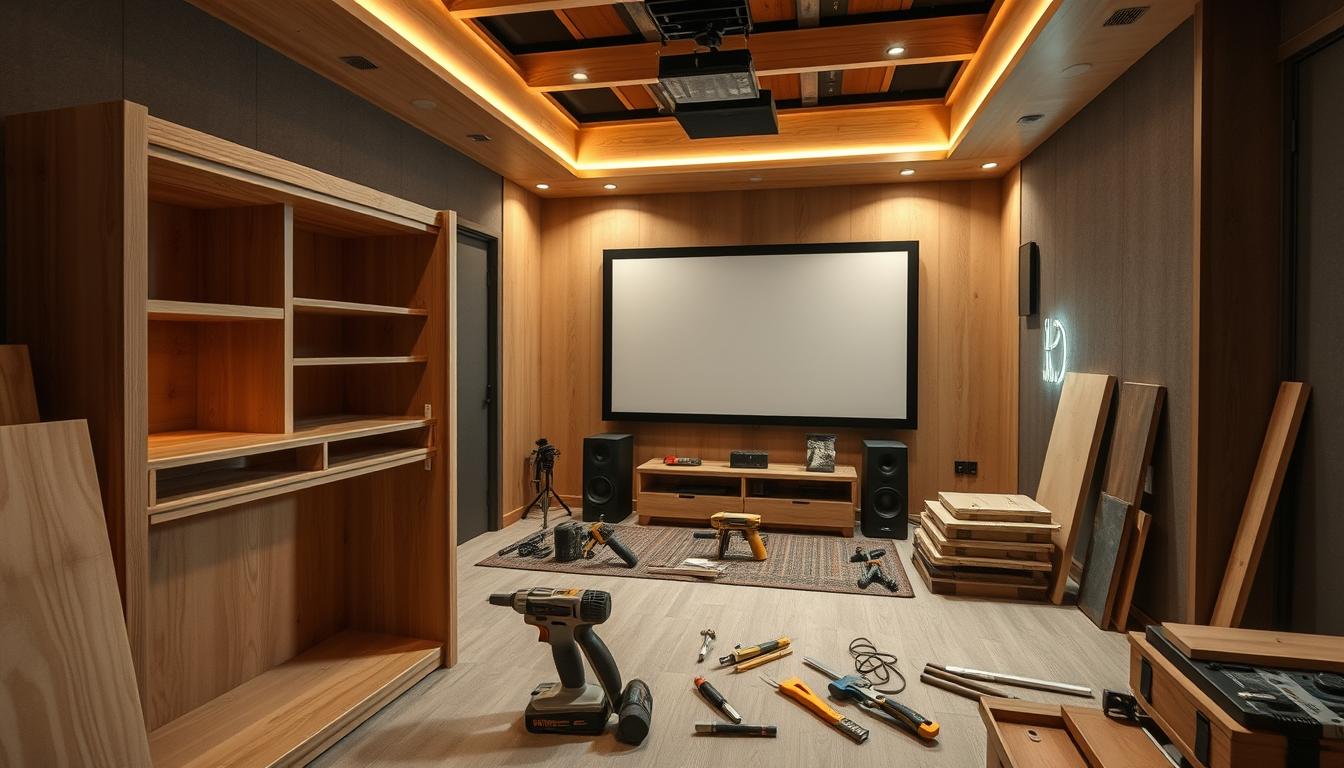
The foundation of any great cabinet lies in its base and frame. Start by constructing a raised base using sturdy materials like 3/4-inch maple plywood. This ensures stability and durability for the entire structure. Measure carefully to match your wall dimensions, and use a Kreg jig to create precise pocket holes for secure joints.
Constructing the Base and Frame
Begin with the base, ensuring it’s level and square. Use a circular saw to cut the boards to the correct size. Assemble the frame by attaching the vertical and horizontal pieces with 1-1/4” screws. Apply glue to the joints for added strength. This step is crucial for supporting the weight of the cabinet and its contents.
Building Boxes, Shelves, and Panels
Next, create individual boxes and shelves. Cut 3/4-inch plywood panels to the desired dimensions, ensuring square joints for a seamless fit. Use a router to smooth the edges and add a professional finish. Attach the shelves to the frame using brad nails and glue, making sure each compartment is evenly spaced.
“Precision is key when building custom cabinets. Every measurement and cut must be exact for a flawless finish.”
Creating Sliding Door Mechanisms
Sliding doors are a space-saving solution for your cabinet. Cut grooves into the bottom of the door panels for bearings and create rabbet cuts at the top for smooth operation. Install the tracks carefully, ensuring the doors slide effortlessly. Use Euro Style concealed hinges for a sleek, modern look.
| Component | Recommended Size |
|---|---|
| Base Height | 4 inches |
| Shelves | 12 inches deep |
| Door Width | 24 inches |
Re-check all measurements at every step to ensure a custom fit. With the right tools and techniques, your cabinet will be both functional and visually appealing.
Custom Features and Hidden Compartments
Custom features can elevate your cabinet from functional to extraordinary. By incorporating innovative elements like false floors, secret levers, and concealed hinges, you can add both practicality and intrigue to your design. These features not only enhance storage but also create a seamless, built-in look.
Integrating False Floors and Secret Levers
Adding a false floor is a clever way to create hidden storage. Start by measuring the cabinet base and cutting a piece of wood to fit. Secure it with glue and screws, ensuring it blends seamlessly with the rest of the structure. This compartment can store valuables or rarely used items.
Secret levers and push rods can reveal concealed spaces. Install a lever mechanism inside the cabinet base, connecting it to a push rod. When activated, the rod lifts the false floor, giving you access to the hidden area. This feature adds a layer of security while maintaining the cabinet‘s clean appearance.
Installing Magnet Locks and Concealed Hinges
Magnet locks are an excellent choice for securing hidden compartments. Install the lock on the underside of the false floor and the magnet on the cabinet base. This setup ensures the compartment stays closed unless intentionally opened.
Concealed hinges are another essential feature. These hinges are hidden from view, giving your cabinet a sleek, modern look. Use a drill to create precise holes for installation, ensuring the door operates smoothly.
| Feature | Purpose |
|---|---|
| False Floor | Creates hidden storage space |
| Secret Lever | Reveals concealed compartments |
| Magnet Lock | Secures hidden areas |
| Concealed Hinge | Maintains a seamless appearance |
Adding auxiliary trim, like cove molding, enhances the visual appeal of your cabinet. This finishing touch ties the design together, making it a standout piece in your space. With these custom features, your cabinet will be both functional and visually stunning.
Conclusion
Creating a custom cabinet for your entertainment space is a rewarding project that combines functionality and style. From initial sketches to the final installation, each step ensures a seamless fit and professional finish. Precise measurements in inches and the right wood selection are crucial for durability and aesthetics.
Innovative features like sliding doors and hidden compartments maximize storage without cluttering the room. Tools like the Kreg jig and quality panels make the process efficient and precise. These elements work together to create a piece that blends perfectly with your wall and enhances your space.
Adapt these techniques to suit your needs, and don’t hesitate to modify the design. For more tips on optimizing your entertainment area, explore this dedicated guide. With careful planning and attention to detail, your custom cabinet will be both practical and visually stunning.
FAQ
What materials are best for constructing a hidden compartment?
Plywood and MDF are excellent choices for durability and ease of customization. Use hardwood for frames to ensure stability.
How do I ensure the cabinet blends seamlessly with my wall?
Match the paint or wallpaper of the cabinet to your wall. Use trim and molding to create a cohesive look.
What tools are essential for this project?
You’ll need a drill, saw, level, tape measure, and clamps. A jig can help with precise cuts and assembly.
How do I create a sliding door mechanism?
Use ball-bearing slides or track systems for smooth operation. Ensure the hinges and tracks are aligned perfectly.
Can I add custom features like secret levers?
Yes, magnet locks and concealed levers can be integrated for added functionality and a hidden appearance.
How do I maximize space in a small room?
Plan the dimensions carefully and use vertical space. Incorporate shelves and compartments for efficient storage.
What’s the best way to hide seams and joints?
Use wood filler and sandpaper to smooth surfaces. Apply paint or veneer for a seamless finish.
How do I ensure the cabinet is sturdy?
Reinforce the frame with screws and glue. Use braces or supports for added strength.