Did you know that 70% of homeowners prioritize comfortable seating when creating their home theater spaces? This statistic highlights the importance of combining functionality with aesthetics to craft the perfect entertainment area. Unlike a casual living room setup, a dedicated home theater is designed to optimize the viewing experience by integrating advanced audio/visual systems with warm, inviting design elements.
One of the key features that sets a home theater apart is the use of wood accents. These natural elements add texture and elegance, creating a sophisticated backdrop for your screen. Whether it’s through paneling, an accent wall, or subtle touches, wood brings a timeless beauty to the space. Pairing these accents with smart lighting and high-quality technology ensures a seamless blend of style and functionality.
Creating the right atmosphere is crucial. Dark tones, cozy seating, and strategic lighting can transform any room into a cinematic haven. This guide will walk you through practical steps and styling tips to help you design a space that’s both luxurious and functional.
Key Takeaways
- Comfortable seating is a top priority for 70% of homeowners.
- Wood accents add texture and elegance to the space.
- Smart lighting enhances the viewing experience.
- An accent wall can serve as a stunning focal point.
- Balancing aesthetics and functionality is key to a great home theater.
Getting Started with Home Theater Design
Planning your entertainment space starts with understanding your unique needs. Whether you’re a movie buff, a gamer, or someone who loves hosting gatherings, your room should reflect your lifestyle. Begin by asking yourself: What’s the primary purpose of this space? This question will guide your decisions on layout, technology, and design.
Understanding Your Entertainment Needs
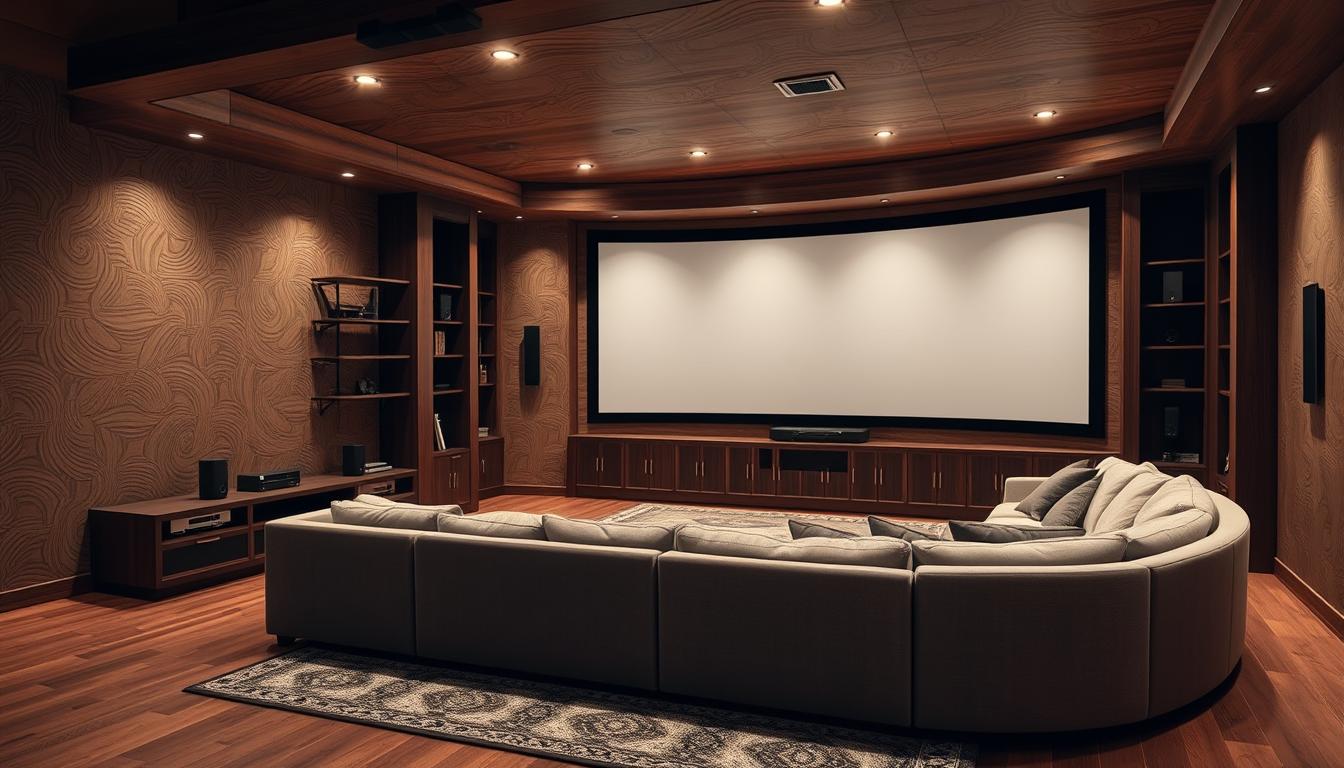
Your entertainment goals shape the entire design process. For example, if movie nights are your priority, focus on a large screen and immersive sound. If gaming is your passion, consider integrating advanced tech like surround sound and LED lighting. Social gatherings may call for flexible seating and a cozy atmosphere.
Here’s a quick guide to help you align your space with your needs:
| Activity | Key Features |
|---|---|
| Movie Watching | Large screen, surround sound, comfortable seating |
| Gaming | High-quality audio, LED lighting, ergonomic seating |
| Social Gatherings | Flexible seating, mini-bar, ambient lighting |
Balancing Aesthetics with Functionality
A great room combines beauty with practicality. Start by choosing a focal point, like an accent wall or a sleek panel. Wooden elements add warmth and texture, creating a luxurious feel. Pair these with modern tech for a seamless experience.
Comfort is key. Opt for plush seating with optimal viewing angles. 70% of homeowners prioritize comfort, so don’t overlook this detail. Lighting also plays a crucial role. Dimmable lights and blackout curtains can transform the atmosphere.
“The best spaces are those that feel both inviting and functional.”
Finally, consider your budget and floor space. Plan carefully to ensure every element fits harmoniously. By balancing aesthetics with functionality, you’ll create a room that’s both stylish and practical.
Understanding the Role of Wooden Accents
Wooden accents bring a unique charm to any room, especially in a home theater. These natural elements add depth and warmth, creating a space that feels both luxurious and inviting. Whether it’s an accent wall, paneling, or subtle touches, wood transforms the atmosphere, making it perfect for movie nights or casual gatherings.
Enhancing Texture and Warmth
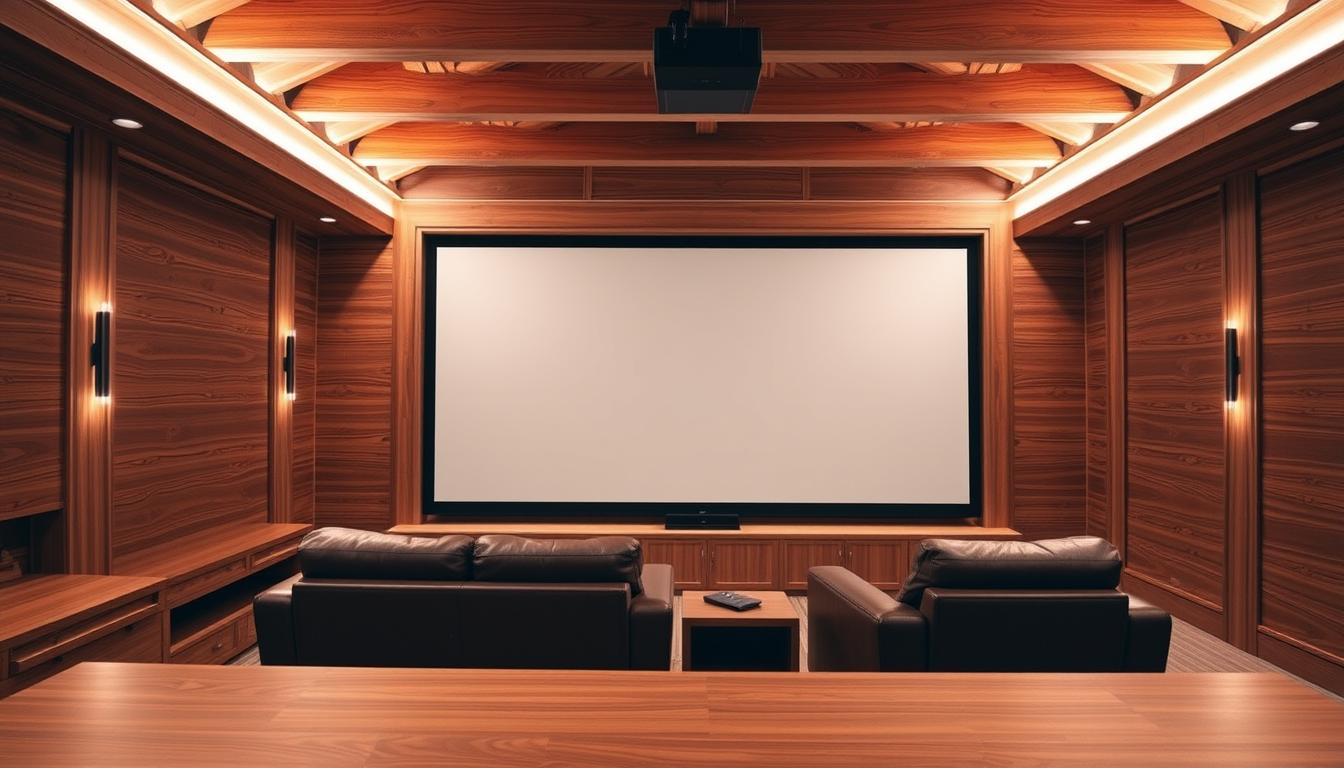
Different types of wood contribute unique textures and tones to your space. Light woods like oak and ash create a bright, airy feel, while darker options like walnut add sophistication. Reclaimed or rustic wood can introduce a sense of history and character, making your room feel cozy and lived-in.
The natural grain patterns of wood add elegance and sophistication. These textures create a striking backdrop for your screen, enhancing the viewing experience. An accent wall with vertical or horizontal paneling can serve as a focal point, balancing functionality with style.
Here’s a quick guide to popular wood types and their effects:
| Wood Type | Effect |
|---|---|
| Oak | Bright, airy, and versatile |
| Walnut | Rich, dark, and sophisticated |
| Reclaimed Wood | Rustic, warm, and full of character |
Mixing modern technology with traditional wood finishes can create a harmonious look. For example, sleek LED lighting paired with a wooden accent wall adds a touch of luxury. This combination ensures your space is both functional and visually appealing.
“Wood brings a timeless beauty to any room, blending seamlessly with modern elements.”
When choosing wood for your space, consider the overall style and atmosphere you want to achieve. Whether it’s a cozy retreat or a sophisticated entertainment area, wooden accents can elevate the design, making it truly unique.
Designing a Modern Home Theater with Wooden Accents
Achieving a balance between sleek tech and organic elements is the key to a stunning room. When creating an entertainment space, the goal is to merge modern technology with natural textures for a look that’s both functional and inviting. This approach ensures your room feels luxurious while delivering an immersive experience.
Key Considerations for a Stylish Look
Choosing the right materials is crucial. Wood accents, like walnut slat walls, add warmth and sophistication. These elements create a striking backdrop for your screen, enhancing the overall atmosphere. Opt for durable materials that offer both beauty and longevity.
Lighting plays a significant role in setting the tone. Dimmable LED lights can complement wood panels, creating a versatile ambiance. Pair these with blackout curtains to control light levels during movie nights.
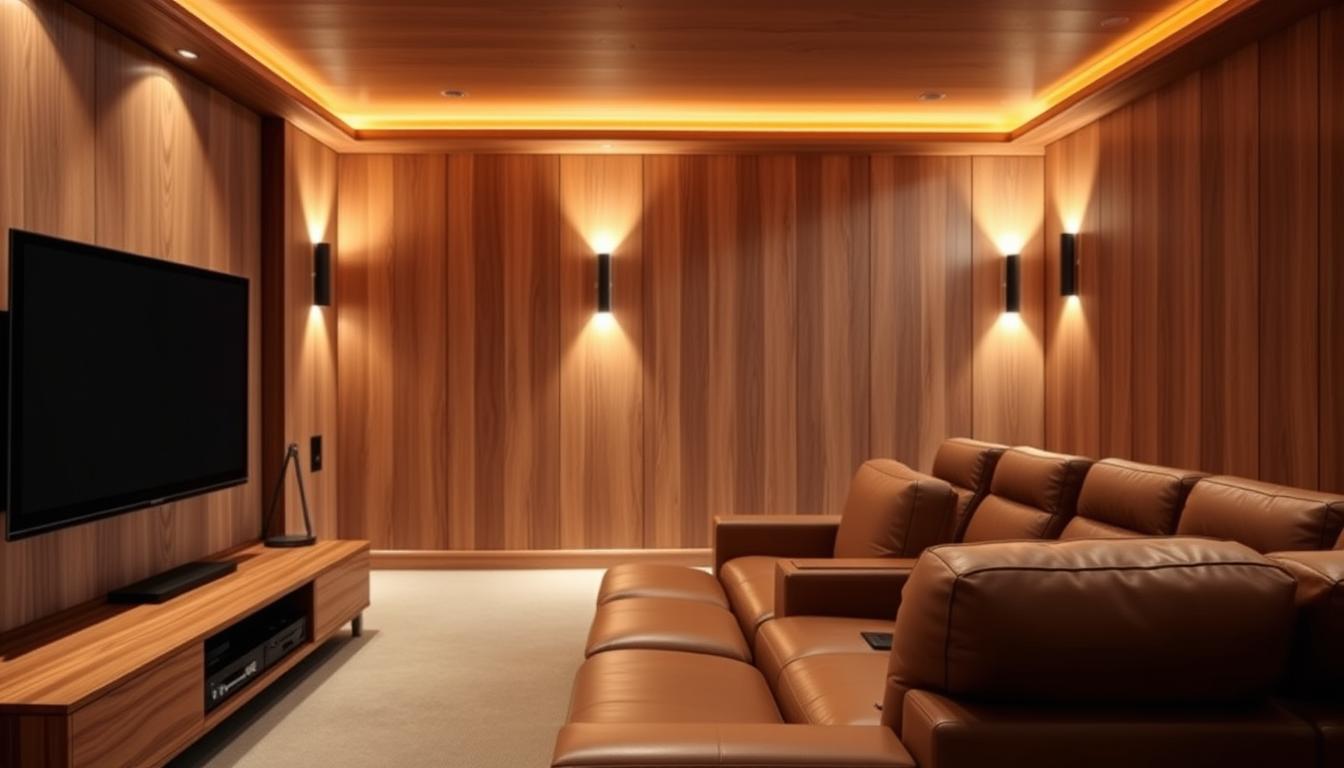
When selecting furniture, prioritize comfort and style. Plush seating with optimal viewing angles ensures everyone enjoys the experience. 70% of homeowners emphasize comfort, so don’t overlook this detail.
Integrating Technology with Natural Elements
Modern setups often feature advanced sound systems and projection screens. These elements should blend seamlessly with wood accents. For example, built-in walnut slat walls can house speakers while maintaining a sleek look.
LED lighting can highlight the natural grain of wood, adding depth to the room. This combination of tech and texture creates a dynamic space that’s perfect for entertainment.
“The best designs balance technology with natural beauty, creating a space that’s both functional and visually stunning.”
Finally, ensure your layout maximizes space and functionality. A well-planned room allows for easy movement while maintaining a cozy atmosphere. By blending modern tech with organic elements, you’ll create a room that’s both stylish and practical.
Planning Your Layout and Space Utilization
Effective space planning is the foundation of a functional and stylish room. Whether you’re creating a dedicated entertainment area or a multiuse space, the layout plays a crucial role in defining the experience. Start by assessing your room’s dimensions and natural light sources to ensure optimal placement of key elements.

Optimizing Seating and Viewing Angles
Comfortable seating is essential for an enjoyable viewing experience. Arrange your chairs to ensure clear sightlines to the screen. For a 70-inch screen, aim for a viewing distance of 5.5 to 8.75 feet for 4K resolution. Multirow setups benefit from risers, elevating each row by 6 to 12 inches for unobstructed views.
Leave at least 3 feet of space in front of each seat for legroom. For multirow layouts, maintain 6 feet between rows to allow easy movement and reclining. 70% of homeowners prioritize comfort, so invest in plush seating with features like built-in footrests and USB charging ports.
Designing Multiuse Areas for Entertainment
Your room should adapt to various activities, from movie nights to social gatherings. Flexible seating arrangements, like modular sofas, allow you to reconfigure the space easily. Add a mini-bar or snack station for a complete entertainment hub.
Consider acoustics and soundproofing to enhance the experience. Columns and molding can improve sound distribution, while softwood or fabric coverings minimize echoes. A balanced focal point, like an accent wall, ties the room together, creating a cohesive look.
“A well-planned layout ensures your space is both functional and visually stunning.”
By prioritizing layout and space utilization, you’ll create a room that’s perfect for entertainment and relaxation. Strategic design choices ensure every element works harmoniously, delivering a luxurious and inviting atmosphere.
Selecting the Perfect Wood and Materials
Choosing the right materials for your entertainment space can elevate both its look and functionality. Wood, in particular, brings warmth and character, making it a popular choice for creating a cozy atmosphere. Whether you prefer reclaimed or rustic options, understanding the unique qualities of each material ensures your room reflects your style and stands the test of time.
Exploring Reclaimed and Rustic Options
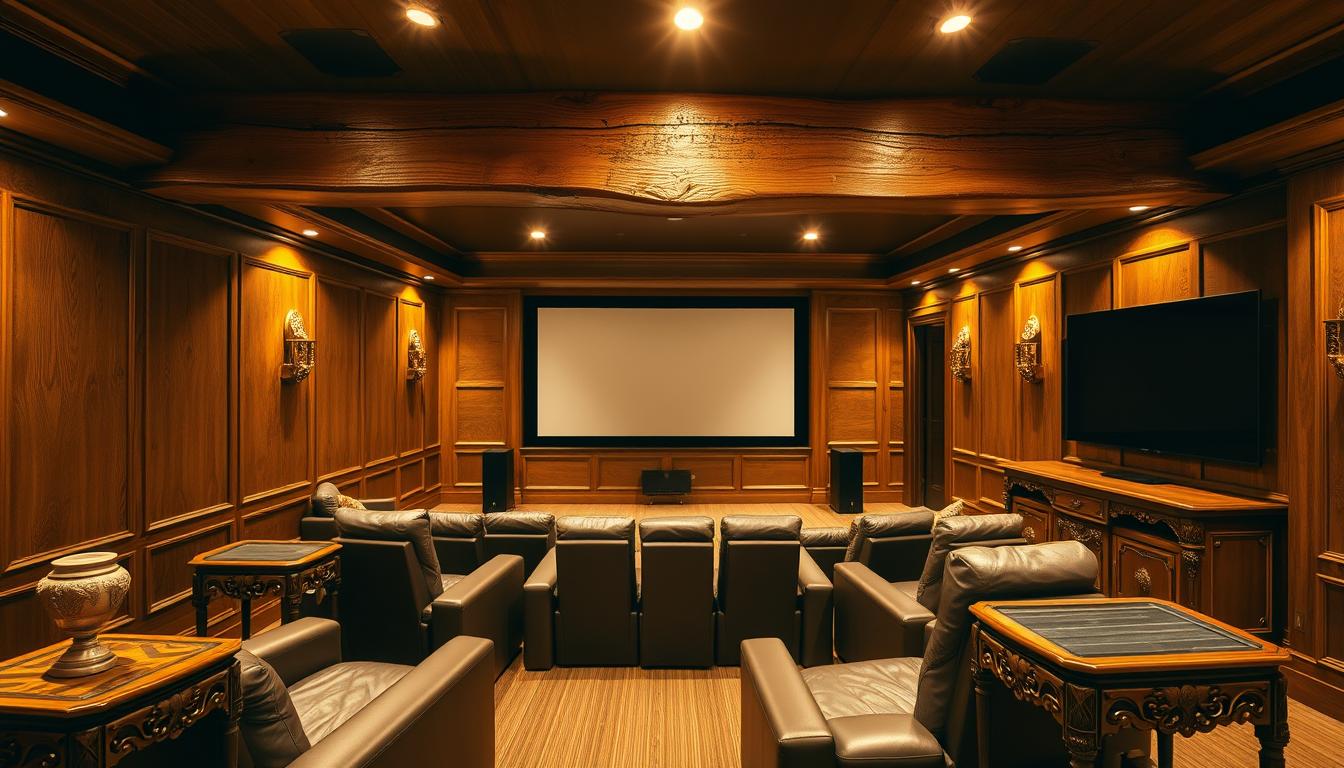
Reclaimed wood carries a sense of history and sustainability. Each piece has unique textures and imperfections, adding character to your space. This material is eco-friendly, repurposing old wood to minimize waste. It’s perfect for creating an accent wall that tells a story while enhancing the room’s atmosphere.
Rustic barn wood offers a raw, natural appeal. Its earthy tones, like faded greys and browns, inject warmth into the room. Horizontal planks can visually expand smaller spaces, making them feel more open and inviting. Both reclaimed and rustic options bring a touch of authenticity to your design.
Evaluating Material Durability and Beauty
When selecting wood, consider its durability and finish. Hardwoods like oak and walnut are long-lasting and resistant to wear. Their natural grain patterns add elegance, creating a stunning backdrop for your screen. Softer woods, like pine, are more affordable but may require extra care to maintain their appearance.
Matching wood tones with your room’s lighting and décor is essential. Light woods, such as ash, reflect sunlight, brightening the space. Darker options, like mahogany, add sophistication and depth. Pairing wood with modern elements, like LED lighting, creates a harmonious blend of rustic charm and contemporary style.
“The right wood choice transforms your room into a space that’s both beautiful and functional.”
Here are some tips for selecting the perfect wood:
- Opt for reclaimed wood for sustainability and unique character.
- Choose rustic barn wood for a warm, natural look.
- Consider durability and grain patterns for long-lasting beauty.
- Match wood tones with your room’s lighting and décor.
- Balance rustic charm with modern design elements.
By carefully evaluating your options, you can create a space that’s both visually stunning and practical. The right wood choice enhances the room’s texture, tone, and overall atmosphere, making it a perfect backdrop for your entertainment needs.
Enhancing Ambience with Lighting and Technology
Creating the perfect atmosphere in your entertainment space involves more than just comfortable seating and a great screen. Lighting and technology play a crucial role in transforming your room into an immersive experience. By combining strategic lighting with advanced tech, you can elevate both the mood and functionality of your space.
Utilizing LED and Ambient Lighting Solutions
LED and ambient lighting are essential for setting the right tone. Blue LED lights, for example, create a dramatic and immersive environment. These lights can be placed around the screen or seating area to enhance the viewing experience. Dimmable options allow you to adjust the brightness, ensuring the perfect balance for every movie or gathering.
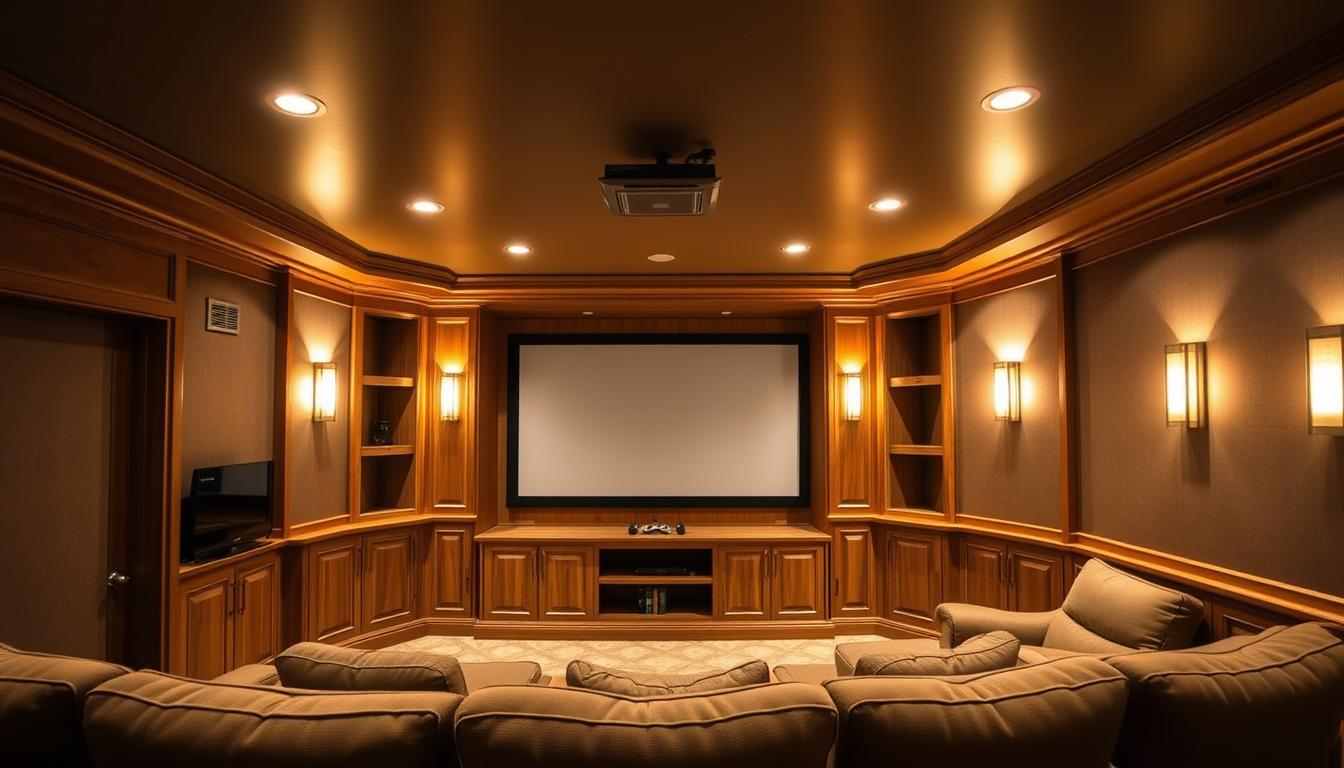
Ambient lighting highlights the natural textures of wood, adding depth and warmth to your room. Wall sconces or recessed ceiling lights can accentuate architectural features, creating a cohesive look. For a modern touch, consider smart lighting systems that sync with your entertainment setup.
Incorporating Soundproofing and Projection Systems
Soundproofing is key to achieving true cinema-quality sound. Materials like acoustic panels or softwood coverings minimize echoes, ensuring crisp audio. Pair this with a high-quality projection system for a seamless viewing experience. Built-in speakers can be integrated into wooden walls, maintaining a sleek and functional design.
When selecting technology, ensure it complements the natural beauty of wood. For example, LED strip lighting can highlight the grain of an accent wall, adding sophistication. Automation systems allow you to control lighting and sound with ease, enhancing convenience.
“The right lighting and technology transform your room into a space that’s both functional and visually stunning.”
Here’s a quick guide to lighting types and their benefits:
| Lighting Type | Benefits |
|---|---|
| LED Strip Lights | Enhance mood, highlight textures |
| Recessed Ceiling Lights | Provide even illumination |
| Wall Sconces | Accentuate architectural features |
For more tips on creating the perfect lighting for your home theater, explore our detailed guide. By thoughtfully integrating lighting and technology, you can craft a space that’s both luxurious and functional.
Creating Eye-Catching Accent Walls
An accent wall can transform your space into a stunning focal point, blending functionality with artistic appeal. Wood paneling is a popular choice, offering texture and warmth that elevates the overall look. Whether you choose vertical or horizontal orientation, the design can significantly impact the room’s perception and atmosphere.

Vertical vs. Horizontal Wood Paneling
Vertical wood paneling creates an illusion of height, making ceilings appear taller. This orientation is ideal for smaller rooms, as it draws the eye upward, enhancing the sense of space. The clean lines add sophistication, making it a perfect choice for a refined look.
Horizontal paneling, on the other hand, broadens the room visually. It’s excellent for creating a cozy, expansive feel, especially in wider spaces. The horizontal lines emphasize width, making it a great option for open-concept areas.
Here’s a comparison of the two orientations:
| Orientation | Effect |
|---|---|
| Vertical | Adds height, enhances sophistication |
| Horizontal | Broadens space, creates coziness |
Lighting plays a crucial role in highlighting the paneling’s texture. Vertical panels can be accentuated with recessed ceiling lights, while horizontal panels benefit from wall sconces. This coordination ensures the wall becomes a true focal point.
“The right paneling orientation can redefine your space, adding both style and functionality.”
When selecting panel sizes and finishes, consider the room’s overall tone. Lighter woods like ash brighten the space, while darker options like walnut add depth. The choice of finish, whether matte or glossy, also impacts the final look.
By thoughtfully choosing between vertical and horizontal wood paneling, you can create an accent wall that enhances your room’s design. This approach ensures your space is both visually stunning and functional.
Integrating Modern and Rustic Design Elements
Combining sleek modern finishes with rustic wood elements creates a harmonious balance in any space. This approach blends the clean lines of contemporary design with the warmth and character of natural materials. The result is a layered, inviting atmosphere that works equally well in formal and cozy settings.
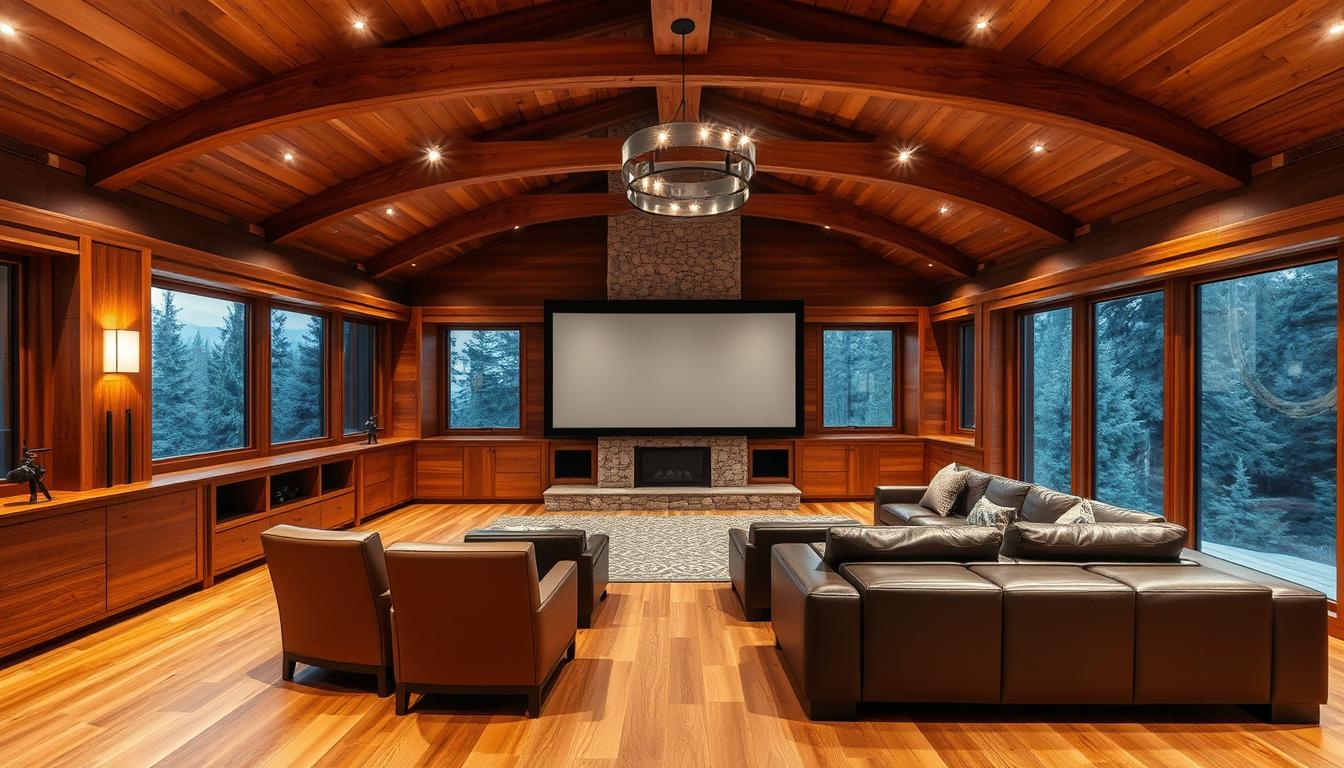
To achieve this balance, start by selecting complementary textures and finishes. Pair smooth, polished surfaces like metal or glass with the natural grain of wood. This contrast adds depth and visual interest to your room. For example, a sleek metal frame for your screen can be paired with a reclaimed wood accent wall to create a striking focal point.
Blending Sleek Finishes with Natural Charm
One effective method is to use modern materials sparingly, allowing the rustic elements to shine. For instance, a minimalist metal coffee table can sit alongside a plush, wood-framed sofa. This combination ensures neither style overwhelms the other, creating a cohesive look.
Lighting also plays a crucial role in blending these styles. Dimmable LED lights can highlight the texture of wood while maintaining a modern aesthetic. Consider using recessed lighting to emphasize architectural features like a wooden ceiling or paneled wall.
“The key to a successful hybrid design is balance—modern elements should enhance, not overshadow, the rustic charm.”
Here are some tips for achieving this balance:
- Use neutral color palettes to unify the space.
- Incorporate mixed materials like metal, glass, and wood.
- Choose furniture that combines sleek lines with natural textures.
- Position modern technology, like speakers, within rustic elements for a seamless transition.
By thoughtfully integrating modern and rustic design elements, you can create a space that feels both fresh and grounded. This approach ensures your room is not only visually stunning but also functional and inviting.
Practical Steps to Bring Your Vision to Life
Bringing your entertainment space to life requires careful planning and execution. Whether you’re starting from scratch or upgrading an existing room, a structured approach ensures your project stays on track and meets your expectations. Here’s a step-by-step guide to help you turn your vision into reality.
Step-by-Step Implementation Guide
Start by validating your concept and setting a budget. Consider the size of your room and the primary purpose of the space. For example, a 10×10-foot room is ideal for a compact setup, while larger spaces allow for more elaborate designs. Outline your goals, whether it’s creating a cozy movie haven or a multiuse entertainment hub.
Next, source high-quality materials. Wood paneling, like oak or walnut, adds warmth and elegance. Choose finishes that complement your room’s lighting and décor. Reclaimed wood is a sustainable option that brings character to your space. Ensure the materials are durable and easy to maintain.
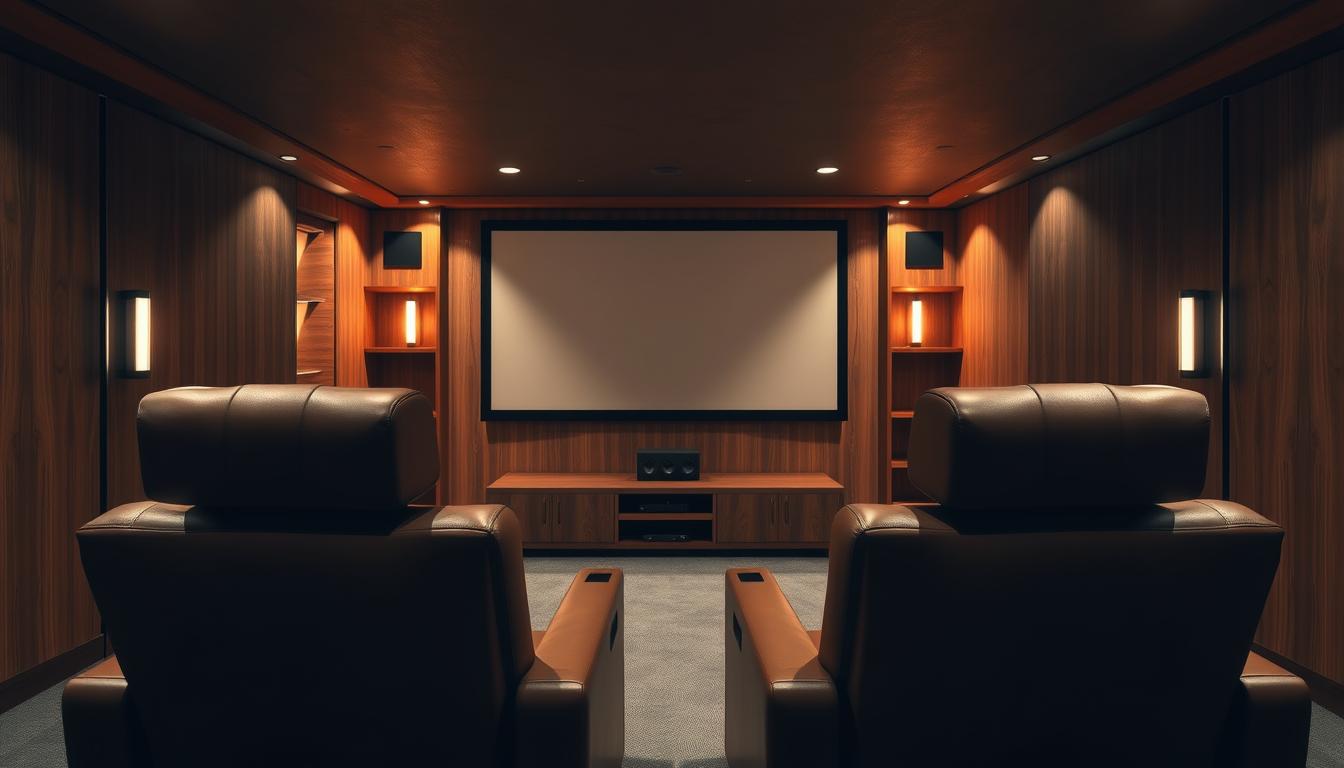
Installation is a critical phase. Begin with the accent wall, which serves as the focal point of your room. Vertical paneling can make the ceiling appear taller, while horizontal paneling broadens the space. Use precise measurements to ensure a seamless fit. For lighting, opt for dimmable LED strips or recessed fixtures to enhance the atmosphere without overpowering the screen.
When integrating technology, plan for optimal audiovisual integration. A 5.1 surround sound system delivers immersive audio, while a high-definition projector ensures crisp visuals. Position speakers within the wood panels for a sleek look. Use cable management tools like Velcro ties to keep the area tidy.
Decide whether to engage professionals or tackle the project yourself. DIY methods can save costs, but hiring experts ensures precision and efficiency. If you choose DIY, follow detailed tutorials and use quality tools. For complex tasks like soundproofing, consider professional assistance.
Finally, add the finishing touches. Soft furnishings like plush seating and heavy curtains enhance comfort and sound quality. A mini-bar or snack station adds functionality, making the space perfect for gatherings. Small details, like a starry ceiling effect with fiber-optic lights, elevate the overall ambiance.
“A well-executed plan ensures your room is both functional and visually stunning.”
By following these steps, you can create a space that combines elegance with practicality. Thoughtful planning and attention to detail ensure your entertainment area meets your needs and exceeds your expectations.
Tips for Maintenance and Upkeep of Your Theater Room
Maintaining your entertainment space ensures it remains both beautiful and functional for years to come. Regular care preserves the elegance of wood accents and the performance of advanced technology. By following a few simple steps, you can keep your room looking and sounding its best.
Preserving Wood Accents and Finishes
Wood adds warmth and sophistication to your space, but it requires proper care to maintain its luster. Dust wood surfaces weekly using a soft, microfiber cloth to prevent buildup. For deeper cleaning, use a mild wood cleaner to protect the finish and avoid harsh chemicals that can damage the material.
Seasonal maintenance is also essential. During dry months, consider using a wood conditioner to prevent cracking. In humid conditions, ensure proper ventilation to avoid warping. These small steps help preserve the natural beauty of your accent wall or paneling.
Caring for Technology and Lighting
Your sound system and lighting are critical to the viewing experience. Schedule regular inspections to ensure all components are functioning correctly. Check speaker connections and clean projector lenses to maintain optimal performance.
LED lighting enhances the atmosphere but can accumulate dust over time. Wipe down fixtures gently to keep them bright and efficient. For soundproofing materials, vacuum or dust acoustic panels to maintain their effectiveness.
“Regular upkeep ensures your space remains a luxurious retreat for entertainment and relaxation.”
Seasonal Maintenance Tips
Seasonal changes can impact your room’s condition. In winter, monitor humidity levels to protect wood from drying out. During summer, ensure proper airflow to prevent moisture buildup. These adjustments help extend the life of your home theater design.
Here’s a quick checklist for seasonal care:
- Inspect wood surfaces for cracks or warping.
- Test all lighting and sound systems for functionality.
- Clean or replace air filters to maintain air quality.
- Check for any signs of wear on seating or carpets.
By balancing aesthetic upkeep with technical performance, you can enjoy a space that’s both stylish and functional. Thoughtful maintenance ensures your room remains a focal point for entertainment and relaxation.
Conclusion
Creating a space that combines elegance and functionality is easier than you think. By merging modern technology with natural wood elements, you can craft a room that’s both warm and inviting. Thoughtful design and smart layout planning ensure your home theater meets both aesthetic and practical goals.
Quality materials, like wood paneling, add texture and sophistication to your space. Pair these with advanced tech for an immersive movie experience. A well-planned focal point, such as an accent wall, ties the room together, creating a cohesive look.
This guide provides actionable steps to help you confidently start your project. Whether you’re renovating or building from scratch, these tips ensure your home theater design reflects your style and needs. Embrace the combination of natural beauty and modern features to create a space that’s truly unique.
Ready to transform your room? Use this guide as your roadmap to a luxurious and functional entertainment area. Share your journey and inspire others with your creative results.
FAQ
How do I start designing a home theater with wooden accents?
Begin by assessing your entertainment needs and the available space. Focus on balancing aesthetics with functionality to create a stylish yet practical room.
Why are wooden accents important in a home theater?
Wooden accents add texture and warmth, enhancing the overall atmosphere. They create a natural, inviting look that complements modern technology.
What should I consider when selecting wood for my home theater?
Choose materials that match your style, such as reclaimed or rustic options. Evaluate durability and beauty to ensure the wood lasts while maintaining its appeal.
How can I optimize seating and viewing angles in my theater room?
Arrange seating to provide clear sightlines to the screen. Consider tiered seating or recliners for comfort and an immersive viewing experience.
What lighting options work best for a home theater?
Use LED and ambient lighting to set the mood. Dimmable lights are ideal for creating a cinematic atmosphere without glare.
Should I use vertical or horizontal wood paneling for accent walls?
Vertical paneling can make the room feel taller, while horizontal paneling adds width. Choose based on the room’s dimensions and your desired effect.
How do I blend modern and rustic elements in my home theater?
Combine sleek finishes like metal or glass with natural wood accents. This mix creates a balanced, sophisticated look.
What steps are involved in implementing a home theater design?
Start with a layout plan, select materials, and integrate technology. Follow a step-by-step guide to ensure every detail aligns with your vision.
How do I maintain wood accents in my theater room?
Regularly clean and polish wood surfaces to preserve their finish. Avoid excessive moisture and direct sunlight to prevent damage.
Can I design a multiuse area for entertainment in my home theater?
Yes, incorporate flexible seating and storage solutions. This allows the space to double as a lounge or gaming area when not in use for movies.