

Did you know that over 70% of Americans prefer watching movies at home rather than in a traditional cinema? With the right setup, you can recreate that cinematic magic in your own space. This guide will show you how to design and build a seating arrangement that combines comfort and style, transforming your living area into a personal movie haven.
Whether you’re working with a tight budget or aiming for a luxurious feel, this guide covers everything you need. From selecting durable materials to incorporating risers for better viewing angles, you’ll learn how to achieve a professional look with a personal touch. Get ready to enjoy your favorite films in a space that’s uniquely yours.
Key Takeaways
- Create a cinematic experience at home with a well-designed seating arrangement.
- Use risers to enhance viewing angles and improve the overall setup.
- Choose durable materials for long-lasting comfort and style.
- Follow step-by-step instructions to achieve a professional finish.
- Transform your space into a personalized movie haven.
Introduction to Your DIY Home Theater Project
Transforming your space into a cinematic retreat starts with a solid plan. A well-designed entertainment area can elevate your viewing experience while adding both style and functionality to your room. Whether you’re working with a small corner or a dedicated space, careful planning ensures every detail aligns with your vision.

Assessing your available room is the first step. Measure the dimensions and consider how the layout will impact your project. This helps you make informed decisions about seating arrangements, storage, and technology integration. A thoughtful approach ensures your setup is both practical and visually appealing.
“A great project begins with a clear idea and a well-executed plan.”
Your unique style plays a significant role in this endeavor. Think about colors, materials, and layouts that reflect your personality. Customization options, like breathable fabrics and ergonomic designs, can enhance comfort and durability. This is your chance to create a space that’s truly yours.
Combining creativity with practicality offers numerous benefits. Not only will you save money, but you’ll also gain a sense of accomplishment. Plus, a well-planned setup ensures long-term enjoyment for you and your family.
| Key Considerations | Benefits |
|---|---|
| Assess room dimensions | Optimizes space usage |
| Choose durable materials | Ensures longevity |
| Incorporate ergonomic design | Enhances comfort |
This section sets the foundation for understanding your project goals and inspirations. By focusing on planning and personalization, you’ll create a space that’s both functional and stylish. Let’s dive into the details and turn your idea into reality.
Understanding Your Home Theater Space and Dimensions
The key to a perfect layout lies in knowing your room’s dimensions. Accurate measurements ensure your setup is both functional and visually appealing. Start by measuring the length, width, and height of your space. This step helps you determine the best arrangement for your setup.

Measuring Your Room Effectively
Use a tape measure to capture the exact size of your room. Record these numbers and sketch a simple floor plan. This will help you visualize how everything fits together. Don’t forget to account for doors, windows, and other obstructions.
Consider the viewing distance from your screen. For an optimal experience, the recommended distance is 1.5 to 2.5 times the screen’s diagonal size. This ensures everyone has a clear view without straining their eyes.
“Precision in measurement leads to perfection in design.”
Planning the Ideal Seating Layout
Once you have your measurements, it’s time to plan the seating arrangement. Start by determining the number of seats you need. Ensure there’s at least 20 inches between each seat for comfort, and 30 inches of walkway space around the room.
Use risers to elevate rows of seats for better viewing angles. This technique, inspired by commercial theaters, ensures everyone has an unobstructed view. Aim for a viewing angle between 36-50 degrees for the best experience.
- Measure your room’s length, width, and height.
- Sketch a floor plan to visualize the layout.
- Ensure proper spacing between seats and walkways.
- Use risers to enhance viewing angles.
By following these steps, you’ll create a balanced and comfortable setup. Proper planning ensures your space is optimized for both functionality and enjoyment.
Materials and Tools You’ll Need
Building a functional and stylish setup requires the right materials and tools. The quality of your materials ensures durability, while the right tools make the process efficient and precise. This section will guide you through the essentials for creating a sturdy and visually appealing structure.

Essential Materials for Construction
Start with high-quality lumber and plywood for the frame. These materials provide the backbone of your setup, ensuring stability and longevity. For the top surfaces, consider using smooth, durable wood or MDF for a polished finish.
Upholstery fabrics are another critical component. Opt for breathable, durable materials like real leather or high-density foam. These choices enhance comfort and withstand daily use. Additionally, soundproofing materials for the wall can improve acoustics and create a more immersive experience.
Recommended Tools for Efficiency
A power drill is indispensable for assembling the frame and attaching components. Pair it with a miter saw for precise cuts, ensuring every piece fits perfectly. A level is essential to maintain balance and alignment throughout the project.
Don’t forget clamps and measuring tape. These tools help secure materials during assembly and ensure accurate dimensions. With the right tools, you’ll streamline the construction process and achieve professional results.
| Materials | Tools |
|---|---|
| Lumber and plywood | Power drill |
| Upholstery fabrics | Miter saw |
| Soundproofing materials | Level |
By selecting the right materials and tools, you’ll create a setup that’s both durable and visually appealing. Whether you’re working on a small room or a larger space, these essentials will help you achieve a professional finish.
DIY Home Theater Seating: Comfort Meets Craftsmanship
Crafting a space that blends relaxation and elegance starts with thoughtful design. A well-planned home theater setup not only enhances your viewing experience but also reflects your personal style. By combining comfort with quality craftsmanship, you can create a space that’s both functional and visually stunning.
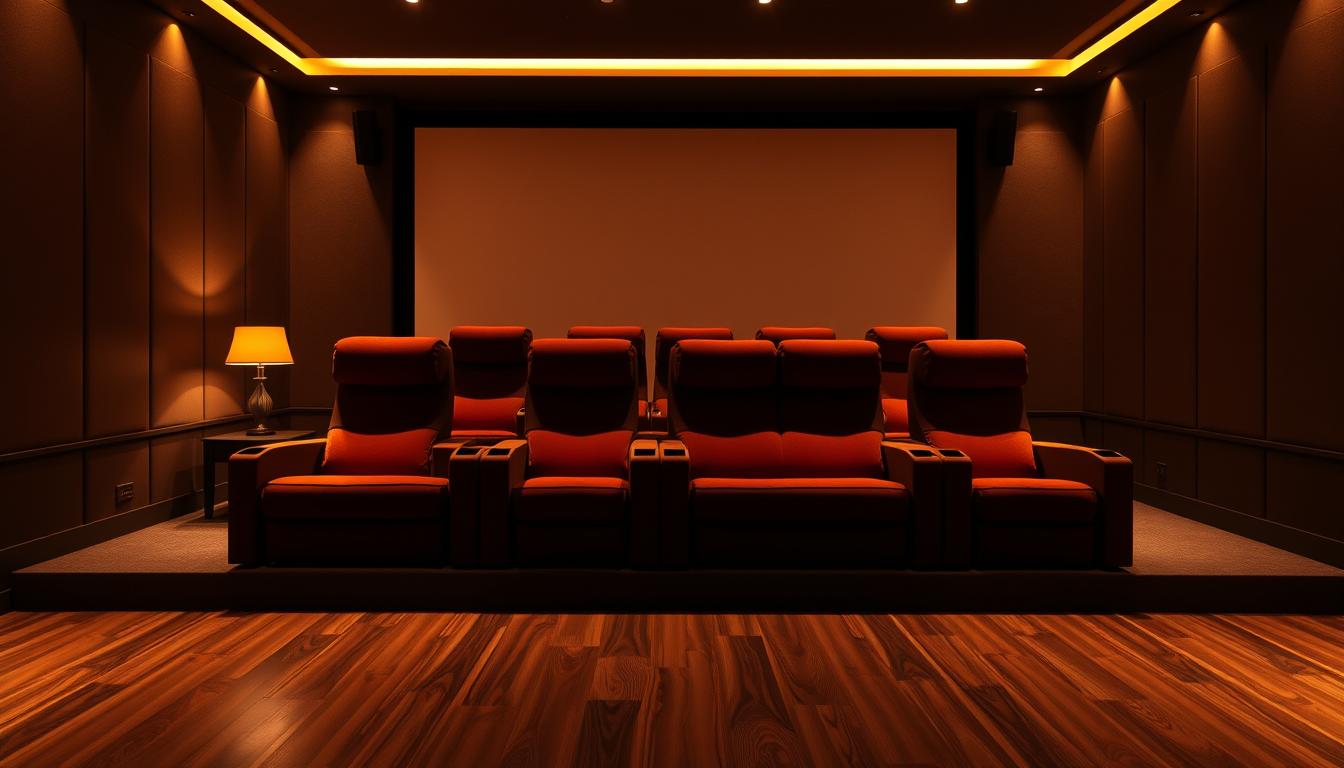
One of the key aspects of a successful project is personalization. Your diy home theater should reflect your unique tastes and needs. From selecting the right materials to designing the perfect layout, every detail contributes to the overall experience. For instance, high-density foam and ergonomic contours ensure long-lasting comfort during extended movie nights.
Real-life examples show how thoughtful design can transform a space. One homeowner incorporated risers to improve viewing angles, while another used breathable fabrics for added comfort. These small touches make a big difference in creating an immersive environment.
“The blend of traditional woodworking and modern techniques ensures both durability and style.”
Here are some design elements to consider for premium theater seating:
- High-resilience foam for optimal support.
- Adjustable lumbar support for ergonomic comfort.
- Customizable upholstery options to match your decor.
By focusing on both style and functionality, you can achieve a setup that’s as practical as it is beautiful. Whether you’re working on a small corner or a dedicated room, the right approach ensures your space is perfect for every viewing session.
Designing the Perfect Seating Layout
Creating an immersive viewing experience starts with the right seating layout. A well-thought-out arrangement ensures everyone has a clear view and feels comfortable during long sessions. Let’s explore how to design a setup that maximizes both functionality and aesthetics.

Seating Configuration Options
Choosing the right configuration depends on your room size and viewing preferences. For smaller spaces, a single row of seats works best. Larger rooms can accommodate multiple rows, with each seat angled toward the screen for optimal viewing.
Consider staggered seating to avoid obstructing views. This setup ensures everyone has a direct line of sight. Another option is to place seats in a curved formation, which enhances the sense of immersion and makes the space feel more dynamic.
Riser Design Concepts for Enhanced Viewing
Incorporating a riser can significantly improve sightlines, especially in multi-row setups. A 10-inch riser is ideal for elevating back seats, ensuring an unobstructed view of the screen. This design mimics commercial theaters and enhances the overall experience.
When building a riser, ensure it’s sturdy and level. Use materials like plywood and lumber for durability. Adding carpet to the riser can also improve acoustics, reducing echo and enhancing sound quality.
Proper placement of light is another crucial factor. Dimmable LED lights or wall sconces can create a cozy ambiance without causing glare. Avoid placing lights directly above the screen to prevent distractions.
| Seating Feature | Benefit |
|---|---|
| Staggered Seating | Unobstructed views |
| Curved Formation | Enhanced immersion |
| 10-inch Riser | Improved sightlines |
Thoughtful design directly impacts the overall viewing experience. By focusing on seating configurations and riser placement, you can create a space that’s both functional and visually appealing. Whether you’re working with a small corner or a dedicated room, these tips will help you achieve the perfect layout.
Step-by-Step Guide to Building Your Seating Setup
Building a sturdy and functional seating setup requires careful planning and precise execution. This guide will walk you through each step, ensuring your project is both durable and visually appealing. Whether you’re a seasoned builder or a beginner, these instructions will help you achieve professional results.

Constructing the Bed Frames and Supports
Start by measuring and cutting the lumber for the frame. Use a miter saw for precise cuts, ensuring all pieces fit together seamlessly. Assemble the base first, securing it with wood screws for stability.
Next, attach the vertical supports to the base. These will form the back of the seating structure. Ensure they are evenly spaced and level. Use clamps to hold the pieces in place while you secure them with screws.
“Taking the time to double-check measurements ensures a professional finish.”
Finally, reinforce the frame with cross braces. This step adds extra stability, especially for larger setups. Use a power drill to secure the braces tightly.
Assembling the Riser Platform
Begin by constructing the base of the riser using plywood and lumber. Cut the pieces to size and assemble them into a rectangular frame. Secure the corners with screws for added strength.
Once the base is complete, attach the legs. These should be evenly spaced and level to ensure the riser is stable. Use a level to check for accuracy before securing the legs with screws.
Finally, cover the riser with carpet or another durable material. This not only improves aesthetics but also enhances acoustics. Secure the material with staples or adhesive for a clean finish.
- Measure and cut lumber accurately for the frame.
- Attach vertical supports and cross braces for stability.
- Construct the riser base and secure the legs.
- Cover the riser with carpet for improved acoustics.
By following these steps, you’ll create a seating setup that’s both functional and stylish. Attention to detail ensures a professional-quality finish, making your space perfect for every viewing session.
Choosing Upholstery and Finishing Touches
The final touches of your space can make or break the overall aesthetic. Upholstery and finishing details are essential for creating a cohesive and inviting atmosphere. By selecting the right fabrics, colors, and textures, you can enhance both the look and feel of your room.

Selecting Comfortable Fabrics
High-quality fabrics are key to ensuring durability and comfort. Opt for materials like Italian leather or high-density foam, which are both stylish and long-lasting. Breathable fabrics, such as cotton velvet or polyester blends, also add a luxurious touch while maintaining practicality.
Consider the wear and tear your furniture will face. For high-traffic areas, choose abrasion-resistant materials like Passion Suede, which can withstand up to 200,000 double rubs. This ensures your setup remains pristine for years to come.
Color and Texture Considerations
Color plays a significant role in setting the mood of your room. Neutral tones like beige or gray create a calming environment, while bold hues like navy or burgundy add a dramatic flair. Match your fabric color to the room’s decor and lighting for a harmonious look.
Texture also enhances the overall design. Soft, plush fabrics like velvet or suede add warmth, while smooth leather offers a sleek, modern appeal. A subtle mix of textures can elevate the room’s aesthetic without overwhelming the senses.
“The right upholstery transforms a space, blending style with functionality.”
Here are some tips for choosing the perfect upholstery:
- Select durable materials like Italian leather or high-density foam.
- Match fabric colors to your room’s decor and lighting.
- Incorporate textures like velvet or suede for added depth.
- Ensure fabrics are easy to clean and maintain.
By focusing on these details, you’ll create a space that’s both stylish and functional. The right upholstery and finishing touches will enhance your overall viewing experience, making your home feel like a true retreat.
Integrating Technology and Power Outlets
A seamless blend of technology and design can transform your space into a modern entertainment hub. Proper integration of power outlets and tech features ensures convenience while maintaining a polished look. Whether you’re setting up a home theater room or a media room, thoughtful planning enhances both functionality and aesthetics.

Incorporating Convenient Power Sources
Start by positioning power outlets strategically. Place them near seating areas for easy access to device charging. Consider installing outlets within the seating platform itself for a clean, seamless look. This approach keeps cords hidden and reduces clutter.
For larger setups, use multiple outlets to accommodate various devices. Ensure they’re spaced evenly to avoid overloading a single circuit. This not only improves safety but also ensures all your tech runs smoothly.
“Smart placement of outlets enhances both usability and the overall design of your space.”
Discreet Technology Integration
Hide wires and cables to maintain a sleek appearance. Use cable management systems or in-wall conduits to keep everything organized. This not only improves aesthetics but also reduces tripping hazards.
Incorporate smart home features like automated light controls or motorized shades. These additions enhance the ambiance and functionality of your home theater room. For example, dimmable LED lights can create a cinematic mood without causing glare.
- Position outlets near seating for easy device charging.
- Use cable management systems to hide wires.
- Integrate smart home features for enhanced functionality.
- Ensure outlets are evenly spaced to avoid circuit overloads.
Safety and Aesthetic Considerations
When installing outlets, prioritize safety. Use GFCI outlets in areas prone to moisture, like basements. Ensure all wiring is up to code and consider hiring a professional for complex installations.
Aesthetically, choose outlet covers that match your decor. For a cohesive look, opt for paintable covers or those in neutral tones. This attention to detail ensures your media room feels polished and well-designed.
By thoughtfully integrating technology and power sources, you can create a space that’s both functional and visually appealing. For more inspiration on combining comfort with tech, explore luxury home theater recliners that offer advanced features like built-in speakers and USB ports.
Custom Storage, Accessories, and Coffee Table Ideas
Organizing your space with functional furniture can elevate both style and practicality. Whether you’re working with a small area or a larger room, integrating creative storage solutions and multifunctional designs can transform your space into a clutter-free haven. Let’s explore some innovative ideas to enhance your setup.
DIY Storage Solutions
Custom storage options can keep your media and accessories organized while adding to the room’s aesthetic. Consider built-in drawers or hidden compartments in your furniture. For example, a lift-top coffee table can reveal a hidden space for remotes and magazines, keeping everything within reach yet out of sight.
Another idea is to use ottomans with hollow centers for storing toys or board games. These pieces not only provide extra seating but also serve as practical storage solutions. By blending utility with design, you can create a space that’s both functional and visually appealing.
Creative Coffee Table Designs
A well-designed coffee table can serve multiple purposes in your setup. Opt for tables with built-in shelves or drawers to store books, blankets, or decor items. This approach reduces clutter while adding a stylish touch to your room.
For a modern twist, consider using reclaimed wood for your table. This eco-friendly material adds character and warmth to your space. Pair it with neutral tones or bold hues to match your decor. A thoughtfully designed coffee table can become the focal point of your room, enhancing both functionality and style.
| Feature | Benefit |
|---|---|
| Built-in drawers | Keeps items organized and hidden |
| Reclaimed wood | Adds eco-friendly charm |
| Lift-top design | Provides hidden storage space |
By incorporating these ideas, you can create a cohesive and organized space. Whether you’re adding custom storage or designing a multifunctional coffee table, these tips will help you achieve a polished and practical setup.
Enhancing the Viewing Experience with Lighting and Sound
Creating the perfect atmosphere for your viewing space involves more than just a screen and speakers. The right lighting and sound setup can transform your room into a cinematic haven. Let’s explore how to optimize these elements for an immersive experience.

Optimal Lighting Options for Ambiance
Proper lighting sets the mood without causing glare. Dimmable LED lights are a popular choice, offering 100% customizable brightness. Wall sconces or recessed ceiling lights can create a cozy ambiance, especially when paired with blackout curtains.
Consider installing smart lighting systems. These allow you to adjust the light intensity with a remote or app, enhancing convenience. Avoid placing lights directly above the screen to prevent distractions during viewing.
“The right lighting can make or break the cinematic experience.”
Soundproofing Techniques and Acoustic Tips
Improving sound quality starts with reducing external noise. Acoustic panels on walls and ceilings can block up to 80% of sound leakage. Heavy velvet curtains also help absorb echoes, creating a clearer audio environment.
For optimal sound distribution, avoid hard surfaces like tile or wood floors. Instead, use thick rugs or carpeting to minimize distortion. Ceiling treatments, such as acoustic tiles, can further enhance both sound and lighting ambiance.
| Feature | Benefit |
|---|---|
| Dimmable LED lights | Customizable brightness |
| Acoustic panels | Reduces sound leakage |
| Blackout curtains | Blocks external light |
By combining these techniques, you can achieve a balanced setup that elevates both audio and visual clarity. For more ideas on enhancing your space, explore budget-friendly upgrades that don’t compromise on quality.
Incorporating Modern Tech and Media Equipment
Elevate your entertainment space with cutting-edge technology and seamless integration. A well-equipped media room combines advanced equipment with smart design, ensuring every viewing session feels like a cinematic experience. From setting up high-definition screens to integrating smart home controls, these steps will help you create a professional-grade setup.
Setting Up Projectors and Screens
Choosing the right screen is crucial for a crisp and immersive viewing experience. Opt for a high-definition screen that complements your room’s dimensions. For larger spaces, a 120-inch screen works well, while smaller rooms benefit from 80 to 100 inches.
Mounting your projector securely ensures optimal performance. Position it at the correct distance from the screen, typically 1.5 to 2 times the screen’s diagonal size. Use a ceiling mount for a clean, unobtrusive look. Ensure the projector is level and aligned for the best image quality.
“Proper alignment and calibration are key to achieving a professional-grade setup.”
Smart Home Integration for Theater Control
Transform your home theater into a smart entertainment hub. Integrate voice-controlled systems like Alexa or Google Assistant to manage lighting, sound, and playback with ease. Smart remotes or apps can centralize control, making it simple to adjust settings without leaving your seat.
Pair your projector with smart devices for seamless operation. Automated screens that sync with your projector are a great addition. These systems enhance convenience and create a polished, futuristic feel.
- Use voice commands to control lighting and sound.
- Sync your projector with automated screens.
- Centralize control with smart remotes or apps.
By combining modern tech with thoughtful design, you can create a media room that’s both functional and visually stunning. Whether you’re setting up a projector or integrating smart systems, these tips ensure a seamless and immersive experience.
Budget-Friendly Tips and Tricks
Creating a stunning entertainment space doesn’t have to break the bank. With smart planning and resourceful ideas, you can achieve a high-end look without overspending. Let’s explore some cost-effective strategies to help you build a space that’s both functional and stylish.
Cost-Effective Material Choices
Choosing the right materials is key to staying within your budget. Opt for plywood instead of solid wood for frames—it’s durable and affordable. For upholstery, consider polyester blends or microfiber, which offer comfort and longevity at a fraction of the cost of premium fabrics.
Another great idea is to repurpose existing furniture. An old sofa can be reupholstered to match your decor, saving you money while adding a personal touch. Thrift stores and online marketplaces are also excellent sources for affordable, high-quality pieces.
“Smart material choices can save you up to 50% on your project costs.”
Resourceful DIY Hacks
Embrace diy solutions to cut costs. For example, build your own risers using plywood and lumber. This not only saves money but also allows you to customize the height and design to fit your space perfectly.
Use acoustic panels made from recycled materials to improve sound quality without spending a fortune. You can even create your own panels using foam and fabric, adding a unique aesthetic to your home setup.
- Repurpose old furniture for a custom look.
- Build risers and acoustic panels yourself.
- Shop second-hand for affordable materials.
By combining these tips, you can create a space that’s both affordable and impressive. Clever planning and resourcefulness ensure you stay within your budget while achieving a professional finish.
Expert Advice and Design Inspiration
Learning from experts can elevate your project to the next level. Professional insights and real-world anecdotes provide invaluable guidance, helping you avoid common pitfalls and achieve polished results. Whether you’re a beginner or an experienced builder, expert advice bridges the gap between amateur efforts and professional-quality outcomes.
Insights from Professional DIYers
Seasoned builders emphasize the importance of attention to detail. For instance, focusing on the frame of your seating setup ensures stability and longevity. One professional shared, “A sturdy frame is the backbone of any successful project. It’s worth spending extra time to get it right.”
Innovative theater seating designs can also transform your space. Experts recommend exploring modular options that adapt to different room sizes. This flexibility allows you to maximize comfort and functionality, even in smaller areas.
“The right design can make a space feel both luxurious and practical. It’s all about balancing aesthetics with functionality.”
Here are some expert tips to enhance your project:
- Use high-quality materials for durability and style.
- Incorporate modular designs for flexibility.
- Focus on ergonomic features for long-term comfort.
Drawing inspiration from professionals can also boost your confidence. Many successful projects start with a simple idea, refined through expert guidance. By learning from their experiences, you can avoid common mistakes and achieve results that exceed expectations.
Finally, remember that every person brings a unique perspective to their project. Whether you’re working with a small budget or aiming for a high-end look, expert advice can help you make the most of your resources. Let their insights inspire your creativity and guide your decisions.
Conclusion
Your journey to creating a personalized entertainment space has reached its final stage. From precise measurements to selecting durable materials, every step has been designed to ensure a professional-quality finish. By integrating advanced lighting and sound systems, you’ve transformed your room into an immersive haven for movies and media.
Flexible design options, like adjustable riser configurations and multifunctional table ideas, add both style and practicality. These elements ensure your setup adapts to your needs while staying within budget. Revisiting expert advice and refining your project as you go will help you achieve the best results.
Now, it’s time to enjoy the fruits of your labor. With careful planning and creative use of technology, your media room is ready to deliver a cinematic experience right at home. Take pride in your accomplishment and let your space inspire countless memorable moments.
FAQ
How do I measure my room for a seating setup?
Start by measuring the length, width, and height of your space. Ensure you account for doors, windows, and any obstructions. Use these dimensions to plan your layout effectively.
What materials are essential for building seating?
You’ll need plywood, lumber, screws, and upholstery foam. For a polished finish, consider adding fabric or leather and decorative trim.
What tools are recommended for this project?
A circular saw, drill, staple gun, and measuring tape are essential. For precision, a level and clamps can also be helpful.
How do I design a riser for better viewing?
Plan the riser height based on your screen size and seating arrangement. Use sturdy materials like plywood and ensure it’s securely anchored to the floor.
What fabrics work best for upholstery?
Choose durable, easy-to-clean fabrics like microfiber or leather. Consider darker colors to minimize stains and maintain a sleek look.
How can I integrate power outlets into my setup?
Install outlets near seating areas for convenience. Use cable management solutions to keep wires organized and hidden.
What are some creative storage solutions?
Build hidden compartments under seats or add shelves for media equipment. A custom coffee table with storage can also be a practical addition.
How do I optimize lighting for ambiance?
Use dimmable LED lights or wall sconces for adjustable brightness. Avoid harsh lighting to maintain a cozy atmosphere.
What are cost-effective material choices?
Reclaimed wood or second-hand furniture can save money. Look for sales on fabric and hardware to stay within budget.
How do I set up a projector and screen?
Mount the projector at the correct distance for your screen size. Ensure the screen is centered and at eye level for the best viewing experience.
Can I integrate smart home technology?
Yes, use smart plugs or voice-controlled systems to manage lighting, sound, and media devices seamlessly.
What are some expert tips for beginners?
Start with a simple design and focus on functionality. Watch tutorials and consult online forums for additional guidance.
