

Did you know that the switch from silent films to “talkies” in the late 1920s was a big deal? It let films include dialogue, music, and sound effects. This change led to the growth of movie sound design, a key part of making movies.
Exploring film audio production shows how soundscapes are crafted. You’ll see how they’re made, recorded, and edited to pull you into the movie. For a better experience, check out a movie sound design website.
Introduction to Movie Soundscapes
Creating movie soundscapes is complex. It involves mixing different sounds like background noise, dialogue, and effects. This makes the movie’s sound world rich and detailed.
The arrival of Dolby Atmos added a new level to sound design. It lets sound move around in space, making scenes feel more real and emotional. As you dive into how soundscapes are made, you’ll see the techniques behind these immersive experiences.
Key Takeaways
- Movie sound design is a key part of making movies, making them more engaging.
- The shift from silent films to “talkies” was a major leap in audio technology.
- Soundscapes are built by mixing various sounds, like background noise and dialogue.
- Dolby Atmos brings sound to life with height channels, making scenes feel more real.
- Film audio production uses many techniques to create deep, immersive sounds, like those in movie soundscapes.
- Understanding movie sound design can make you appreciate movies more. You can learn more by visiting film audio production websites.
Understanding Movie Soundscapes: The Foundation of Film Audio
Exploring cinema reveals the importance of movie soundscapes. They are key to an immersive experience. The shift from mono sound to surround sound has greatly improved audience engagement. Sound effects, film sound engineering, and editing are essential in creating a film’s audio landscape.
A well-crafted soundscape stirs emotions and takes viewers on journeys. Filmmakers use sound effects, music, and dialogue to create a captivating atmosphere. For example, small sound cues can reveal a lot about characters and their emotional paths.
Key elements of a movie soundscape include:
- Sound effects: These can range from realistic sounds like footsteps and door creaks to more creative elements like futuristic sound effects.
- Music: Film scores are integral to a movie’s emotional landscape, with composers collaborating closely with directors to reflect the story’s essence.
- Dialogue: This is a critical component of any film, and sound editing techniques are used to ensure that it is clear and concise.

Understanding sound’s role in storytelling and cinematic sound design enhances appreciation for movie soundscapes. Whether it’s the eerie sounds in a horror film or the sweeping scores in an epic adventure, the combination of sound effects, film sound engineering, and editing creates a memorable experience.
The Evolution of Sound Design in Cinema
The history of sound in movies is rich and interesting. It has seen big steps forward in how sound is added to films. From silent movies to today’s Dolby Atmos, sound design has made movies better.
The first ‘talkies’ came in the 1920s, changing movies from silent to sound. The 1950s brought stereo and surround sound, making movies more real. Composers like John Williams and Hans Zimmer made music that added to the movie’s story.
Tools like ProTools let sound designers work with sounds in new ways. Now, with 3D audio and VR, sound can move around you. This makes movies more interactive and engaging.
- The use of multi-channel audio in filmmaking, which has become a standard in the industry.
- The development of new audio technologies, such as Dolby Digital and DTS, which have expanded surround sound capabilities.
- The increasing demand for realism and emotional connection in sound design, particular in genres like horror and action.
As movies keep changing, it’s exciting to see how sound will keep improving the movie experience.
Essential Equipment for Movie Sound Recording
For film audio production, the right tools are key to capturing top-notch sound. You’ll need professional microphones and recording devices, digital audio workstations, and field recording gear. Shotgun microphones are best for sound effects because they focus on the subject and block out background noise.
For editing, large condenser cardioid microphones are great for ADR, ensuring excellent sound quality. For immersive sound, you’ll need at least two microphones. Handheld recorders are a budget-friendly option for basic recording. Ambisonic microphones capture 360° sound, perfect for virtual reality.
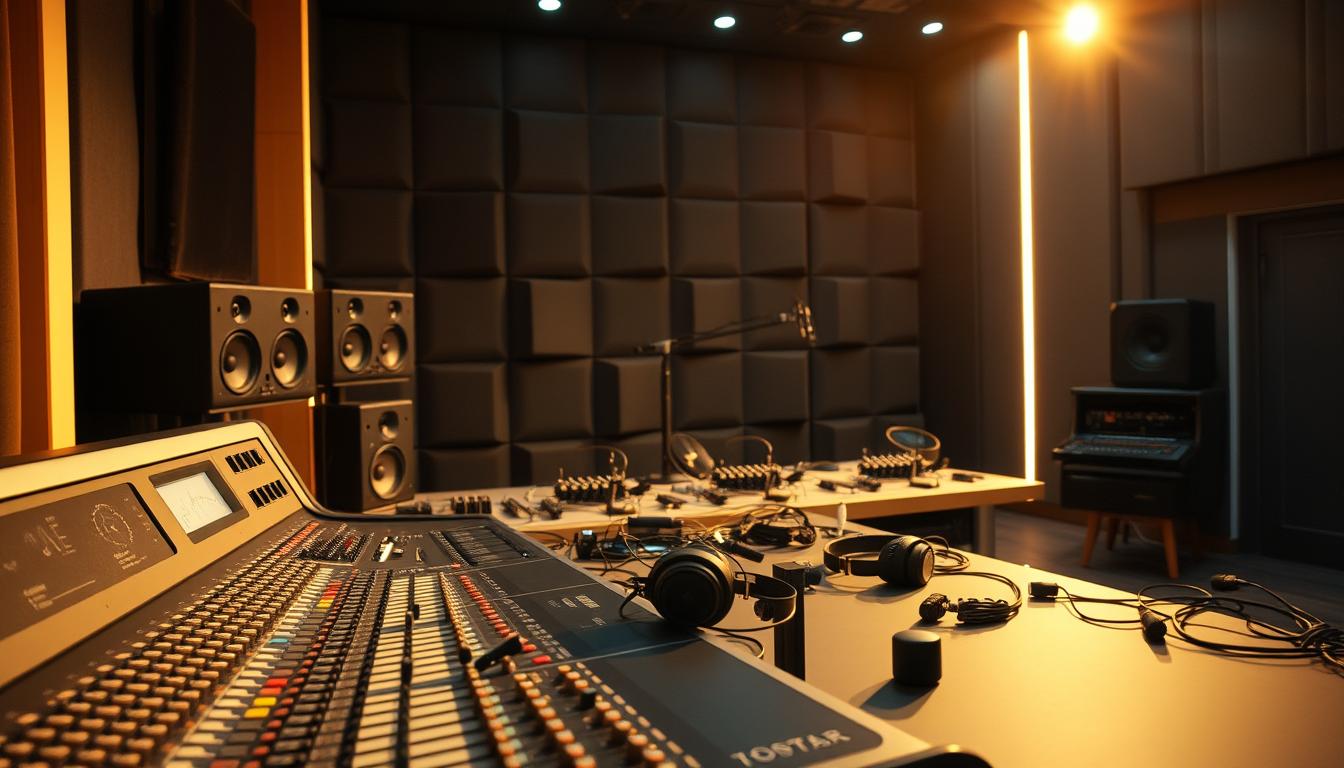
Field recording needs the right equipment to get high-quality sound effects and ambient sounds. Use windscreens, windsocks, and quality headphones for monitoring. The closer the mic is to the subject, the clearer the sound. With the right gear and editing skills, filmmakers can create an engaging audio experience for their audience.
How Are Movie Soundscapes Made: The Creative Process
Making a movie soundscape combines movie sound design and film sound engineering skills. It starts with the sound designer working with the director. They aim to create an audio experience that draws the audience in.
Sound editors like Ai-Ling Lee, known for La La Land and Jojo Rabbit, use special techniques. They record sounds in the field, mask them, and layer them. Portable recorders help capture unique sounds from different places.
The making of movie soundscapes involves trying new things and testing them. Editors might test sounds with people who aren’t experts. This helps make sure the sound gets the right emotional response.

Music is also key in creating a movie’s sound. Filmmakers often use temporary music to add tracks easily. The final mix of the soundtrack is important. It combines all sound elements into a unified and engaging audio experience.
Location Sound Recording Techniques
Capturing high-quality sound in movies is key. This means using special techniques to record dialogue, background sounds, and effects on set. These recordings help make the movie feel real to the audience.
Working on location comes with challenges. You might face background noise, echo, or other issues that can mess up your sound. To tackle these, you can use boom operation or lavaliere microphones to get clear dialogue.
Capturing Dialogue on Set
Recording dialogue on set is vital. You need to use microphones to catch the actors’ voices well. At the same time, you must block out background noise and distractions. The right tools and methods help make sure your dialogue is clear and top-notch.
Ambient Sound Recording
Ambient sound recording is also key. It’s about capturing the scene’s background sounds, like city hums or nature sounds. These sounds make the movie feel more real and add depth to the sound production.

Managing Environmental Challenges
Dealing with environmental challenges is a big part of location sound recording. You might need to use noise reduction or find ways to reduce external impacts. With the right gear and preparation, you can get high-quality location sound that enhances your movie’s sound production.
The Art of Foley Sound Creation
Foley sound creation is key in film sound engineering. It uses props and surfaces to make realistic sound effects. This started in the 1920s with Jack Foley, who worked on live radio and later in film and video games.
Foley artists make everyday sounds to make scenes feel real. They do this when the original audio isn’t enough.
Making Foley sounds is hard work that needs creativity and attention to detail. Foley artists use props like celery for bone-breaking sounds or coconut shells for horse footsteps. They even use things like thick leather and dollar bills to sound like cash being pulled from a wallet.
Working with Foley artists and sound mixers is key. They make sure the sound effects are up to par before moving on.
Some cool examples of sound design include using an ice cream cone for a velociraptor sound in “Jurassic Park.” In “Saving Private Ryan,” sound designers used real artillery sounds to make battle scenes feel real. Foley sound makes movies and games more engaging and helps us feel the story.

Foley artists face tough competition, which can make their jobs unstable. But their work is vital in today’s audio and video world. As technology gets better, Foley sound creation keeps getting more advanced, using new tools to make audio more immersive.
Sound Effects Design and Implementation
Sound effects are key to making movies feel real. Techniques like sound mixing are vital for great audio. Sound designers use custom sounds, build libraries, and manipulate digital sounds to make movies come alive.
Sound effects can be made or recorded from real life. For example, ambience sounds are captured with special microphones. Foley sounds, like footsteps, are recorded in studios with props.
Some common techniques include:
- Creating custom sounds with synthesizers or field recordings
- Building sound libraries for easy access to sounds
- Using digital tools like compression and reverb to improve sounds

Sound designers use these techniques to make movies feel real. With sound editing and mixing, movies can have amazing audio. This makes the movie experience even better.
Music Composition and Integration
Music is key in making a film’s scenes more emotional. It can make us feel, create suspense, and shape how we see the story. In film audio post-production, music is a big deal that needs thought.
Composers like Max Steiner and Bernard Herrmann have added a lot to films. John Williams’ “Imperial March” is known for adventure and heroism. Today, directors like Quentin Tarantino and Wes Anderson use songs to add mood and character.
Finding the right balance between music and story is important. Too much music can take away from the film, while too little might miss the mark. Composers must think carefully to make the music and story work together well.
Some composers use leitmotifs, which are musical themes tied to characters or ideas. This helps tie the story together. Sonification also adds depth by turning real-world data into sound.
Dialogue Editing and Enhancement
In film audio production, editing and improving dialogue is key. It makes the audio sound clear, easy to understand, and engaging. One way to do this is Automated Dialogue Replacement (ADR). It involves recording new dialogue in a studio to replace bad recordings made on set.
Creating sound effects is also vital. They make the audio more immersive. For example, the sound of footsteps or clothes rustling can make a scene feel more real.
Some common editing techniques include:
- Dialogue cleaning: removing background noise and hum from dialogue recordings
- EQ adjustments: balancing the frequency response of dialogue recordings to ensure clarity
- Compression: evening out the volume levels of dialogue recordings to make softer sounds more audible
These techniques help make dialogue sound top-notch. Whether it’s through ADR, sound effects, or cleaning up dialogue, the aim is to create an engaging audio experience. It should pull the listener into the scene seamlessly.
The Final Mix: Bringing It All Together
The final mix in movies is where everything comes together. It’s about balancing sounds, thinking about spatial audio, and checking quality. The aim is to make a soundtrack that fits perfectly with the movie’s visuals.
The sound mixer is key in this stage. They adjust dialogue, music, and sound effects to make a smooth mix. They also focus on spatial audio, making sure sounds are placed right in the surround sound field.
Quality is a big deal in the final mix. The mixer checks if the mix is loud enough, has the right dynamic range, and sounds good across all frequencies. Tools like loudness meters help them make sure the mix is top-notch.
The final mix is a critical part of sound mixing. It needs skill and attention to detail. By balancing sounds, thinking about spatial audio, and checking quality, the mixer creates a mix that’s engaging and of high quality. This is the end of the cinematic sound production journey, where all audio elements come together to make a great soundtrack.
Industry Standards and Best Practices
In film audio production, following industry standards is key to making great soundscapes. It’s important to know how sound effects help tell the story. When mixing audio for films or TV, think about where it will be heard. This ensures the sound fits well in different places.
Sound mixers use tools like Pro Tools and Logic Pro to mix soundtracks well. They often use plugins for equalization and compression. This helps improve sound effects and the overall listening experience. By sticking to these practices, sound designers can make soundscapes that pull viewers into the story.
- Optimizing audio for various environments
- Utilizing DAWs and plugins to refine sound effects creation
- Following industry standards for sound design and mixing
By following these rules and keeping up with new tech, sound designers can make top-notch film audio. This meets the highest standards in the industry.
Future Trends in Movie Sound Design
The film industry is growing, and sound in movies is getting more important. New tech like Dolby Atmos and binaural sound is making sounds more real. This lets sound designers do amazing things.
New tech like AI-driven soundscapes is changing movies. It lets sounds change with the story. This makes movies feel more real and exciting. Virtual production audio is also changing how we make and edit sounds in movies.
Some big trends in movie sound design include:
- Emerging technologies such as AI-driven soundscapes and virtual production audio
- Increased use of immersive audio formats such as Dolby Atmos and binaural sound
- Greater emphasis on sound design in the filmmaking process, with sound designers playing a more integral role in the creative team
It’s exciting to see how sound design will shape the future of movies. New tech and creative sound design will open up endless possibilities.
| Technology | Description |
|---|---|
| Dolby Atmos | An immersive audio format that allows for precise sound placement |
| Binaural Sound | A technology that captures spatial cues, giving a 3D auditory experience |
| AI-driven Soundscapes | A technology that allows for dynamic sound adaptation based on real-time narrative changes |
Conclusion: Mastering the Art of Movie Soundscapes
The art of movie sound design is key in filmmaking. It greatly affects how we feel and see a movie. From the detailed film sound engineering to the mix of dialogue, sound effects, and music, it all matters a lot.
Studies show that up to 70% of a movie’s emotional impact comes from sound. Clear dialogue, background sounds, and smart sound effects draw us in. Foley artists and mix engineers work hard to create these sounds, showing their dedication.
As technology advances, sound design in movies will grow more important. Knowing about movie sound design and film sound engineering can make your movies stand out. It will give your audience a memorable experience that stays with them.
FAQ
What elements make up a movie soundscape?
A movie soundscape includes sound effects, music, and dialogue. These elements are carefully mixed to create an immersive audio experience.
How does sound design contribute to storytelling in films?
Sound design is key in storytelling. It sets the mood, evokes emotions, and enhances the visual story. It uses diegetic and non-diegetic sound to immerse the audience.
What key milestones have shaped the evolution of sound design in cinema?
The history of sound design in cinema has seen big changes. From synchronized sound to digital audio processing, these advancements have opened up new creative possibilities.
What are the essential tools and equipment used for movie sound recording?
For movie sound recording, you need top-notch equipment. This includes high-quality microphones, digital audio workstations, and field recording gear. The right tools are key for capturing and shaping the audio elements of a movie.
How do sound designers approach the creative process of making movie soundscapes?
Sound designers use a variety of techniques to create movie soundscapes. They mix sound effects, music, and dialogue to enhance the visual story. Their goal is to create an immersive audio experience.
What challenges do sound recordists face when capturing location audio?
Recording location audio comes with its own set of challenges. Sound recordists must manage environmental factors, capture clear dialogue, and record ambient sounds. They use special techniques and equipment to overcome these challenges.
What is the role of Foley sound creation in movie soundscapes?
Foley sound creation adds depth and authenticity to movie soundscapes. It involves using props and surfaces to recreate realistic sound effects. Foley artists play a vital role in enriching the audio experience.
How do sound designers create and implement custom sound effects?
Creating custom sound effects is a key part of sound design. Sound designers use various techniques, including building sound libraries and digital sound manipulation. These methods help them create unique and impactful audio elements.
What is the role of music composition and integration in movie soundscapes?
Music is essential in movies, adding emotional depth to the story. Composers work with sound designers to create music that enhances the visual narrative. This music immerses the audience in the film’s world.
How do sound editors handle dialogue editing and enhancement?
Dialogue editing involves techniques like ADR and dialogue cleaning. Sound editors use these methods to ensure clear and consistent dialogue. Their work is vital for the overall audio quality of a movie.
What are the key considerations in the final mix of a movie soundscape?
The final mix of a movie soundscape requires careful balancing. Sound mixers must consider spatial audio and follow industry standards. Their goal is to create a harmonious and immersive audio experience.
What are the industry standards and best practices for movie sound design?
The film industry has set guidelines for sound design and mixing. Sound professionals must follow these standards to ensure high-quality audio. This ensures a consistent and engaging audio experience for audiences.
What are the emerging trends and future technologies shaping the future of movie sound design?
The future of movie sound design is exciting, with new technologies like virtual production audio and immersive audio formats. These advancements will open up new creative possibilities for filmmakers and enhance the cinematic experience for audiences.
