Did you know that over 70% of consumers now prefer media experiences enhanced by immersive audio? This revolutionary technology is reshaping how we engage with movies, offering a depth of sound that traditional stereo systems simply can’t match.
Immersive audio, like Dolby Atmos and Sony 360, creates a three-dimensional experience by placing sounds in specific directions and heights. This system allows listeners to feel as if they’re inside the action, whether in a cinema or their home.
Experts agree that this shift from stereo to immersive formats is a game-changer. Engineers and creative professionals are leveraging this technology to deliver unparalleled realism in movies and music.
From streaming platforms to luxury cars, immersive audio is becoming a standard for modern media. It’s time to rethink your current setup and explore how this trend can elevate your viewing experience.
Key Takeaways
- Immersive audio creates a three-dimensional sound experience.
- Technologies like Dolby Atmos and Sony 360 are leading the way.
- Experts highlight its impact on realism in movies and music.
- Streaming platforms and automotive systems are adopting this trend.
- Upgrading your setup can significantly enhance your media experience.
Introduction to Immersive Audio
Spatial audio technology brings a new dimension to sound. Unlike traditional stereo systems, it creates a three-dimensional experience that surrounds the listener. This technology uses binaural cues and spatial positioning to place sounds in specific directions and heights.
What Makes Audio Immersive?
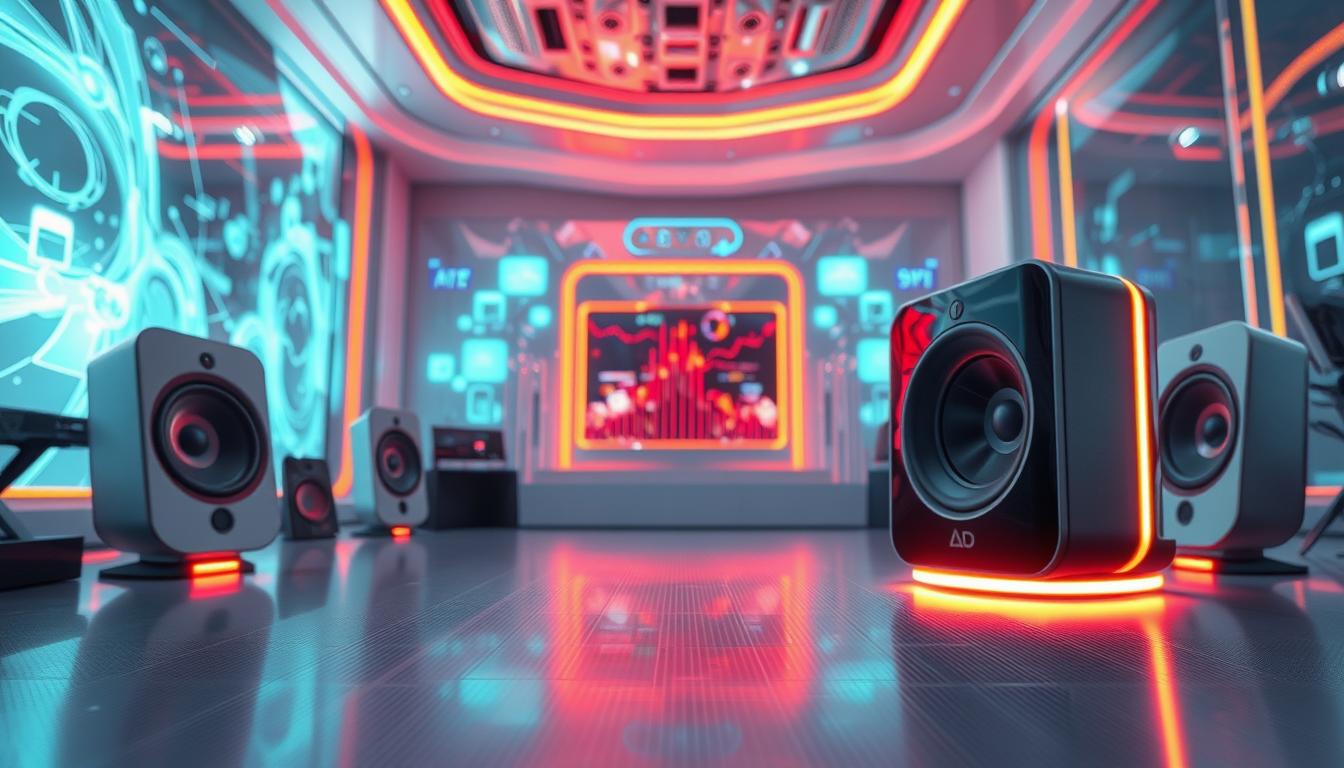
Immersive sound relies on advanced systems like Dolby Atmos and Sony 360. These solutions use overhead speakers and multidimensional sound fields to envelop the listener. The result is a lifelike experience that traditional stereo cannot match.
Binaural cues play a key role. They mimic how your ears perceive sound in real life. This capability allows audio engineers to create realistic environments. For example, you might hear a helicopter flying above or footsteps approaching from behind.
The Relevance for Modern Movie Viewing
Immersive audio enhances cinematic realism. It adds depth to scenes, making you feel like you’re part of the action. This trend is especially relevant for modern movies, where sound design is as important as visuals.
Systems like Dolby Atmos are now a standard in many cinemas and home theaters. They use multiple audio channels to create a fully enveloping sound environment. This setup ensures every viewer enjoys a consistent and high-quality experience.
Whether you’re watching a blockbuster or a concert film, immersive audio transforms the way you engage with media. It’s a game-changer for both consumers and creators.
The Evolution of Cinematic Sound Technology
The journey of cinematic sound has transformed dramatically over the decades. From the early days of mono and stereo to today’s immersive formats, audio technology has reshaped how we experience movies. This evolution reflects both technological advancements and changing audience expectations.

The Legacy of Stereo and Surround Sound
Stereo sound marked a significant leap in the 1950s, introducing two-channel audio that created a sense of directionality. By the 1970s, surround sound systems like 5.1 and 7.1 added depth, placing listeners at the center of the action. These formats laid the groundwork for modern innovations by familiarizing audiences with directional cues.
Surround sound became a standard in cinemas and home theaters. It allowed engineers to create dynamic soundscapes, enhancing the experience of movies and music. However, these systems were limited to horizontal sound placement, leaving room for further innovation.
Transition to Immersive and Spatial Audio
The shift to immersive audio began with the introduction of Dolby Atmos and similar technologies. These systems added overhead and lateral channels, creating a three-dimensional sound field. Spatial audio replicates real-life soundscapes, making you feel like you’re inside the scene.
Advancements in software processing have enabled precise sound placement. For example, a helicopter can now sound like it’s flying above you, while footsteps approach from behind. This level of realism has redefined the listening experience in both cinemas and home setups.
Industry pioneers like Dolby and Sony continue to drive this transformative change. Their innovations have made immersive audio a standard in modern media, from blockbuster movies to streaming platforms. As a result, audiences now expect richer, more engaging soundscapes.
How Immersive Audio Will Change the Way You Watch Movies
Modern audio technology is reshaping the boundaries of sound in films. With advancements like Dolby Atmos and Sony 360, immersive audio creates a three-dimensional soundscape that surrounds you. This shift from traditional stereo to spatial formats is revolutionizing the experience of watching movies.

New Viewing Paradigms
Immersive audio introduces new ways to engage with movies. Unlike stereo systems, it places sounds in specific directions and heights. This technology makes you feel like you’re inside the scene, whether it’s a thunderstorm or a bustling city.
Streaming platforms like Netflix and Disney+ are adopting this format. They use metadata-driven sound rendering to optimize the listening experience across devices. This ensures consistent quality, whether you’re using headphones or a home theater setup.
Enhanced Realism Through Advanced Processing
Advanced audio processing is key to this transformation. Engineers use precise sound placement to create lifelike environments. For example, you might hear footsteps approaching from behind or a helicopter flying overhead.
This level of realism is achieved through dynamic sound re-mapping. It adjusts the audio based on your room’s acoustics and speaker configuration. This ensures an immersive experience regardless of your setup.
Real-World Applications
Home theaters are benefiting greatly from this technology. Systems like Dolby Atmos use multiple speakers to create a fully enveloping sound field. This makes every movie night feel like a trip to the cinema.
Streaming services are also leveraging immersive audio. They offer content optimized for spatial sound, enhancing the media experience for consumers. This trend is setting a new standard in the industry.
| Feature | Traditional Stereo | Immersive Audio |
|---|---|---|
| Sound Placement | Horizontal | 3D (Directional & Height) |
| Realism | Limited | High |
| Device Compatibility | Universal | Optimized for Advanced Systems |
| User Experience | Standard | Immersive |
Immersive audio is not just a trend; it’s the future of cinematic sound. By upgrading your setup, you can enjoy a richer, more engaging experience that brings movies to life.
Understanding the Science Behind Immersive and Spatial Audio
The science behind immersive audio reveals how our brains process sound in three dimensions. This technology leverages binaural perception and advanced software to create lifelike soundscapes. By understanding these principles, you can appreciate the engineering behind modern audio systems.

Binaural Perception and 3-D Sound Cues
Binaural perception is the way your ears process sound from different directions. This natural ability allows you to locate sounds in space. Immersive audio mimics this process using 3-D sound cues.
For example, a helicopter flying overhead or footsteps approaching from behind are created using precise sound placement. This technology ensures a realistic listening experience.
“Binaural cues are the foundation of immersive audio, replicating how we hear in real life.”
Software Rendering and Speaker Calibration
Software rendering transforms spatial coordinates into precise speaker outputs. This process ensures virtual sound objects align with physical setups. Advanced algorithms adjust for room acoustics and speaker configurations.
Calibration is key to maintaining consistency. Systems like Dolby Atmos use metadata to optimize sound placement. This ensures every user enjoys a high-quality experience, regardless of their setup.
| Aspect | Traditional Audio | Immersive Audio |
|---|---|---|
| Sound Placement | Horizontal | 3D (Directional & Height) |
| Realism | Limited | High |
| Calibration | Basic | Advanced |
| User Experience | Standard | Immersive |
Immersive audio combines science and engineering to deliver unparalleled realism. By understanding these principles, you can better appreciate the technology behind your favorite media.
Immersive Audio’s Impact on Consumer Experience and Viewing Trends
The way we experience sound is evolving rapidly, thanks to groundbreaking advancements. Immersive audio is reshaping how consumers engage with media, offering a richer and more personalized experience. This shift is particularly evident as media consumption moves from shared living spaces to individual devices.

Adaptation in Home Theaters and Personal Devices
Home theaters and soundbars are adapting to meet modern demands. Systems like Dolby Atmos and Sony 360 now support compact setups, ensuring high-quality sound even in smaller spaces. This evolution reflects the growing trend of personalized viewing experiences.
Soundbars, for example, are becoming more sophisticated. They now include multiple speakers and advanced processing to replicate cinematic sound. This makes them a popular choice for consumers seeking an upgrade without the complexity of a full home theater system.
Integration with AI and Smart Audio Systems
AI is playing a pivotal role in modern audio systems. Smart devices like the Amazon Echo Studio use AI to optimize sound based on real-time listener positioning. This ensures a consistent and high-quality experience across different environments.
Automated calibration is another key feature. It adjusts audio output to match the acoustics of your room. This eliminates the need for manual tuning, making it easier for users to enjoy immersive sound.
| Feature | Traditional Audio | Smart Audio Systems |
|---|---|---|
| Calibration | Manual | Automated |
| Sound Quality | Limited | Optimized |
| User Experience | Standard | Personalized |
These advancements are setting a new standard in the industry. Whether you’re watching a movie or listening to music, immersive audio ensures a captivating experience tailored to your preferences.
Overcoming Challenges in Immersive Audio Implementation
Adopting immersive audio isn’t without its challenges. While the technology promises a transformative experience, its implementation faces technical and market-related hurdles. From calibration complexities to fragmented standards, the journey to seamless integration requires innovative solutions.
Technical Hurdles and Calibration Complexity
One of the biggest obstacles is calibrating multi-speaker systems. Achieving precise sound placement in a 3D environment demands advanced tools and expertise. Systems like Dolby Atmos rely on metadata-driven rendering, but inconsistencies in room acoustics can disrupt the experience.
Automated calibration tools are emerging to address this. For example, HOLOPLOT’s technology uses AI to optimize audio output based on real-time listener positioning. This ensures consistent quality across different setups, from home theaters to large venues like the Sphere in Las Vegas.
Market Fragmentation and Standardization Efforts
The audio industry is also grappling with market fragmentation. Proprietary formats like Dolby Atmos and Sony 360 often require specific decoding software, creating compatibility issues. This fragmentation can lead to inconsistent experiences across platforms and devices.
Efforts are underway to standardize protocols. Industry leaders are collaborating to develop plug-and-play systems that reduce technical barriers. For instance, the adoption of universal metadata formats could simplify integration for consumers and engineers alike.
Real-life applications, such as sports broadcasting and live events, highlight these challenges. Solutions like adaptive re-rendering algorithms are being developed to ensure consistent sound quality across diverse environments.
“Standardization is key to unlocking the full potential of immersive audio for all users.”
By addressing these hurdles, the industry can move toward a unified standard that enhances the media experience for everyone. Whether you’re a consumer or a creator, overcoming these challenges ensures that immersive audio delivers on its promise of unparalleled realism.
Conclusion
From mono to 3D, audio has transformed how we engage with media. The shift from traditional stereo to immersive formats like Dolby Atmos offers unparalleled realism and engagement. Advanced technology, including software rendering and AI-driven calibration, ensures precise sound placement for a lifelike experience.
While challenges like calibration complexity and market fragmentation exist, ongoing standardization efforts promise a future where immersive audio is universally accessible. This system is becoming a standard in cinemas, home theaters, and streaming platforms, enhancing the media experience for every consumer.
Explore immersive speaker setups firsthand and stay informed about emerging innovations. The evolution of sound is far from over, and its potential to redefine entertainment is limitless.
FAQ
What is immersive audio?
Immersive audio is a sound format that creates a three-dimensional listening experience. It uses spatial cues to make you feel like sounds are coming from all directions, including above and below.
How does immersive audio differ from stereo or surround sound?
Unlike stereo or surround sound, which are limited to horizontal sound placement, immersive audio adds height and depth. This creates a more realistic and engaging experience, especially in movies and music.
What technologies are used in immersive audio systems?
Technologies like Dolby Atmos, DTS:X, and Auro-3D are commonly used. These systems rely on object-based audio, which allows sound engineers to place sounds precisely in a 3D space.
Can I experience immersive audio at home?
Yes, many home theater systems and soundbars now support immersive audio formats. You’ll need compatible devices and proper speaker placement to enjoy the full effect.
Why is immersive audio important for modern movie viewing?
It enhances realism by making you feel like you’re inside the scene. This creates a more emotional and captivating experience, transforming how you engage with films.
What challenges exist in implementing immersive audio?
Challenges include technical complexity, calibration requirements, and the need for standardization across devices and platforms. These factors can affect accessibility and adoption.
How does immersive audio integrate with smart home systems?
Immersive audio can work with AI-powered smart speakers and home automation systems. This allows for seamless control and personalized listening experiences in your living space.
Is immersive audio only for movies?
No, it’s also used in music, gaming, and virtual reality. Artists and developers are increasingly adopting this technology to create more engaging and lifelike experiences.