Did you know that vinyl record sales have surpassed CDs, with a 30% year-over-year growth in 2023? This resurgence highlights the timeless appeal of vinyl and the importance of setting up your turntable correctly. Whether you’re a seasoned audiophile or a newcomer, integrating your turntable into your home theatre system can elevate your music experience.
Modern turntables often lack built-in Bluetooth, making connections to advanced audio systems tricky. However, most receivers come with built-in phono preamps, simplifying the process. Brands like Audio-Technica and Marantz offer versatile options to ensure seamless integration.
Understanding the role of components like the preamp, receiver, and speakers is crucial. A quality preamp ensures optimal sound performance, while the right receiver can handle multiple audio inputs. This guide will walk you through the essentials, making the setup process both technical and accessible.
Key Takeaways
- Vinyl record sales are growing, emphasizing the need for proper turntable setup.
- Most receivers include built-in phono preamps for direct connections.
- Quality preamps and receivers enhance sound performance significantly.
- Brands like Audio-Technica and Marantz offer versatile turntable options.
- Understanding component roles simplifies the integration process.
Understanding Turntable Components and Signal Flow
The magic of vinyl lies in the intricate interplay of its components, each contributing to the final audio experience. To fully appreciate the richness of analog sound, it’s essential to understand how these parts work together. From the platter to the cartridge, every element plays a critical role in delivering high-fidelity audio.
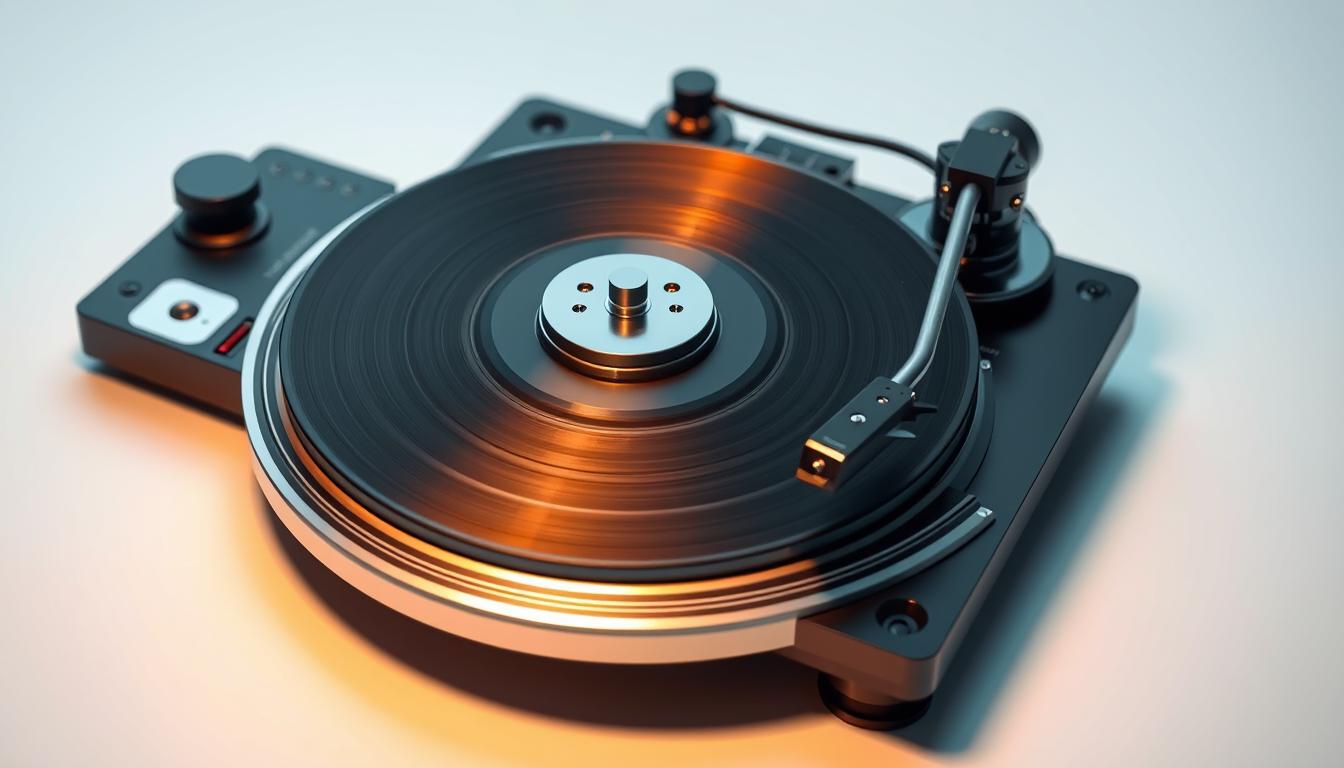
Turntable Parts and Their Functions
At the heart of any turntable is the platter, which spins the record at a consistent speed. The tonearm holds the cartridge and stylus, guiding them across the record’s grooves. The cartridge converts the physical vibrations from the stylus into an electrical signal, which is then sent to the phono preamp.
Each component must function seamlessly to ensure optimal sound quality. For example, a misaligned tonearm can distort the audio, while a worn-out stylus may damage your records. Understanding these parts helps you maintain your setup and troubleshoot issues effectively.
Role of the Phono Preamp in Your Setup
The phono preamp is a crucial link in the signal chain. It amplifies the weak signal from the cartridge and applies the RIAA equalization curve, which corrects the audio for playback. Without a preamp, the sound would be too quiet and lack depth.
Most modern receivers include a built-in phono preamp, simplifying the connection process. However, standalone preamps often offer superior sound quality, making them a popular choice for audiophiles. Whether integrated or external, the preamp ensures your analog signal is ready for amplification.
Signal flow from the turntable to your speakers relies on RCA cables, which carry the analog audio. High-quality cables minimize interference and signal loss, preserving the integrity of your sound. Proper connections between components are essential for achieving the best audio performance.
Selecting the Right Equipment for Your Vinyl Experience
Choosing the right equipment is the foundation of a great vinyl experience. Your setup’s quality directly impacts how your vinyl records sound. Whether you’re building a new system or upgrading, understanding your options is key.

Choosing Turntables, Amplifiers, and Receivers
Start with a turntable that matches your needs. Models like the Fluance RT81 Elite offer excellent value with features like a 2.0-gram tracking force for minimal noise. Pair it with a receiver like the Sony STRDH190, which includes a built-in phono preamp for seamless integration.
Amplifiers and receivers play a crucial role in your setup. They process the output from your turntable and send it to your speakers. Look for devices with multiple input options to accommodate other audio sources.
Built-In vs. Standalone Preamp Options
Most modern receivers come with a built-in phono preamp, simplifying the process. However, standalone preamps like those from Pro-Ject often deliver superior sound quality. They’re ideal for audiophiles seeking the best possible line-level output.
Standalone preamps also offer more customization. You can fine-tune the signal to match your system’s needs. This flexibility makes them a popular choice for high-end setups.
For more insights on integrating a turntable with your receiver, check out this detailed guide.
How to Connect a Turntable to Your Home Theatre System
Vinyl enthusiasts often face the challenge of integrating their turntables with modern audio systems. Whether you prefer traditional wired setups or wireless solutions, understanding the options ensures optimal sound quality.
Using RCA Cables and Analog Inputs
RCA cables are the most common way to connect your turntable. These cables carry the analog signal from the turntable to the receiver. For best results, use high-quality cables to minimize interference.
If your receiver has a built-in phono preamp, connect the turntable directly to the phono input. This setup avoids the need for an external preamp, simplifying the process. Ensure the ground wire is properly connected to prevent buzzing noises.
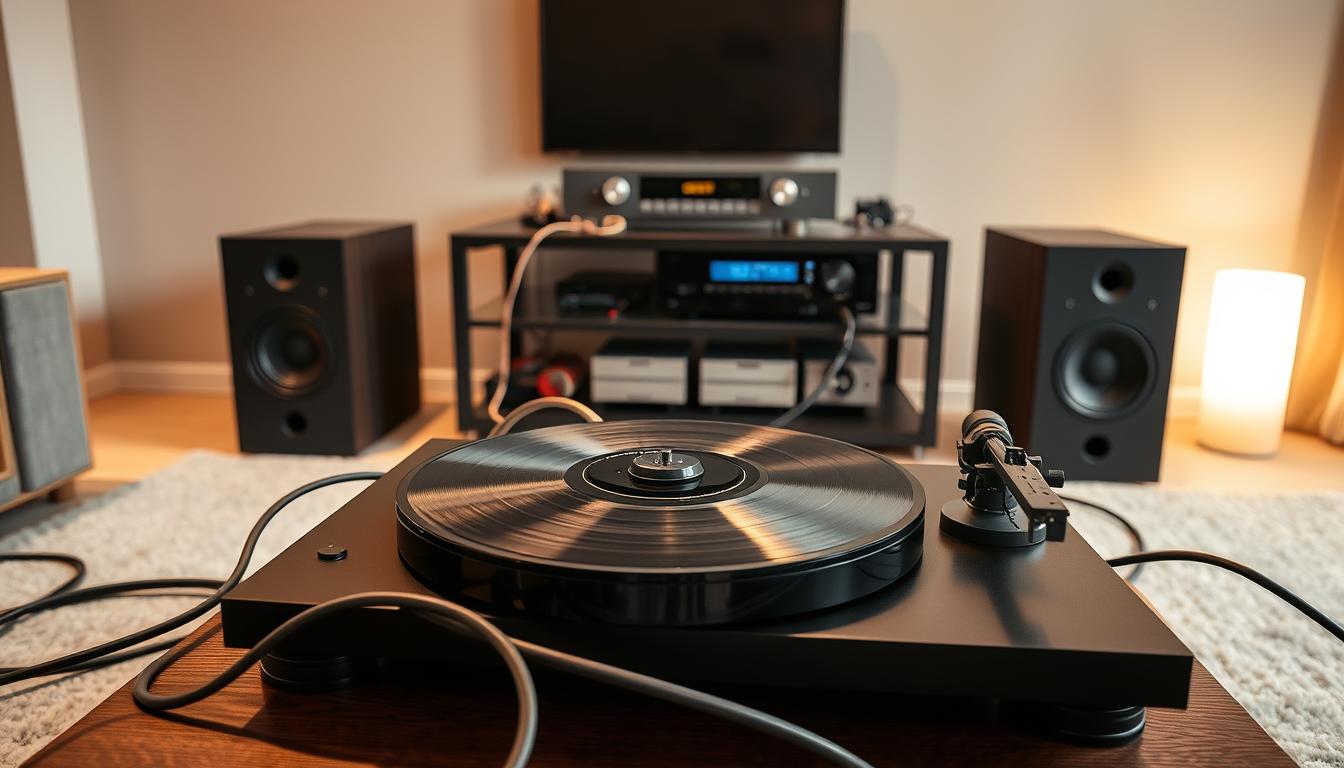
For receivers without a built-in phono preamp, you’ll need an external preamp. Devices like the ART Pro Audio DJPRE II are affordable and effective. Connect the turntable to the preamp, then the preamp to the receiver’s auxiliary input.
Integrating Bluetooth and Wi-Fi Options
Modern turntables often include Bluetooth or Wi-Fi capabilities. These wireless options allow you to stream music to compatible speakers or headphones. However, not all turntables have built-in preamps, so check your device’s specifications.
For turntables without wireless features, you can use a Bluetooth transmitter. Connect the transmitter to the turntable’s output, and pair it with your wireless speakers. This method is ideal for creating a clutter-free setup.
| Connection Type | Pros | Cons |
|---|---|---|
| RCA Cables | Reliable, minimal signal loss | Requires physical connections |
| Bluetooth | Wireless, easy to set up | Potential latency issues |
| Wi-Fi | High-quality streaming | Complex setup, higher cost |
Wi-Fi systems like Sonos or Yamaha MusicCast offer advanced streaming options. These systems require additional devices, such as the Sonos Port, to bridge the turntable to the network. While more complex, they provide superior sound quality for audiophiles.
By understanding these connection methods, you can choose the best setup for your needs. Whether you stick with traditional RCA cables or embrace wireless technology, the goal is to preserve the integrity of your signal and enjoy your vinyl collection to the fullest.
Managing Vibration and Isolation for Optimal Sound Quality
Achieving pristine sound quality from your vinyl setup requires more than just high-quality equipment. External vibrations and improper placement can degrade your turntable’s performance. By focusing on isolation techniques and room setup, you can minimize interference and enjoy crystal-clear audio.
Effective Turntable Isolation Techniques
Isolation is critical for reducing vibrations that affect your turntable. Materials like Sorbothane and rubber are excellent for absorbing low-frequency vibrations. These materials are often used in isolation feet or platforms to create a stable base for your setup.
For advanced setups, consider using a multi-layer platform with materials like granite or maple. These add mass and stability, effectively absorbing vibrations. Pairing them with Sorbothane pads can further enhance performance, especially for low-frequency isolation.
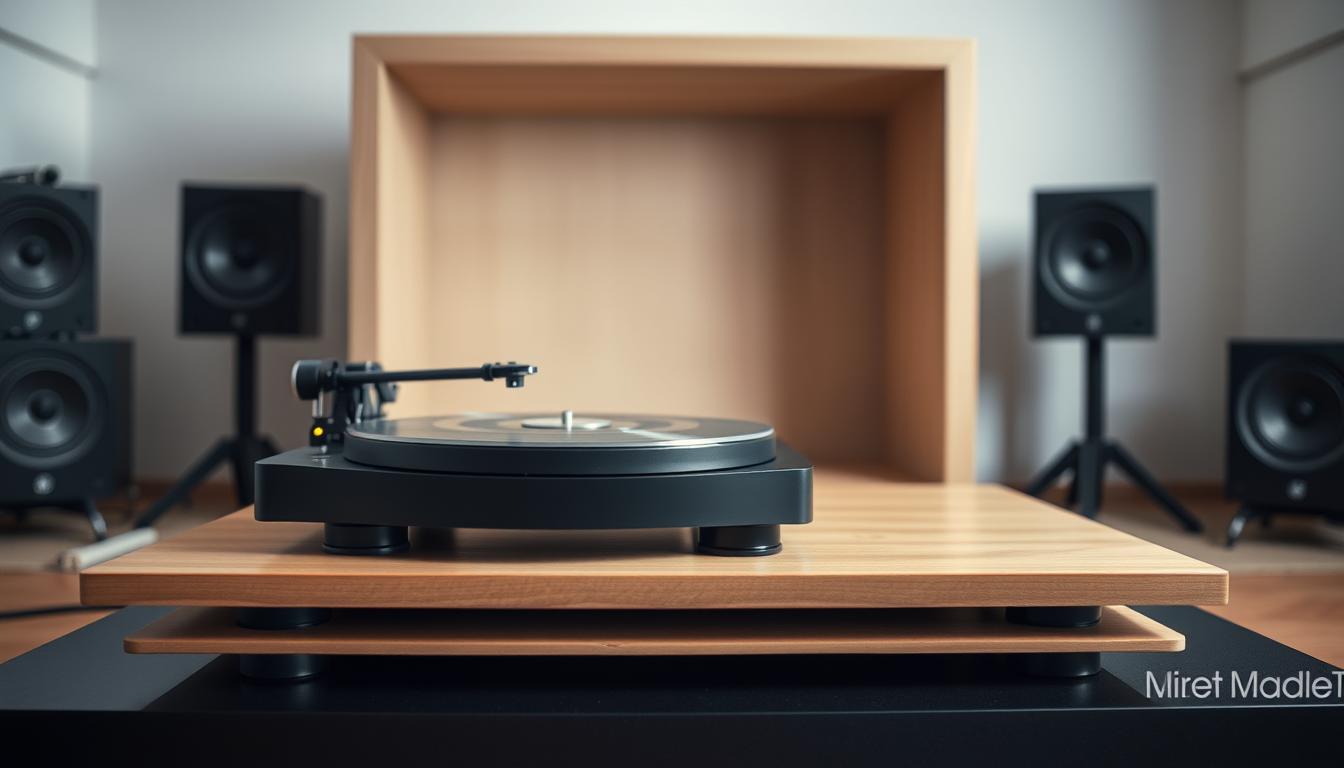
Proper grounding is another essential step. Ensure your turntable’s ground wire is securely connected to your amplifier or built-in preamp. This prevents hum and interference, ensuring a clean signal path.
Proper Speaker Placement and Room Set-Up
Speaker placement plays a significant role in minimizing feedback and resonance. Position your speakers at least 4-6 feet away from your turntable. This reduces the risk of acoustic feedback, which can distort your audio.
If space is limited, consider mounting your turntable on a wall shelf. This reduces vibrations from footfalls or cabinet transfers. Pair this with foam or other isolation materials to further dampen vibrations from the floor.
For optimal results, experiment with small adjustments in speaker and turntable positioning. Even slight changes can lead to significant improvements in sound quality. Maintaining reasonable volume levels also helps prevent resonance issues.
By focusing on isolation and placement, you can create a setup that delivers the best possible audio experience. Whether you’re using a powered speaker or a traditional amplifier, these techniques ensure your vinyl sounds as it should.
Troubleshooting Common Connection Issues
Even the best setups can encounter issues, but understanding common problems ensures your vinyl experience remains uninterrupted. From ground loops to signal interruptions, this section provides actionable solutions to keep your system running smoothly.
Addressing Ground Loops and Hum Problems
Ground loops are a frequent issue, often causing an annoying hum in your audio. This occurs when multiple devices share a common ground, creating interference. To resolve this, ensure your turntable’s ground wire is securely connected to your built-in preamp or amplifier.
If the hum persists, try isolating your turntable from other electronics. Using a ground loop isolator can also eliminate unwanted noise. These devices are an affordable option for improving sound quality.
Cable Checks and Signal Verification
Loose or damaged cables are another common culprit. Inspect your RCA cables for wear and ensure they’re firmly connected. High-quality cables minimize signal loss, preserving the integrity of your audio.
If your player isn’t producing sound, verify the signal path from the cartridge to the amplifier. A faulty needle or misaligned cartridge can disrupt the signal. Replacing the needle or realigning the cartridge often resolves these issues.
For systems with a built-in preamp, check the settings to ensure the preamp is active. If using an external preamp, confirm it’s properly connected and powered. These steps are a reliable way to diagnose and fix connectivity problems.
Conclusion
Vinyl’s resurgence has brought a renewed focus on achieving the best possible sound quality in modern setups. Integrating a turntable into your home system ensures you experience every detail of your recordings. This guide has walked you through the essential steps, from selecting the right equipment to optimizing playback quality.
Key features like built-in preamps and high-quality RCA cables simplify the process, while proper isolation techniques enhance sound clarity. Maintaining your stylus is crucial for long-term performance, ensuring your vinyl collection sounds pristine for years to come.
Whether you’re streaming wirelessly or using traditional connections, the journey of setting up your system is rewarding. Revisit this guide for troubleshooting tips and explore new ways to enjoy your analog sound. With the right setup, your home becomes a haven for high-fidelity playback.
FAQ
What is the role of a phono preamp in a turntable setup?
A phono preamp boosts the low-level signal from your turntable and applies the RIAA equalization curve, ensuring proper audio playback. Without it, the sound from your vinyl record will be weak and distorted.
Can I use a turntable with a built-in phono preamp directly with powered speakers?
Yes, if your turntable has a built-in phono preamp, you can connect it directly to powered speakers using RCA cables. This setup eliminates the need for an external amplifier or receiver.
How do I connect a turntable to a home theatre system without a phono input?
If your home theatre system lacks a phono input, use an external phono preamp. Connect the turntable to the preamp, then route the signal to the line input on your receiver or amplifier.
What are the benefits of using a standalone phono preamp over a built-in one?
A standalone phono preamp often offers better sound quality, more customization options, and superior signal processing compared to built-in preamps. It’s ideal for audiophiles seeking enhanced audio performance.
How can I reduce vibration and improve sound quality in my turntable setup?
Use isolation platforms or turntable mats to minimize vibrations. Place your turntable on a stable surface away from speakers and other devices that generate movement or noise.
What should I do if I hear a hum or ground loop when using my turntable?
Check the ground wire connection between your turntable and preamp or amplifier. Ensure all cables are securely connected and free from damage. Using a ground loop isolator can also resolve this issue.
Can I stream vinyl records wirelessly to my home theatre system?
Yes, some turntables feature Bluetooth or Wi-Fi connectivity, allowing you to stream vinyl playback to compatible speakers or receivers. Alternatively, you can use a Bluetooth transmitter with your turntable.
What’s the difference between analog and digital connections for turntables?
Analog connections, like RCA cables, preserve the raw audio signal from your turntable. Digital connections, such as Bluetooth or USB, convert the signal to digital format, which may affect sound quality.