Did you know that 70% of homeowners prefer a clutter-free living room? A well-designed audio setup can transform your space without compromising aesthetics. This project focuses on building a concealed system that blends seamlessly into your walls.
Using materials like MDF and Honduran Mahogany veneer, you can achieve a professional finish. This approach not only enhances the look of your room but also improves sound quality. The process is cost-effective, with most materials readily available.
Whether you’re a DIY enthusiast or a beginner, this guide provides step-by-step instructions. From planning to finishing, every detail is covered to ensure success. Ready to elevate your living space with a hidden audio solution? Let’s get started.
Key Takeaways
- Concealed audio systems enhance both aesthetics and functionality.
- Wood and MDF are durable materials for creating a sleek finish.
- This project is cost-effective and uses readily available materials.
- Step-by-step instructions make it accessible for all skill levels.
- A professional look is achievable with careful planning and execution.
Planning Your DIY Wooden Speaker Housing
Planning is the foundation of any successful DIY project. A well-organized approach ensures your audio setup blends seamlessly into your living room décor. Start by mapping out your space and considering how the design will complement your existing layout.
Gathering Materials and Tools
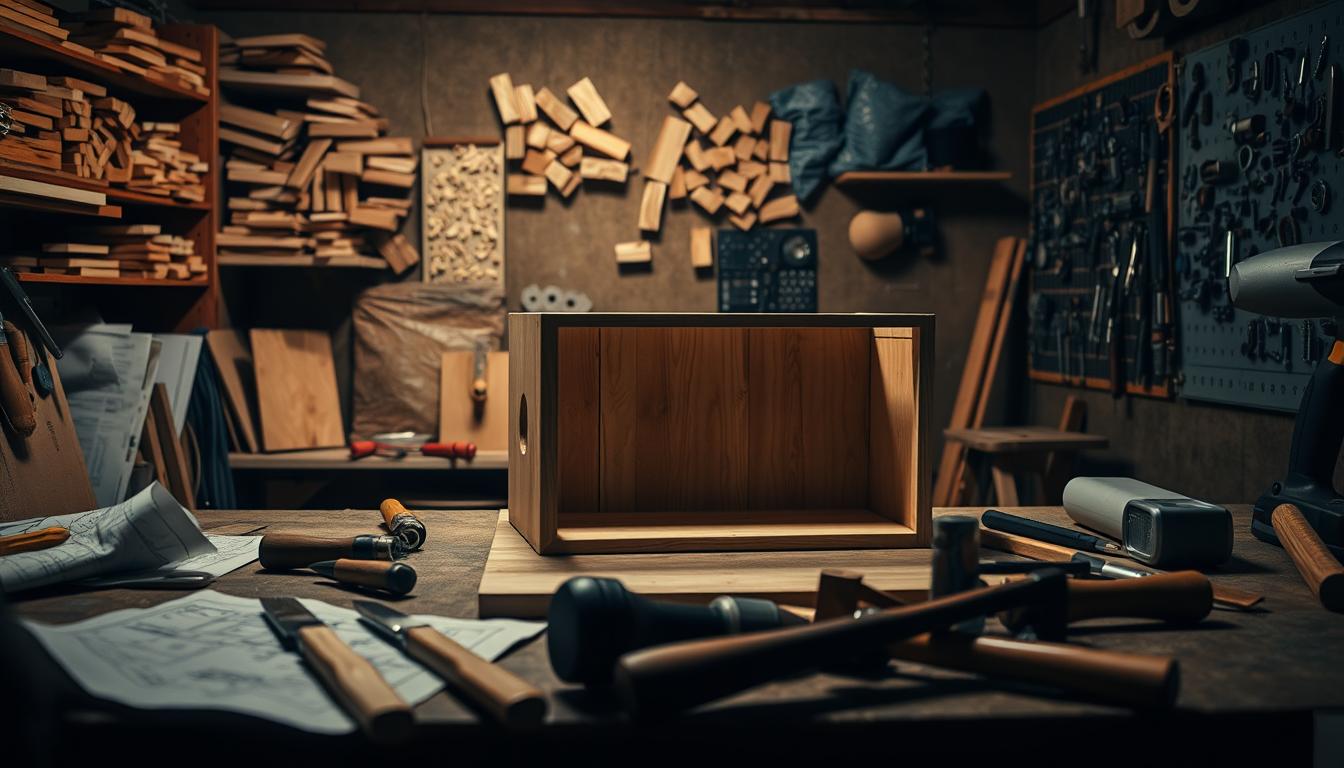
To achieve a professional finish, you’ll need quality materials like MDF, veneer, screws, and wood glue. Tools such as a drill, clamps, and a measuring tape are essential. Make sure you have everything on hand before starting to avoid delays.
Designing Your Project Blueprint
Creating a detailed blueprint is crucial. Measure your space accurately and plan the placement of your speakers. Consider how the wire will run to maintain a clean look. Proper planning ensures both functionality and aesthetic appeal.
For wire management, explore effective techniques to conceal cables and maintain sound clarity. This step is vital for a polished final result.
“A good plan is like a roadmap; it shows the final destination and the best route to get there.”
Finally, consider the living room’s layout to ensure your design enhances both audio performance and visual harmony. With careful planning, your project will surround you with both style and sound.
Building the Speaker Box with MDF and Veneer
Crafting a concealed audio setup requires precision and attention to detail. Using 3/4 inch MDF, you can create a sturdy and snug box that houses your speakers effectively. This material is ideal for its density and ability to reduce resonance, ensuring cleaner sound quality.

Constructing the Basic Box Structure
Start by cutting the MDF panels to the required dimensions. Assemble the pieces using both screws and wood glue for strong, durable joints. Ensure each piece fits snugly to maintain the box’s structural integrity.
Double-check the alignment of the panels before securing them. This step is crucial to avoid gaps that could affect the look and performance of the final product. Proper assembly ensures the box can stand the test of time.
Applying Veneer for a Smooth Finish
Once the box is assembled, it’s time to apply the Honduran Mahogany veneer. Use contact cement to bond the veneer to the MDF, ensuring a flawless finish. Wait the recommended 20 minutes before pressing the materials together for optimal adhesion.
Trim any excess veneer using a scalpel for precision. This step enhances the look of the box, giving it a professional and elegant appearance. Properly routed speaker wire ensures both functionality and aesthetics.
“Attention to detail transforms a simple project into a masterpiece.”
Finally, inspect each piece of the construction to ensure stability. A well-built box not only enhances sound quality but also complements your living space. With careful execution, your audio setup will blend seamlessly into your décor.
Integrating Hidden Sound Systems and Proper Wiring
Achieving a clean and functional audio setup starts with precise integration. Proper wiring and secure mounting are essential for both performance and aesthetics. This section guides you through the critical steps to ensure your system blends seamlessly into your space.

Securing Speakers to the Housing
To ensure stability, secure your speakers firmly within the box. Use pilot holes to prevent splitting the material. Place screws strategically at the top, side, and center for even weight distribution.
Wood glue adds extra reinforcement. Double-check the alignment before tightening the screws. This step ensures the speakers remain in place, even at higher volumes.
Managing Speaker Wire and Mounting Options
Concealing wires is crucial for a polished look. Drill through wall studs, leaving at least an inch of space for the wires. This keeps the setup neat and avoids damage to the cables.
Consider mounting options like steel cables for added security. Always check for studs before drilling to ensure stability. Proper spacing and alignment are key to balanced sound dispersion.
“A well-integrated system combines functionality with elegance, enhancing both sound and space.”
Measure and mark each step carefully. Correct placement of screws and pilot holes relative to the studs ensures a professional finish. With these techniques, your audio setup will deliver both style and performance.
Make a wooden wall-mounted speaker housing for hidden sound systems
Proper installation ensures your audio setup blends seamlessly into your living space. To achieve a polished look, focus on precise measurements, secure mounting, and effective cable management. These steps will help you create a system that’s both functional and visually appealing.
Preparation and Measurement
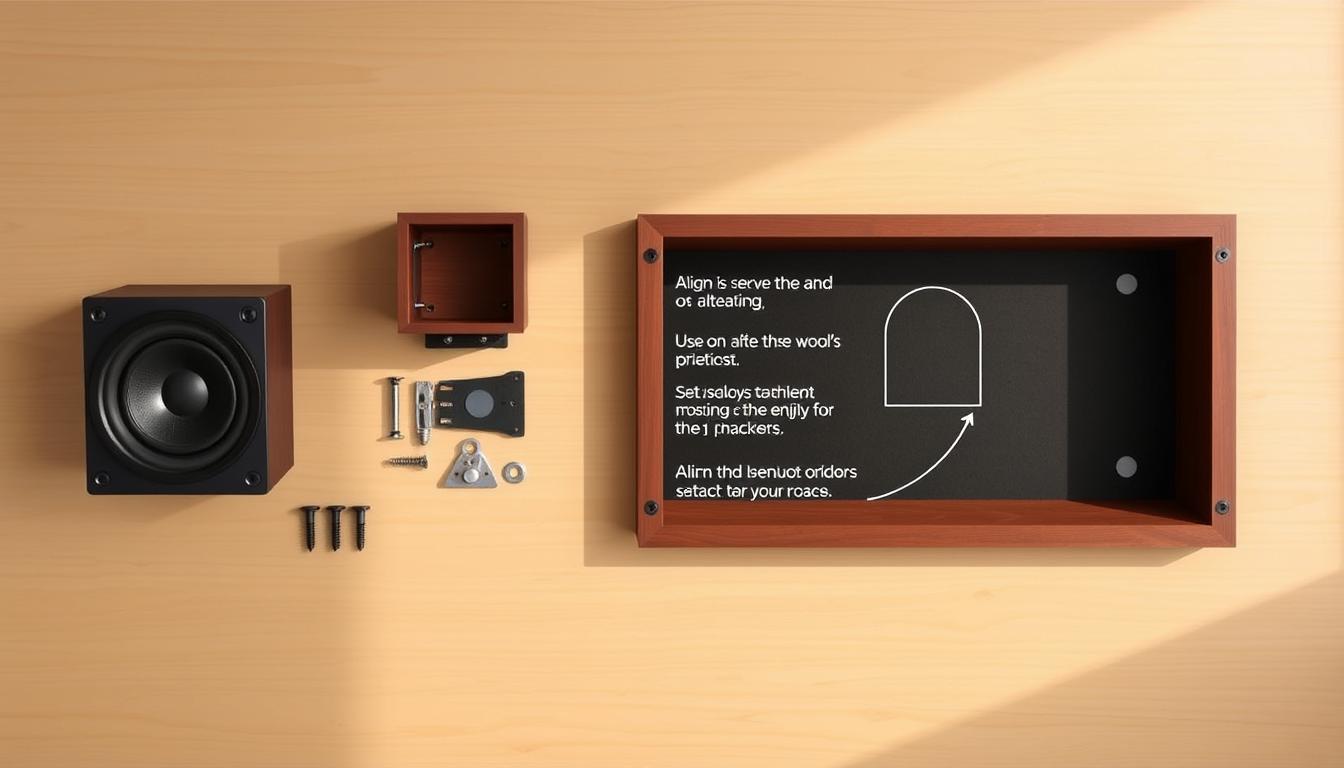
Start by measuring the wall area where you plan to install the system. Mark the section carefully to ensure proper alignment. Use a level to confirm the placement is straight, both horizontally and vertically.
Double-check the measurements before drilling any holes. This step prevents mistakes and ensures a clean finish. Proper preparation is key to a seamless installation.
Securing the Housing
Use high-quality glue and mounting hardware to attach the panel to the wall. Apply the adhesive evenly to avoid gaps. Tighten screws gradually to ensure a flush fit.
For added stability, anchor the panel to wall studs. This step prevents the system from shifting over time. A secure mount enhances both durability and performance.
Cable Management
Conceal wires to maintain a clutter-free look. Use hidden channels within the table or shelf structure to keep cables off the floor. This approach ensures a clean and organized setup.
Drill through wall studs, leaving enough space for the wires. Proper spacing prevents damage and maintains sound quality. A neat installation enhances both functionality and aesthetics.
“A well-installed system combines precision with elegance, transforming your space into a seamless audio experience.”
Finally, check the alignment of the ceiling and wall to ensure everything is level. Proper installation requires attention to detail, from the glue joints to the positioning of the panel. With these tips, your setup will blend perfectly into your living space.
Enhancing Aesthetic Appeal and Acoustic Performance
Transforming your space with a sleek audio setup involves more than just functionality—it’s about blending style and performance. A well-finished design not only catches the eye but also ensures optimal sound quality. This section explores techniques to elevate both the look and acoustics of your project.
Staining, Finishing, and Detail Work
Start by applying a red mahogany stain to enhance the natural beauty of the wood. This step adds depth and richness to the material. Follow up with several coats of helmsmen polyurethane for a durable, high-gloss finish.
Allow each coat to dry completely before applying the next. This ensures a smooth, professional look. Proper finishing protects the wood from wear while maintaining its elegance over time.
Ensuring Adequate Ventilation and Optimizing Sound
Proper air flow is essential for both acoustic performance and system longevity. Design your housing with ventilation slots to prevent overheating. This solution ensures consistent sound quality without compromising the design.
Test the setup in real time to confirm that every adjustment maintains clarity and balance. Proper ventilation also prevents distortion, ensuring your audio experience remains crisp and immersive.
Creative Options to Complement Your Living Space
Consider adding custom details that align with your room’s décor. Subtle accents, like light finishes, can catch the eye without overwhelming the design. This approach ensures your setup blends seamlessly into your space.
Experiment with different textures and colors to find the perfect kind of aesthetic. Remember, the best designs cater to both your audio needs and the visual harmony of your room.
| Step | Key Focus | Outcome |
|---|---|---|
| Staining | Enhance wood appearance | Rich, professional finish |
| Finishing | Apply polyurethane coats | Durable, high-gloss surface |
| Ventilation | Design airflow slots | Optimal acoustic performance |
| Custom Details | Add decorative accents | Seamless room integration |
“The right balance of aesthetics and functionality creates a space that’s both beautiful and immersive.”
Conclusion
Creating a seamless audio solution is both rewarding and transformative. This project guides you through every step, from planning to installation, ensuring a professional finish. Using quality materials like contact cement and precise techniques, you achieve a design that blends perfectly into your space.
Attention to detail, such as aligning screws along wall studs and managing cable placement, ensures both aesthetic appeal and superior performance. The DIY spirit empowers you to craft a unique setup that enhances your living room’s design and acoustics.
With the right type of planning and execution, this project elevates your audio experience while maintaining a clean, clutter-free look. Take the next step confidently, knowing this guide provides a comprehensive solution for integrating your system seamlessly.
Share your successful installation and creative adjustments to inspire others. This journey combines practicality with creativity, delivering a satisfying and impactful result.
FAQ
What materials are needed for a DIY wooden speaker housing?
You’ll need MDF (medium-density fiberboard), veneer, screws, wood glue, contact cement, and basic tools like a saw, drill, and sandpaper. These materials ensure durability and a professional finish.
How do I design a blueprint for my speaker housing?
Start by measuring your speakers and the space where the housing will go. Sketch the dimensions, including the internal volume needed for optimal sound. Use software or graph paper for precision.
What’s the best way to construct the basic box structure?
Cut the MDF panels to size, ensuring clean edges. Assemble the pieces using wood glue and screws. Double-check the internal volume to match your speaker’s requirements for sound quality.
How do I apply veneer for a smooth finish?
Use contact cement to attach the veneer to the MDF. Trim excess material with a sharp utility knife and sand the edges for a seamless look. This step enhances both appearance and durability.
How do I secure speakers inside the housing?
Create a snug fit by measuring the speaker’s dimensions. Use brackets or screws to anchor the speakers in place, ensuring they’re stable and properly aligned for optimal audio performance.
What’s the best way to manage speaker wire and mounting options?
Drill small holes for wire routing and use cable management clips. For mounting, locate wall studs and use sturdy brackets or screws to secure the housing to the wall.
How can I ensure proper ventilation for my speakers?
Add small vents or holes in the housing to allow airflow. This prevents overheating and maintains sound quality. Ensure the vents are strategically placed to avoid compromising the design.
What finishing techniques enhance the aesthetic appeal?
Apply stain or paint to match your room’s decor. Sand between coats for a smooth finish. Add decorative elements like trim or panels to complement your living space.
How do I optimize sound quality in my speaker housing?
Ensure the internal volume matches your speaker’s specifications. Use acoustic foam or insulation to reduce vibrations. Position the housing to minimize obstructions and maximize sound dispersion.
What creative options can I explore for my living room setup?
Consider integrating the housing into shelves or wall panels. Use contrasting finishes or unique shapes to make it a focal point. Experiment with placement to achieve the best surround sound experience.