Did you know sound travels at 700 miles per hour? That’s faster than most commercial jets! This incredible speed plays a key role in creating immersive audio experiences. Whether you’re setting up a home theatre or optimizing your living room acoustics, understanding how sound waves work is essential.
Sound waves behave differently based on their frequency. High-frequency waves are short and fast, while bass frequencies are long and slow. This impacts how you hear audio in your space. Speaker placement and room acoustics also influence the quality of sound. For example, bass notes can be harder to locate, allowing subwoofers to be placed flexibly in a surround sound setup.
Creating the right audio environment involves more than just buying the best speakers. It’s about understanding how sound interacts with your home. From wave behavior to speaker configuration, every detail matters. Dive in to learn how these principles can transform your listening experience.
Key Takeaways
- Sound travels at 700 miles per hour, influencing audio setup.
- High-frequency waves are short, while bass waves are long.
- Speaker placement affects sound quality in your home.
- Bass frequencies are harder to locate, allowing flexible subwoofer placement.
- Room acoustics play a crucial role in immersive audio.
Introduction to Home Theater Acoustics
Creating a cinematic experience at home starts with understanding the basics of sound dynamics. Whether you’re setting up a 5.1 or 7.1 system, the way sound interacts with your space is crucial. Acoustics play a key role in shaping how you hear every detail, from dialogue to background music.

Defining Surround Sound Concepts
Surround sound systems are designed to envelop you in audio. They use multiple speakers to create a 360-degree experience. For example, a 5.1 setup includes five main channels and one subwoofer for bass. This setup ensures that sound comes from all directions, making you feel like you’re in the middle of the action.
Higher-end systems, like 7.1 or Dolby Atmos, add even more channels for greater depth. These configurations allow sound to move around and above you, enhancing the immersive effect. Proper speaker placement is essential to maximize this experience.
The Role of Acoustics in Immersive Experiences
Your ear perceives sound differently based on the room’s acoustics. Hard surfaces can cause echoes, while soft materials absorb sound. Balancing these elements ensures clarity and depth in your audio.
Early decisions, like choosing the right room dimensions or adding acoustic panels, can make a big difference. For instance, the Golden Ratio (1:1.6:2.6) is often recommended for optimal sound distribution. Proper tuning of your system also helps manage frequency ranges, ensuring every note is heard as intended.
- Understand how sound waves interact with your space.
- Choose the right speaker configuration for your needs.
- Optimize room acoustics for clear and immersive audio.
The Physics Behind Perfect Surround Sound
Wave properties play a critical role in shaping your listening experience. Understanding how sound behaves in a room can transform your audio setup. From frequency to amplitude, these elements define the clarity and depth of what you hear.

Fundamental Wave Properties
Sound is a wave that travels through air, vibrating at different frequencies. High frequencies are short and fast, while low frequencies are long and slow. This difference affects how you perceive audio in your space.
For example, bass notes are harder to locate, allowing subwoofers to be placed flexibly. High-frequency sounds, like dialogue, require precise speaker placement for clarity. Mastering these properties ensures balanced audio reproduction.
Reflection, Diffusion, and Absorption
When sound hits a surface, it can reflect, diffuse, or be absorbed. Reflection occurs when sound bounces off hard surfaces, creating echoes. Diffusion scatters sound waves, reducing focus but enhancing spaciousness.
Absorption softens sound by trapping energy in materials like acoustic panels. Balancing these effects is crucial for clear audio. Too much absorption can deaden sound, while excessive reflection causes muddiness.
Time delays in sound propagation also influence your experience. Direct sound reaches your ears first, followed by reflections. Managing these delays ensures accurate sound localization and immersive listening.
- Learn how wave properties impact sound reproduction.
- Understand the effects of reflection, diffusion, and absorption.
- Discover the technical differences between direct and reflected sound waves.
- Explore how time delays shape your audio experience.
- Master wave behavior for optimal surround sound.
For more tips on avoiding common mistakes in audio setups, check out this guide on home theater systems.
Understanding Surround Sound Systems
Achieving immersive audio starts with the right speaker setup. Whether you’re using a 5.1 or 7.1 system, each configuration plays a unique role in delivering sound. Proper speaker placement ensures that every note reaches your ears with clarity and precision.
Signal processing ensures accuracy in directing sound throughout your room. Advanced technologies like Dolby Atmos and DTS:X map audio in a 360-degree sphere, creating a lifelike experience. These systems rely on precise signal routing to deliver effects like footsteps or whispers with stunning realism.
Speaker Configuration and Signal Processing
Optimal system design minimizes issues like uneven sound distribution. For example, a 5.1 setup includes five speakers and one subwoofer, while a 7.1 system adds two more for enhanced depth. Subtle differences in signal routing can drastically impact sound quality.
Precise configuration enhances the effect of your audio setup. High-frequency sounds, like dialogue, require careful placement for clarity. Bass notes, on the other hand, are more flexible due to their lower frequency range.
- Signal processing directs sound accurately across your space.
- System design ensures balanced audio output.
- Speaker placement affects clarity and immersion.
- Advanced technologies like Dolby Atmos enhance realism.
- Subtle differences in routing influence overall quality.
Psychoacoustics and Human Hearing
Your brain plays a key role in how you experience sound. It decodes audio cues to create a cohesive listening experience. Understanding this process can help you optimize your home theater setup for maximum immersion.

Auditory Localization and Perception
Your ears and brain work together to determine where sound comes from. This process, called localization, relies on subtle cues like timing and intensity differences between your ears. For example, a sound reaching your left ear slightly faster than your right helps your brain pinpoint its direction.
Perception also plays a role. Your brain fills in gaps to create a complete audio image. This is why even a 5.1 system can feel immersive—your brain interprets the spatial cues to enhance the experience.
Pitch, Loudness, and Time Domain Insights
Pitch and loudness are critical to how you perceive sound. High-pitched notes are easier to locate, while low frequencies are more diffuse. Loudness, or level, affects how clearly you hear details. Even slight variations can alter your listening experience.
Time domain cues are equally important. Your brain processes the timing of sound waves to create a sense of depth. For instance, a delayed echo can make a room feel larger. Balancing these elements ensures a realistic and engaging audio experience.
- Learn how your brain localizes sound in three-dimensional space.
- Discover the interplay between pitch, loudness, and time in creating immersive audio.
- Understand why subtle variations in level can significantly impact your listening experience.
- Explore how auditory perception enhances the realism of home theater setups.
- Gain insights into the nuances of sound notes and their role in immersive audio.
Room Acoustics: Designing the Perfect Space
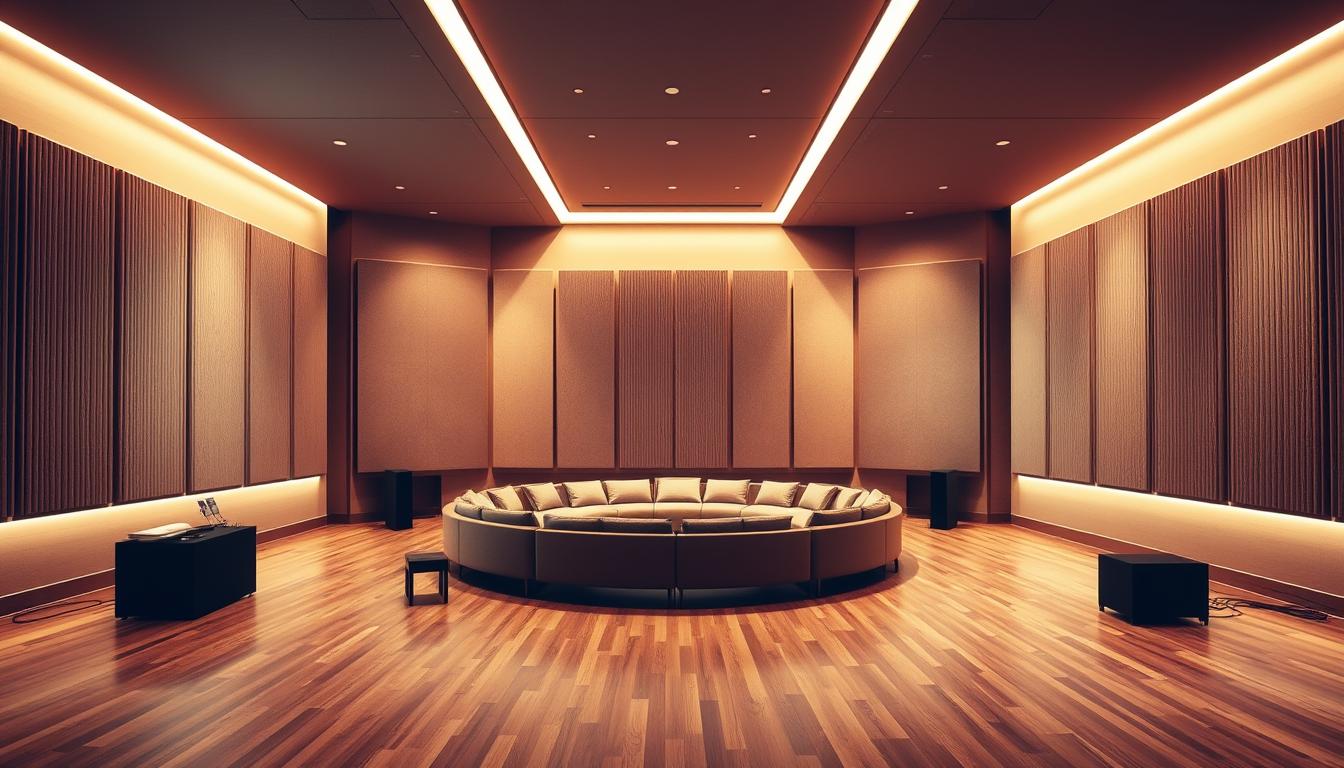
Your room’s design plays a bigger role in sound quality than you might think. From its dimensions to the materials used, every detail affects how sound travels and reaches your ears. A well-designed environment ensures clarity, depth, and immersion in your audio experience.
Impact of Room Dimensions and Layout
The size and shape of your room significantly influence sound performance. Smaller, rectangular spaces often amplify standing waves, especially in the bass range. This can lead to uneven sound distribution and muddiness.
For optimal acoustics, consider the Golden Ratio (1:1.6:2.6) when designing your space. This proportion helps balance sound waves, reducing unwanted echoes and reflections. Additionally, placing speakers along the shorter wall can enhance stereo imaging and bass response.
Effective Acoustic Treatments
Controlling echo and reflections is essential for clear audio. Hard surfaces like walls and floors can cause sound to bounce, creating interference. Soft materials, such as acoustic panels, absorb mid and high frequencies, improving clarity.
Bass traps are another effective solution. Placing them in corners where low frequencies build up can tame standing waves. For a balanced environment, aim to cover 35-40% of your side walls with acoustic treatments.
| Treatment Type | Purpose | Placement |
|---|---|---|
| Acoustic Panels | Absorb mid/high frequencies | Walls, ceilings |
| Bass Traps | Control low frequencies | Corners |
| Diffusers | Scatter sound waves | Back wall, sides |
Objects in your room also play a role. Furniture and decor can either absorb or reflect sound, depending on their material and placement. Pay attention to left right orientation to ensure even sound distribution.
By carefully considering these factors, you can create a space that maximizes audio clarity and immersion. Whether you’re setting up a home theater or optimizing a listening room, thoughtful design makes all the difference.
Balancing Bass and High Frequency Reflections
Balancing bass and high frequencies is key to achieving clear audio. Low frequencies can overpower your sound, while high frequencies need precision to avoid harshness. Proper management ensures every note is heard as intended.

Taming Low Frequencies with Bass Traps
Bass traps are essential for controlling unwanted low-frequency reflections. They absorb excess energy, preventing bass from building up in corners. This results in a cleaner, more balanced sound.
Place bass traps in strategic locations, like room corners, where low frequencies tend to accumulate. This simple addition can significantly improve your listening experience by reducing muddiness.
Preserving Music Integrity and Clarity
Maintaining clarity across the frequency spectrum is crucial for music reproduction. High frequencies require precise speaker placement to avoid distortion. Meanwhile, controlled bass ensures depth without overpowering other elements.
Use acoustic panels to manage mid and high frequencies. This combination with bass traps creates a harmonious sound effect, enhancing both dialogue and background audio.
Actionable Tips for Optimizing Listening Conditions
- Place bass traps in corners to control low-frequency buildup.
- Use acoustic panels to manage mid and high frequencies.
- Experiment with speaker placement for optimal clarity.
- Balance absorption and diffusion for a natural sound.
- Test your setup with different audio tracks to fine-tune performance.
By implementing these techniques, you can create a space where every note shines. Whether you’re enjoying music or immersive sound effects, balanced frequencies make all the difference.
Optimizing Speaker and Subwoofer Placement
Positioning your speakers and subwoofer correctly can make or break your audio experience. Proper placement ensures balanced sound and immersive effects. Whether you’re setting up a 5.1 or 7.1 system, every detail matters.

Ideal Speaker Setups and Positioning
Start by placing your front left and right speakers at a 45-degree angle from your listening position. This creates a wide soundstage for clear dialogue and effects. Align the center speaker with your ear level for optimal clarity.
Rear speakers should be positioned 90-110 degrees from the front, slightly above ear level. This setup ensures sound envelops you from all directions. Avoid placing speakers too close to walls to prevent bass reinforcement issues.
Subwoofer Placement Strategies
Subwoofers are flexible but benefit from strategic placement. Start by placing yours in a front corner to amplify bass. If bass feels uneven, try the “subwoofer crawl” method. Move the subwoofer to your listening spot, play low-frequency music, and crawl around to find the best position.
For larger rooms, consider adding a second subwoofer. Placing one in the front and one in the back improves bass distribution. Ensure your receiver is calibrated to manage multiple subwoofers effectively.
- Align front speakers at a 45-degree angle for a wide soundstage.
- Place the center speaker at ear level for clear dialogue.
- Use the “subwoofer crawl” method to find optimal bass placement.
- Add a second subwoofer for larger rooms to balance bass response.
- Calibrate your receiver to simplify setup and maximize performance.
Enhancing Your Surround Sound Experience with Equipment
Your home theater’s audio quality hinges on the right equipment choices. From receivers to projectors, each component plays a vital role in creating an immersive experience. Understanding how to select and integrate these tools ensures your setup delivers top-notch performance.

Choosing the Right Receiver and Format
A high-quality receiver is the backbone of your audio system. It processes signals and directs sound to the appropriate speakers. Look for models that support advanced formats like Dolby Atmos or DTS:X for a truly immersive experience.
Compatibility is key. Ensure your receiver matches your speaker configuration and supports the latest audio formats. This ensures seamless integration and optimal performance.
Selecting Projectors and Screens for Home Theaters
Visuals are just as important as audio. A high-quality projector and screen can elevate your film viewing experience. Consider screen size and resolution to match your room’s dimensions and seating arrangement.
For example, a 120-inch screen is ideal for larger rooms, while a 100-inch screen suits smaller spaces. Pair it with a 4K projector for crisp, detailed visuals. These choices, combined with the right audio setup, create a cinematic experience at home.
- Invest in a receiver that supports advanced audio formats.
- Match your screen size to your room’s dimensions.
- Choose a projector with high resolution for sharp visuals.
- Ensure all components are compatible for seamless integration.
- Test your setup with different media to fine-tune performance.
DIY Projects to Upgrade Your Home Theater
Transform your home theater with hands-on DIY projects that enhance both functionality and aesthetics. Whether you’re a seasoned DIY enthusiast or just starting, these projects offer practical solutions to improve your audio setup while blending seamlessly with your home’s design.

Building a Custom AV Receiver Rack
A custom AV receiver rack keeps your system organized and efficient. Start by measuring your components to ensure the rack fits perfectly. Use sturdy materials like plywood or MDF for durability.
Design the rack with ventilation in mind. Overheating can damage your equipment, so include vents or fans. Cable management is also crucial. Use clips or ties to keep wires neat and avoid tangling.
“A well-designed rack not only organizes your setup but also enhances airflow, prolonging the life of your components.”
Here’s a quick guide to materials and tools:
| Material | Purpose |
|---|---|
| Plywood/MDF | Frame and shelves |
| Ventilation Fans | Cooling |
| Cable Clips | Wire management |
Painting In-Wall and In-Ceiling Speakers
Blend your speakers into your room’s design by painting them to match your walls or ceiling. Start by removing the speaker grilles and cleaning them thoroughly. Use a primer to ensure the paint adheres properly.
Choose a paint color that matches your decor. Matte finishes work best to avoid glare. Apply thin, even coats, allowing each layer to dry completely. Reattach the grilles once the paint is dry for a seamless look.
- Remove grilles and clean surfaces before painting.
- Use primer for better paint adhesion.
- Opt for matte finishes to reduce glare.
- Apply thin, even coats for a professional finish.
These DIY projects not only improve your system’s performance but also add a personal touch to your home theater. Experiment with these ideas to create a space that’s both functional and visually appealing.
Advanced Techniques in Acoustic Design
Advanced acoustic techniques can transform your home theater into a professional-grade listening space. By mastering these methods, you ensure every sound detail is crystal clear. From controlling reflections to optimizing speaker placement, these strategies elevate your audio experience.
Diffusion and Absorption Strategies
Balancing diffusion and absorption is key to refining your sound image. Diffusion scatters sound waves, creating a spacious effect. Absorption, on the other hand, reduces unwanted echoes by trapping sound energy.
For optimal results, use acoustic panels to cover 35-40% of your side walls. This setup ensures clarity while maintaining a natural sound. Combining these techniques with three-dimensional placement enhances audio localization, making every note feel precise.
Cabinet Trickery for Critical Speaker Channels
Cabinet design plays a crucial role in preserving sound quality. Properly engineered enclosures minimize vibrations and distortions. This ensures critical speaker channels deliver accurate audio.
Strategic placement of your receiver and speakers also impacts performance. Slight adjustments can improve signal routing and system tuning. For example, placing your receiver in a well-ventilated location prevents overheating and maintains consistent quality.
| Technique | Purpose | Application |
|---|---|---|
| Diffusion | Scatter sound waves | Back wall, sides |
| Absorption | Reduce echoes | Walls, ceilings |
| Cabinet Design | Minimize vibrations | Speaker enclosures |
By implementing these advanced techniques, you achieve studio-grade acoustics in your home theater. Whether you’re fine-tuning speaker placement or optimizing your receiver, every detail contributes to an immersive listening experience.
Conclusion
Every detail in your home theater setup contributes to the final audio experience. From room dimensions to source placement, each element plays a vital role in shaping the sound field. Properly designed space ensures clarity, while advanced equipment like a receiver enhances immersion.
Understanding how system components interact is key. Whether it’s balancing bass or optimizing speaker placement, these choices impact your audio quality. Studies show that even slight adjustments can significantly improve the overall effect.
Applying these insights to your next project ensures a professional-grade sound system. By focusing on both technical and environmental factors, you create a theater experience that’s truly immersive. Start planning today to transform your space into an extraordinary listening environment.
FAQ
What is the role of acoustics in creating an immersive surround sound experience?
Acoustics play a crucial role in shaping how sound waves interact with your space. Proper acoustic treatment ensures clear audio, minimizes unwanted echoes, and enhances the overall immersive effect of your surround sound system.
How do reflection, diffusion, and absorption affect sound quality?
Reflection can cause echoes, diffusion spreads sound evenly, and absorption reduces unwanted noise. Balancing these elements improves clarity and ensures accurate sound localization in your home theater.
What is the best speaker configuration for a surround sound system?
A standard 5.1 or 7.1 setup is ideal. Place front speakers at ear level, surround speakers slightly behind, and the subwoofer in a corner for optimal bass response. Proper positioning enhances the sound field and creates a three-dimensional audio experience.
How does human hearing influence surround sound design?
Auditory localization helps you perceive sound direction. By understanding pitch, loudness, and time domain, you can optimize speaker placement and signal processing to match how your ears naturally interpret sound.
What are the key factors in designing the perfect room for surround sound?
Room dimensions, layout, and acoustic treatments are critical. Avoid square rooms, use bass traps for low frequencies, and incorporate diffusers and absorbers to control reflections and improve sound quality.
How can I balance bass and high-frequency reflections in my home theater?
Use bass traps to manage low frequencies and acoustic panels to tame high-frequency reflections. This balance ensures clear dialogue and powerful, distortion-free bass.
Where should I place my subwoofer for the best bass response?
Place your subwoofer in a corner or along a wall to enhance bass. Experiment with placement to find the spot where low frequencies sound full and balanced without overwhelming the room.
What equipment is essential for enhancing a surround sound experience?
A high-quality AV receiver, compatible speakers, and the right audio format are key. Ensure your receiver supports Dolby Atmos or DTS:X for immersive sound, and pair it with a projector or screen for a complete home theater setup.
Can I upgrade my home theater with DIY projects?
Yes! Build a custom AV receiver rack to organize equipment or paint in-wall and in-ceiling speakers to blend seamlessly with your room’s design. These projects can enhance both functionality and aesthetics.
What advanced techniques can improve acoustic design in a home theater?
Use diffusion panels to scatter sound evenly and absorption panels to reduce echoes. For critical speaker channels, consider cabinet trickery to minimize vibrations and improve audio clarity.