Did you know that over 60% of home theater enthusiasts prefer DIY solutions for their setups? Creating a custom wooden stand for your projector not only saves money but also offers unmatched flexibility. Unlike pre-made options, a DIY stand allows you to tailor the design to your room’s layout and aesthetic.
Whether you’re mounting your projector on a wall, ceiling, or using a portable stand, a well-crafted wooden solution ensures stability and durability. It’s a practical choice for those who value both functionality and style. Plus, with the right materials, you can create a stand that complements your home theater perfectly.
By choosing a DIY approach, you gain control over the design, ensuring it meets your specific needs. From cable management to height adjustments, every detail can be customized. This guide will walk you through the process, helping you create a stand that enhances your viewing experience while staying within budget.
Key Takeaways
- DIY stands offer cost-effective and customizable solutions for projector setups.
- Wooden stands provide durability and blend seamlessly with home decor.
- Custom designs allow for better cable management and height adjustments.
- Portable stands are ideal for flexible room arrangements.
- DIY projects balance aesthetics, functionality, and affordability.
Introduction to Your DIY Projector Stand Journey
Embarking on a DIY projector stand project opens doors to creativity and functionality. It’s more than just a piece of furniture; it’s a chance to enhance your home theater experience. By building your own stand, you gain control over every detail, ensuring it fits your space and style perfectly.
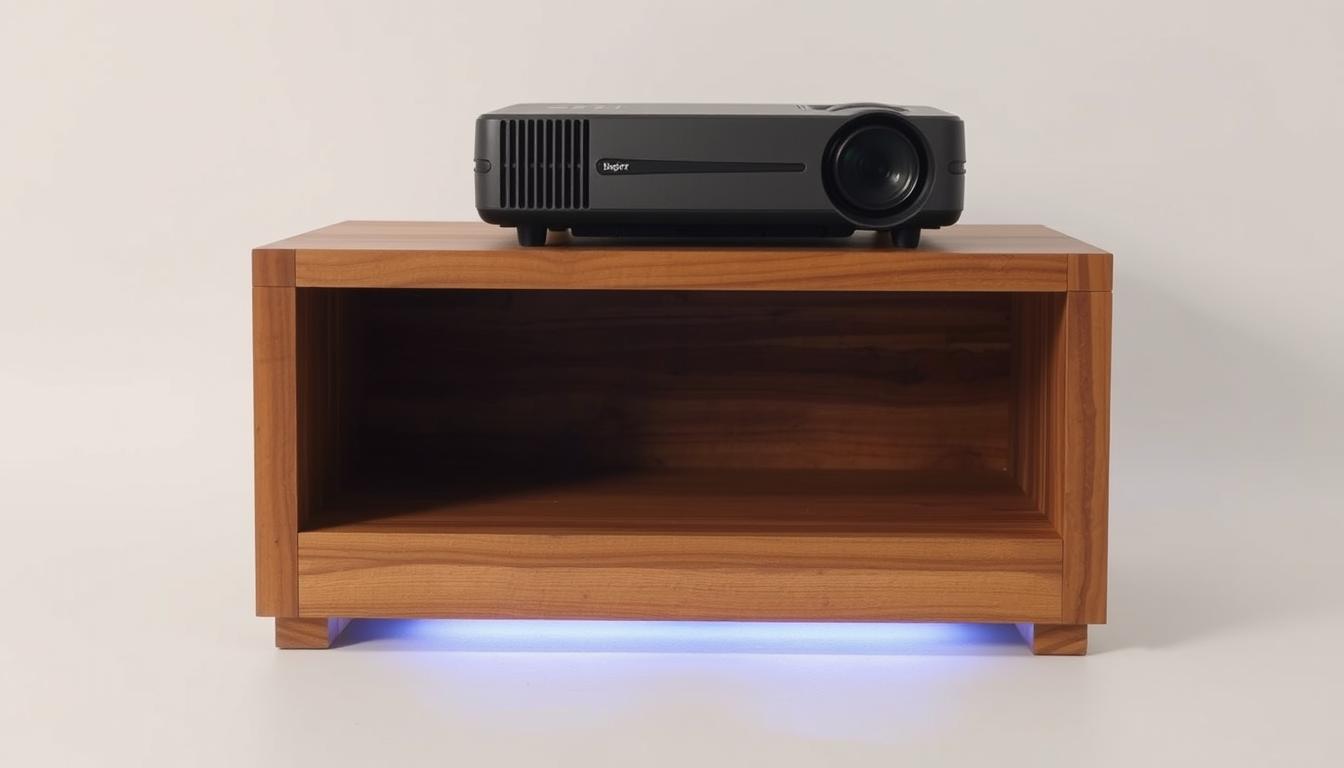
Understanding the DIY Home Theater Experience
Creating a custom stand allows you to tailor your setup to your room’s layout and lighting. Whether you’re mounting your projector on a wall or ceiling, a personalized design ensures optimal performance. You can adjust the height and placement to eliminate shadows and improve image quality.
Safety is also a priority. A well-built stand ensures proper weight distribution, preventing accidents. By understanding your room’s dimensions and lighting, you can create a setup that maximizes both functionality and aesthetics.
Benefits of a Custom Wooden Stand
Opting for a custom wooden stand offers numerous advantages. Unlike pre-made options, it provides design flexibility, allowing you to match your home decor. Wood is durable and can support the weight of your projector securely.
Building your own stand is also cost-effective. You save money while creating a solution that meets your exact needs. Plus, the satisfaction of crafting something with your own hands adds a personal touch to your home theater setup.
From cable management to secure mounting, every detail can be customized. This ensures your projector operates smoothly while enhancing the overall look of your room. A custom stand is the perfect blend of practicality and style.
Planning Your Materials and Design Strategy
Crafting a projector stand starts with careful planning and material selection. The right choices ensure durability, functionality, and aesthetic appeal. This phase is crucial for creating a stand that meets your specific needs.
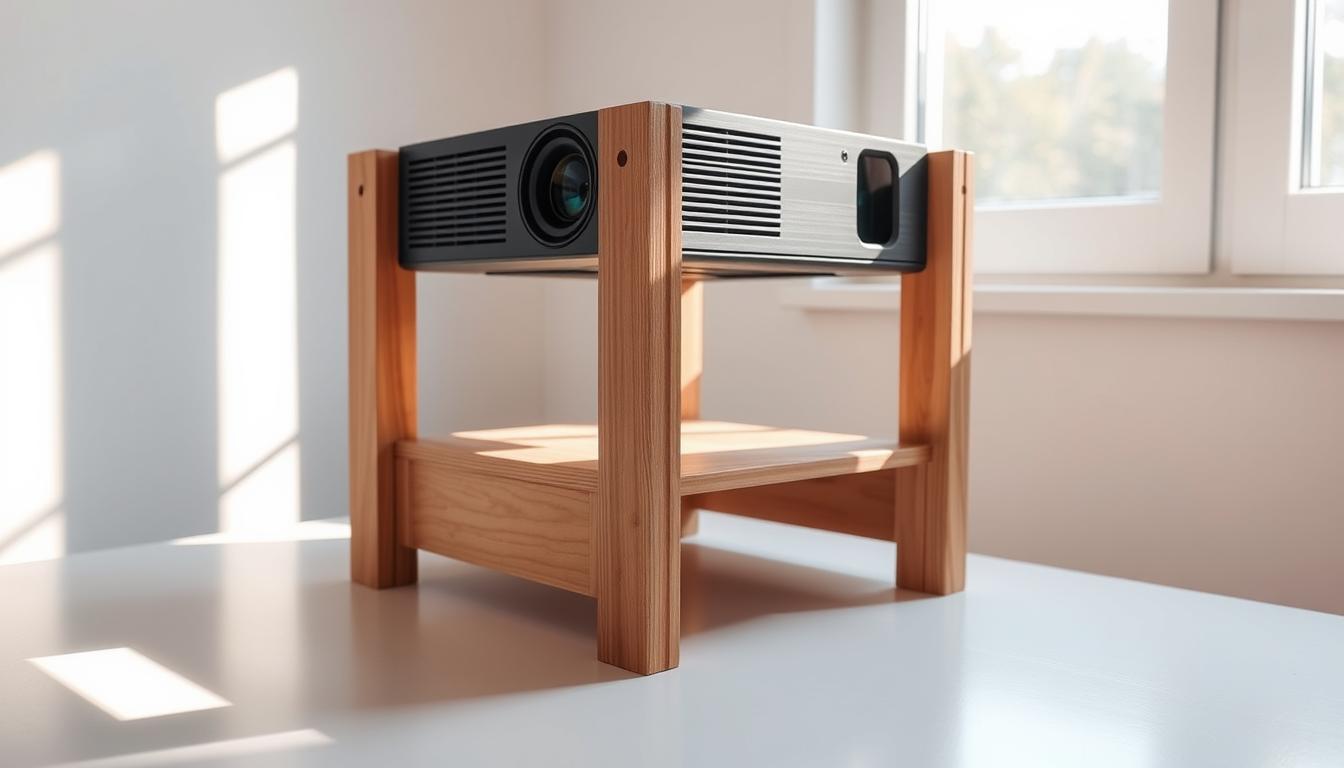
Selecting the Right Wood, Tools, and Accessories
Choosing the type of wood is the first step. Hardwoods like oak or maple offer strength and longevity, while softwoods like pine are lighter and easier to work with. Consider the weight of your projector when making this decision.
Tools are equally important. A saw, drill, and measuring tape are essential for precise cuts and assembly. Accessories like metal reinforcements and cable management systems add stability and organization to your stand.
When planning your design, think about the room layout. Will the stand be placed against a wall or mounted on the ceiling? Accurate measurements ensure compatibility with your projector mount.
Here’s a comparison of wood and metal materials to help you decide:
| Material | Pros | Cons |
|---|---|---|
| Wood | Durable, customizable, blends with decor | Heavier, requires maintenance |
| Metal | Lightweight, sturdy, modern look | Less customizable, may not match decor |
For a secure mount, consider using toggle bolts or a sleeper system, especially if attaching to drywall. Learn more about mounting a projector to ceiling drywall for detailed tips.
By carefully selecting materials and tools, you set the foundation for a stand that’s both functional and visually appealing. This planning phase ensures your projector setup is stable, organized, and tailored to your space.
How to Build a Portable Wooden Projector Stand
Assembling your own projector stand is a rewarding project that combines practicality and creativity. With the right tools and materials, you can create a stand that fits your space and enhances your viewing experience. This guide provides step-by-step instructions and key measurements to ensure your project is a success.
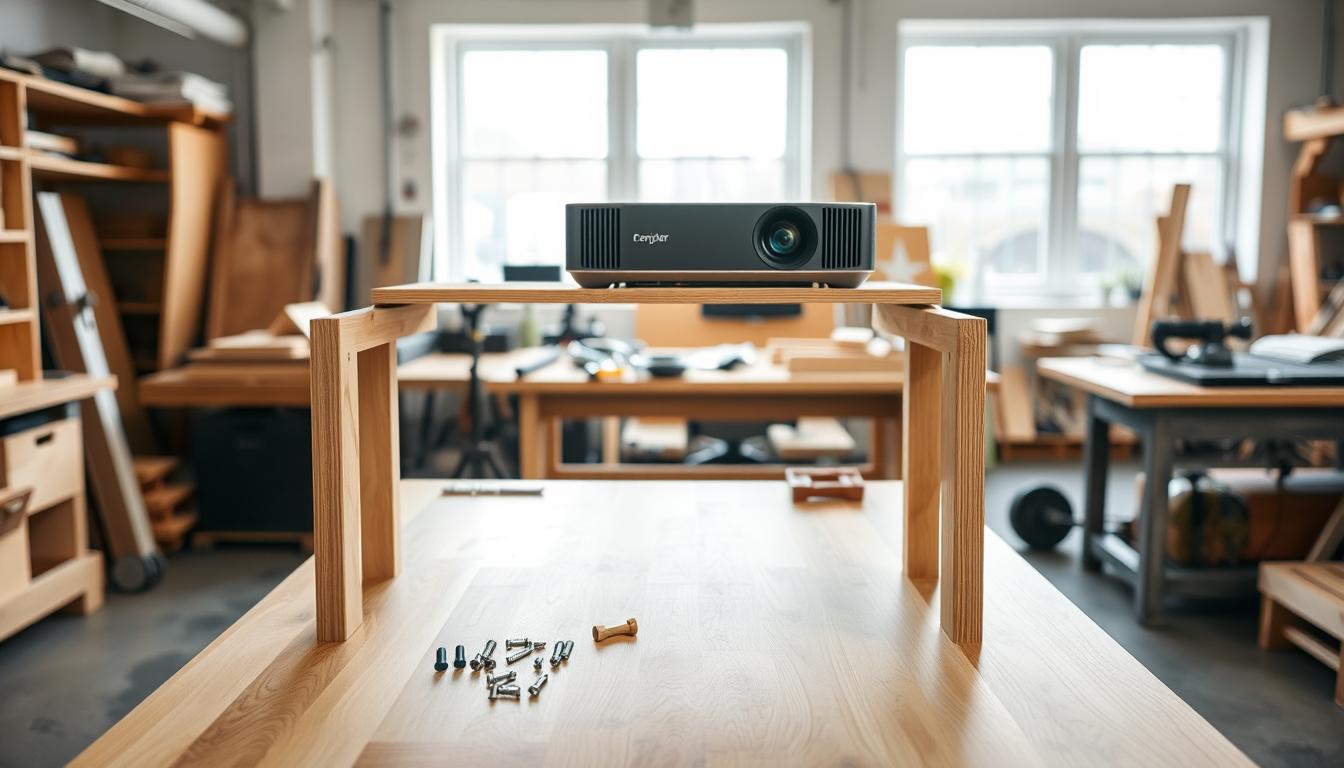
Step-by-Step Assembly Process
Start by cutting the wood to the desired dimensions. Use a saw for precision and ensure all pieces are measured accurately. Next, drill holes for screws and reinforcements to add stability. Assemble the base first, ensuring it can support the weight of your projector.
Attach the vertical supports to the base, securing them with screws. Add horizontal shelves or platforms for additional storage or cable management. Finally, sand the edges and apply a finish to protect the wood and enhance its appearance.
Key Measurements and Adjustability Techniques
Measure the height of your projector to determine the optimal placement. For a wall mount, ensure the stand is at least 6.5 feet from the ground. For a ceiling mount, consider the room’s dimensions and lighting to avoid shadows.
Adjustability is key for a versatile setup. Use adjustable feet or brackets to level the stand on uneven surfaces. Incorporate cable management systems to keep wires organized and prevent tripping hazards.
| Material | Weight Rating | Cost |
|---|---|---|
| Eye Screws | 95 lbs | $1.59 |
| Lap Link Connectors | 225 lbs | $0.89 |
| Eye Bolts | 300 lbs | $3.49 |
By following these steps and measurements, you can create a stand that is both functional and visually appealing. Whether you choose a wall or ceiling mount, your DIY project will enhance your home theater setup.
Exploring Alternative Mount Options and Adaptations
Exploring different mounting options can transform your projector setup into a versatile and efficient system. Whether you’re working with limited space or need flexibility, there are several ways to adapt your projector to fit your needs. From wall mounts to ceiling mounts, each option offers unique benefits.
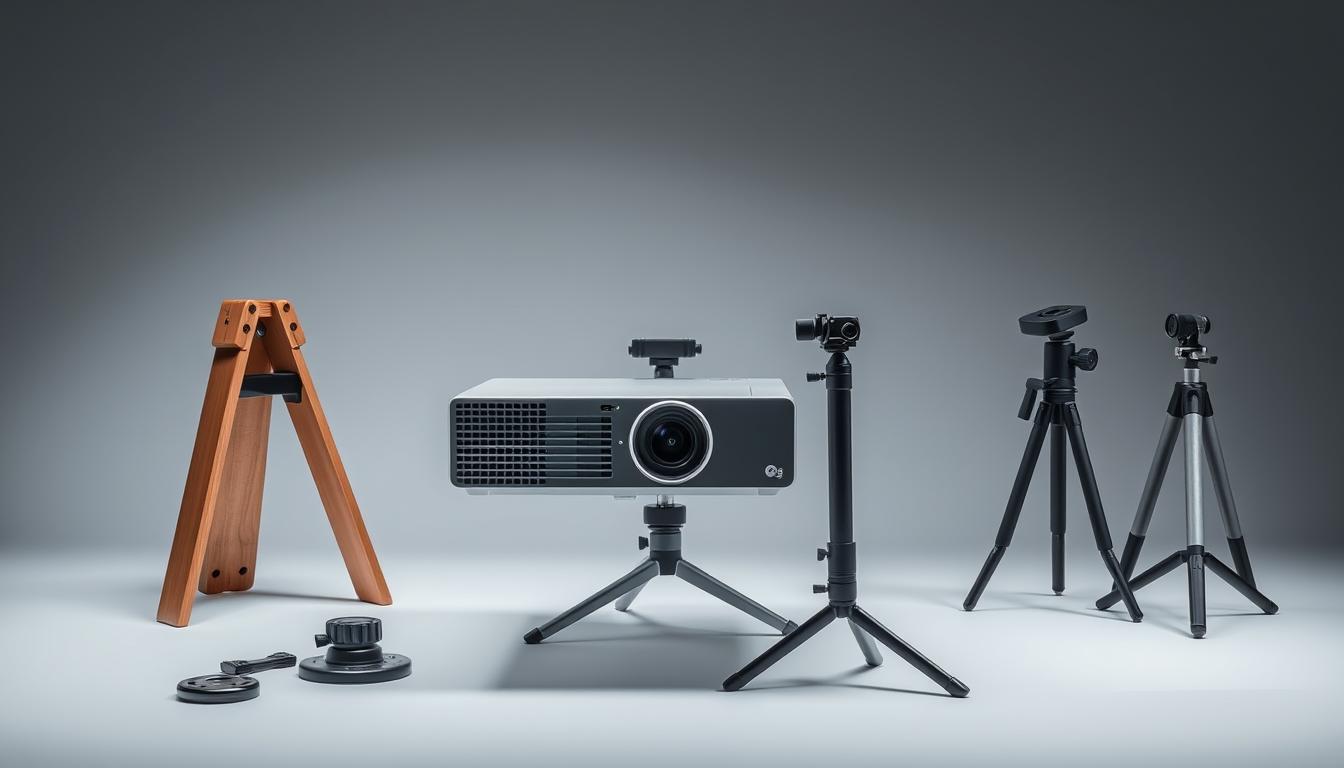
Comparing Wall, Ceiling, and Mobile Mount Setups
Wall mounts are ideal for permanent installations, especially in smaller rooms. They save floor space and provide a clean, organized look. However, they require sturdy walls and proper mounting hardware to ensure stability.
Ceiling mounts are perfect for larger spaces, like home theaters or conference rooms. They offer a clear projection path and eliminate shadows. But, they may require professional installation and careful consideration of cable management.
For those who need flexibility, mobile setups like tripod stands are a great idea. They allow you to move the projector between rooms or even outdoors. These stands are lightweight and easy to adjust, making them ideal for temporary setups.
Here’s a quick comparison of the three options:
| Mount Type | Pros | Cons |
|---|---|---|
| Wall Mount | Space-saving, permanent | Requires sturdy walls |
| Ceiling Mount | Clear projection, no shadows | Professional installation needed |
| Mobile Stand | Flexible, portable | Less stable, temporary |
When choosing a mount, consider your room size, usage frequency, and projector weight. Each option has its strengths, so pick the one that best suits your needs.
Ensuring Stability, Safety, and Aesthetic Appeal
Stability and safety are critical when designing a projector stand. A well-balanced setup prevents accidental tipping and ensures your projector stays secure. Proper weight distribution and base strength are key factors to consider.
Calculating Weight Distribution and Base Strength
To avoid instability, calculate the weight distribution of your stand. Start by measuring the weight of your projector and any additional accessories. Ensure the base is wide enough to support the load evenly.
For added strength, consider using metal reinforcements. These can be installed at key stress points to enhance durability. A sturdy base prevents wobbling and ensures your projector remains level.
Here’s a quick guide to weight distribution for different setups:
| Setup Type | Base Width | Weight Capacity |
|---|---|---|
| Wall Mount | 24 inches | 50 lbs |
| Ceiling Mount | 36 inches | 75 lbs |
| Mobile Stand | 18 inches | 30 lbs |
Adjust the height of your stand to match your room layout. For wall mounts, ensure the stand is at least 6.5 feet from the ground. For ceiling mounts, consider the room’s dimensions to avoid shadows.
Use cable management systems to keep wires organized. This not only improves safety but also enhances the overall look of your setup. A clean, organized stand is both functional and visually appealing.
By following these tips, you can create a stand that is both safe and stylish. Whether you choose a wall or ceiling mount, proper planning ensures a stable and durable setup.
Conclusion
Creating your own projector setup is a rewarding way to enhance your home theater experience. By following the step-by-step guide, you can design a stand that fits your space perfectly. Choosing the right materials, like durable metal or wood, ensures stability and longevity.
Whether you opt for a wall or ceiling mount, proper measurements and weight distribution are crucial. These details guarantee safety and functionality. Customizing your setup allows for better height adjustments and cable management, improving your viewing experience.
With the flexibility to adapt your design, you can create a solution that suits your room layout. Start your project today and enjoy the satisfaction of a personalized, professional-grade setup. Revisit the guide for detailed tips and take the first step toward transforming your space.
FAQ
What type of wood is best for a projector stand?
Hardwoods like oak or maple are ideal for durability and stability. Plywood is a cost-effective alternative for a lighter option.
Can I use a wall mount instead of a stand?
Yes, wall mounts are a great alternative, especially for saving space. Ensure the mount supports your projector’s weight and size.
How do I ensure the stand is stable?
Focus on a wide base and proper weight distribution. Use sturdy screws and brackets to secure the structure.
What tools are needed for building a projector stand?
Basic tools include a saw, drill, screws, measuring tape, and sandpaper. A level ensures the stand is even.
Is a ceiling mount a better option than a stand?
Ceiling mounts work well for permanent setups, offering a clean look. However, a stand provides portability and flexibility.
How do I adjust the height of the projector stand?
Design the stand with adjustable legs or shelves. This allows you to customize the height for optimal viewing.
Can I hide cables in the stand design?
Yes, incorporate cable management holes or channels to keep wires organized and out of sight.
What’s the ideal weight capacity for a projector stand?
Ensure the stand supports at least 1.5 times your projector’s weight. This accounts for additional accessories.
How do I make the stand portable?
Use lightweight materials and add handles or wheels for easy movement. Ensure the design remains sturdy.
Can I customize the stand to match my room’s decor?
Absolutely. Choose a finish or paint color that complements your space. Add decorative elements for a personalized touch.